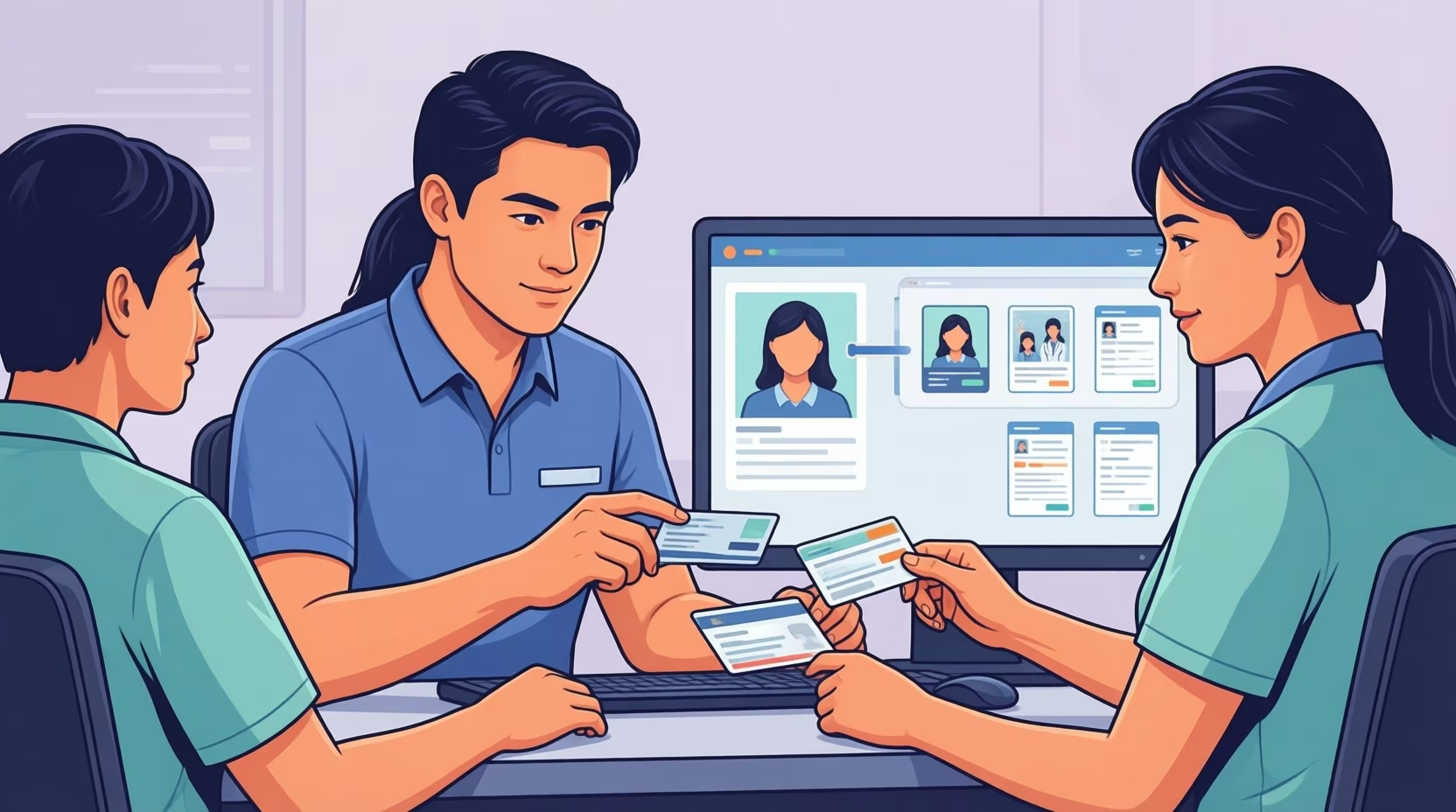
A patient arrives for an appointment, and the registration team can’t locate the right medical record. The name on the insurance card differs from what’s stored in the hospital system, while an outdated policy number sits in the billing software. Before the consultation can move forward, staff have to review the records and fix the discrepancies.
- Why Accurate Patient Information Matters
- How Duplicate Records Create Operational Problems
- The Connection Between Patient Data and Revenue Cycle Performance
- Why Eligibility Verification Matters
- How Technology Can Improve Patient Data Accuracy
- Connecting Registration, EHR, and Billing Systems
- Why Human Oversight Remains Important
- Building Accountability Across Healthcare Departments
- Measuring Patient Data Quality
- Practical Steps for Improving Patient Data Management
- FAQ
- Why is accurate patient information important in healthcare?
- How does patient data accuracy affect revenue cycle performance?
- Keeping Patient Data Accurate Across Healthcare Operations
Patient data accuracy depends on consistent intake, insurance eligibility checks, duplicate-record reviews, and clear ownership across registration, clinical, and billing teams. Healthcare organizations should connect their systems, validate required fields, track repeat errors, and have staff review uncertain record matches before merging files.
Though this situation looks like a minor administrative hiccup, inaccurate patient information affects several departments at once. Registration errors delay appointments, duplicate records complicate clinical decisions, and wrong insurance details stall claim processing.
For healthcare organizations, accurate patient data goes beyond basic recordkeeping. It drives patient identification, clinical coordination, financial management, and communication across the entire care process.
Why Accurate Patient Information Matters
Patient data covers demographic information, contact details, insurance coverage, medical history, diagnoses, and treatment records. Each category backs a distinct part of healthcare operations.
Registration staff use demographic details to identify patients and book appointments. Clinicians rely on medical records to review past care, while billing teams pull insurance and service details to prepare claims.
When this information is incomplete or inconsistent, employees spend extra time confirming details and fixing mistakes. Inaccurate patient records can also trigger common claim denials in primary care, especially when names, birth dates, or insurance ID numbers don’t match payer files.
Semarchy and OvalEdge describe how outdated demographics, coverage details, medication histories, and coding inconsistencies can lead to rejected claims and care delays. 4medica and Atlas Systems also link inaccurate records to medication errors, claims processing problems, and compliance risks.
Patient matching is a core piece of healthcare interoperability. Matching links records belonging to the same person across separate healthcare systems. Accurate demographic details support this process when patients get care from multiple providers.
How Duplicate Records Create Operational Problems
Duplicate records split one patient’s clinical history across separate files, muddle appointment logs, and slow administrative reviews. They usually crop up when an organization stores the same person under different names, addresses, or identification numbers.
A patient might register under a nickname during one visit and a full legal name at the next. If the system misses the existing file, staff may accidentally build a second profile.
Incomplete and inconsistent demographic data can be a major hurdle in matching electronic patient records.
Healthcare teams can cut down on these issues through standardized intake steps, duplicate-record tracking, and careful verification before merging profiles.
The Connection Between Patient Data and Revenue Cycle Performance
Revenue cycle management starts long before a medical service happens. Accurate patient intake, insurance verification, and clinical notes shape how claims are built and processed.
A wrong insurance member number, expired coverage entry, or mismatched patient name can trigger a claim rejection or force extra review. These snags also drain staff productivity.
Billing staff have to reach out to registration teams, cross-check insurance cards, fix claim fields, and call payers before an account can move ahead.
Healthcare organizations reviewing their medical billing services workflows should check how patient data accuracy affects claim submissions, denial follow-up, payment posting, and open accounts receivable. Catching errors at the start of the revenue cycle prevents avoidable rework down the line.
Why Eligibility Verification Matters
Insurance eligibility verification helps providers confirm whether a patient holds active coverage and pull current benefit details. In many electronic eligibility workflows, providers use the X12 270 transaction for eligibility checks, while payer responses return via the X12 271 transaction.
These transactions handle the exchange of eligibility and benefit data between providers and health plans.
Still, confirming eligibility doesn’t guarantee payment. Medical necessity rules, prior authorization, network limits, clinical documentation, and other payer policies can all affect a claim.
Providers should pair accurate insurance records with thorough claim review processes.
How Technology Can Improve Patient Data Accuracy
Electronic health records and practice management platforms have reshaped how providers gather, store, and share patient files. Digital intake forms catch blank required fields, and automated validation rules flag conflicting demographic entries. Many platforms also spot potential duplicate profiles for staff to check.
These tools cut down on repetitive clerical work, though software alone won’t guarantee clean data.
Connecting Registration, EHR, and Billing Systems
Many healthcare groups run separate software for scheduling, registration, clinical charting, and billing. When these platforms don’t talk to each other, staff end up typing the same details multiple times.
A patient might update their street address at check-in, yet the billing software keeps showing the old one. System integration closes these gaps when connected applications share updated records automatically.
Standard health data elements support consistent electronic exchange across healthcare systems. Even with standards in place, organizations need clear rules defining which system holds the master record and how staff should resolve conflicting entries.
Why Human Oversight Remains Important
Automated tools spot possible mistakes, but they can’t always tell which entry is right. Two patient files with similar names and birth dates might belong to two different people.
Merging them automatically without checking first could mix wrong clinical history into a patient’s chart. Staff must review questionable matches and follow strict protocols when fixing or combining files. Software works best when employees know its limits and stay accountable for final decisions.
Building Accountability Across Healthcare Departments
Keeping patient data accurate doesn’t fall solely on the front desk. Clinical teams, administrative staff, medical records specialists, and billing reps all play a part in maintaining reliable files.
Intake staff check demographic details, while clinicians make sure treatment notes are complete. Billing teams spot recurring insurance mismatches and flag them for the registration crew.
Healthcare managers should set clear ownership so teams fix errors at the source. For instance, repeated claim rejections tied to invalid subscriber IDs usually mean intake verification steps need work.
Fixing each rejected claim one by one doesn’t address the intake problem. Managers can audit the check-in workflow and see whether staff need better training or software updates.
Measuring Patient Data Quality
Patient data quality is measured by tracking a small set of rates over time: registration accuracy, duplicate records, completed eligibility checks, registration-related claim rejections, correction turnaround time, and patient billing inquiries.
What each indicator shows:
- Registration accuracy rate: In a local audit, the share of patient files holding accurate required details.
- Duplicate record rate: How often duplicate profiles show up during a team’s chart audits.
- Eligibility verification rate: In a local review, the share of patient visits with completed coverage checks.
- Registration-related claim rejections: Claims kicked back due to missing or wrong patient details.
- Correction turnaround time: How long it takes staff to fix flagged data errors.
- Patient billing inquiries: Calls or complaints tied to wrong demographic, insurance, or balance details.
Leaders should track these numbers routinely and compare results across departments.
A spike in intake-related rejections often points to inconsistent front-desk habits, gaps in training, or broken data feeds between platforms. Finding the root cause of errors matters far more than just counting how often they happen.
Practical Steps for Improving Patient Data Management
The most practical steps are to audit how staff collect and update patient details, set consistent ID and insurance-card checks at the front desk, schedule routine sweeps for duplicate profiles, and train staff on how clean records affect downstream teams. None of this requires replacing every piece of software.
Start by auditing how staff collect, verify, update, and share patient details. Front-desk teams need consistent rules for checking photo IDs and insurance cards. Managers can schedule routine sweeps for duplicate profiles and write down clear steps for resolving conflicts.
Staff training matters just as much. Employees perform better when they see how clean records affect coworkers downstream. Leaders should also check whether current software handles data exchange smoothly and flags errors clearly. Routine audits catch incomplete claim data and documentation errors before they pile up as extra clerical work.
Patient records also need strong protection through role-based access controls, secure networks, and clear privacy rules. Teams should manage data accuracy and security together whenever files move across platforms.
FAQ
Why is accurate patient information important in healthcare?
Accurate records help staff identify the right patient and keep appointments, clinical reviews, and billing work tied to the same file. Incorrect demographics or missing medication histories can delay treatment and care coordination. Outdated lab results and inaccurate clinical details can also contribute to incorrect interventions, misdiagnoses, or medication errors.
How does patient data accuracy affect revenue cycle performance?
Claim submissions depend on accurate intake, coverage, coding, and documentation data. Wrong member numbers, expired coverage, and demographic mismatches can trigger rejections and extra payer review. Staff then have to correct claim fields, confirm insurance details, and follow up on denials, which delays payment posting and leaves accounts receivable open longer.
Keeping Patient Data Accurate Across Healthcare Operations
Accurate patient data backs nearly every step of healthcare operations, from booking visits and charting care to processing claims and running financial reports.
Missing intake details, duplicate profiles, and expired insurance records create avoidable clerical work and slow down care delivery. Providers can fix these issues by tightening check-in habits, connecting software platforms, training staff, and tracking repeat errors. Healthcare leaders don’t just need to gather more data – they need to keep patient records accurate, consistent, secure, and useful for the teams delivering and managing care.