By using this site, you agree to the Privacy Policy and Terms of Use.
Accept
Health Works CollectiveHealth Works CollectiveHealth Works Collective
  • Health
    • Mental Health
  • Policy and Law
    • Global Healthcare
    • Medical Ethics
  • Medical Innovations
  • News
  • Wellness
  • Tech
Search
© 2023 HealthWorks Collective. All Rights Reserved.
Reading: Factors Related to Adherence [INFOGRAPHIC]
Share
Notification Show More
Font ResizerAa
Health Works CollectiveHealth Works Collective
Font ResizerAa
Search
Follow US
  • About
  • Contact
  • Privacy
© 2023 HealthWorks Collective. All Rights Reserved.
Health Works Collective > Wellness > Factors Related to Adherence [INFOGRAPHIC]
Wellness

Factors Related to Adherence [INFOGRAPHIC]

Jumpinjacs
Jumpinjacs
Share
3 Min Read
AdherenceFactors
SHARE

Just as no two patients are identical, the factors that affect adherence vary dramatically from patient to patient, and also importantly what type of treatment plan they are adhering to. Adherence to medication is often affected by medication itself: side-effects, contraindications, timing, and the way it is applied. Adherence to a physical rehabilitation program is affected by the function of the patient, very often by the level of pain they feel, and sometimes by the patients own belief in their abilities.

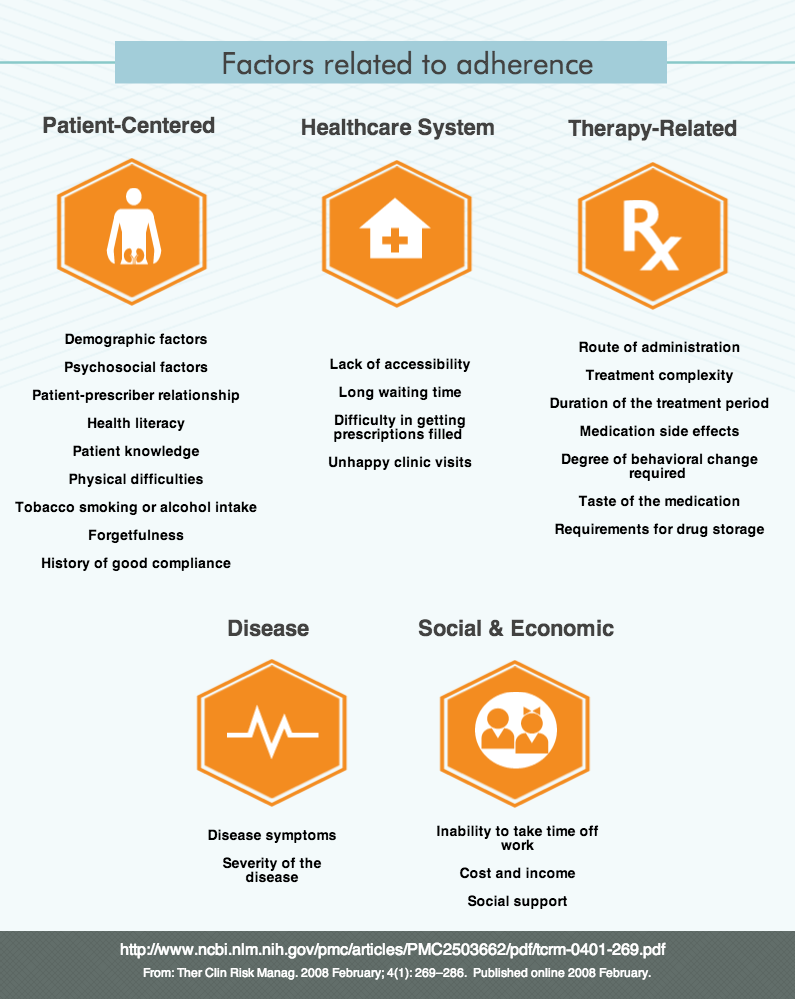
Just as no two patients are identical, the factors that affect adherence vary dramatically from patient to patient, and also importantly what type of treatment plan they are adhering to. Adherence to medication is often affected by medication itself: side-effects, contraindications, timing, and the way it is applied. Adherence to a physical rehabilitation program is affected by the function of the patient, very often by the level of pain they feel, and sometimes by the patients own belief in their abilities. Adherence to diet is affected by so many factors including, access to appropriate food and social pressure. Even with these differences, though there are a number of common factors that affect patient adherence, both negatively and positively.

The 2008 study “Factors affecting therapeutic compliance: A review from the patient’s perspective” provides a comprehensive review of research on the subject, and presents this view of the factors.

AdherenceFactors

More Read

The ACA has put patients at the center of healthcare services. A patient-centric healthcare approach in this digital era means a revised definition of quality in the physician-patient relationship. When it comes to healthcare services, patients shell out a hefty amount from their pocket and want nothing less than the best. The services in healthcare are no longer limited to just cost as consumers now evaluate quality and experience in the same equation. Research highlights from the 2015 Healthcare Consumer Trends by National Research Corporation states that reputation in healthcare matters more to consumers when choosing a brand than any other industry, e.g. hospitality, retail, airline, etc. The new generation of quality measurements in healthcare require a different mind-set and a different 'toolbox' to handle the hurdles. It’s the need of the hour for healthcare providers and others across the healthcare value chain to adopt the patient-centric approach for surviving in the vast competitive ocean of healthcare services. Patient-centric care is an approach that develops through effective communication, empathy and a positive physician-patient relationship. The primary purpose is to improve patient care outcomes and satisfaction and to reduce patient symptoms and unnecessary costs. It’s a win-win situation for both physicians and patients. While healthcare providers are able to support their patients in becoming more compliant with treatment and management of their conditions/diseases, patients feel more satisfied with the care that they are receiving. PwC’s Health Research Institute’s annual report 2016 states that health systems should keep an eye on the consumer experience as they expand and extend. More partnerships and more caregivers could mean confusion for patients and poor customer experiences. To differentiate their practice among competitors, patient satisfaction can be used as a competitive distinguishing factor. Although patient satisfaction cannot really provide tangible benefits, but an experience that exceeds patient expectations for what a practice/hospital can provide is very important as it creates loyal patients who return for future health needs and refer their family and friends. Happy and satisfied patients are a secret marketing weapon for healthcare providers, whether they are physicians, dentists, physiotherapists or hospitals. Your patients are the new-age digital health decision-makers. In this era of Internet and social media, they now have multichannel access to information related to health. Needless to mention, they have gained new power to make their decisions; whether it’s choosing a healthcare provider or referring a physician to family and friends. By converting your satisfied patients to be your brand advocates, you can capitalize and use their voice as an effective marketing strategy to reach out to many other potential patients. To strive and thrive, in the U.S. many healthcare organizations are applying patient-centric approaches to healthcare. It’s all about what matters to patients, so it makes a lot of sense for the healthcare industry to place patients' healthcare experience at the center of their policies and procedures. The best deliverables are a combination of great communication for a positive physician-patient relationship, disciplined measurement and analysis of patient feedback and commitment to technology innovation – the formula for improving patient engagement and care.
The Link Between Patient Satisfaction and Long-Lasting Relationships
How LifeBridge Health Employees Get in Shape for the Summer
Methods for Protein Purification in Biotechnology
Innovating Healthcare System Strategy: Creating the Commercial ACO
Tips for Living with Chronic Obstructive Pulmonary Disease (COPD)

As a provider, there are some areas that you can influence, and some that are data points that might help inform how you approach the patient. You probably can’t impact their socio-economic situation, but you can understand how it might impact their treatment. For example, how big of a factor is cost or transportation in their ability to adhere to a program? Trying to save money often results in patients trying to take fewer pills than prescribed. We spoke with one arthritis researcher who prescribed swimming for her patients, however, for many of them the cost of a gym membership and transportation to the pool was prohibitive.

When putting together a treatment plan for a patient, it’s good to keep all of these factors in mind, working with the patient to come up with a plan in which they are most likely to succeed. Tailoring the plan to the patient lifestyle, rather than the other way around.


TAGGED:adherenceinfographics
Share This Article
Facebook Copy Link Print
Share

Stay Connected

1.5KFollowersLike
4.5KFollowersFollow
2.8KFollowersPin
136KSubscribersSubscribe

Latest News

doctor talking on the phone
How Home System Conditions Shape Daily Health and Long Term Comfort
Health
April 9, 2026
healthcare communication
Independent Practices Should Keep Real People at the Heart of Patient Communication
Global Healthcare
April 8, 2026
rehab for substance abuse
Is 30-Day Inpatient Rehab Enough Time to Recover?
Addiction Recovery
April 8, 2026
men in white coat standing beside woman in white coat
Why Methylene Blue Has Grown in Popularity Across Europe
Mental Health
April 1, 2026

You Might also Like

SpecialtiesWellness

2019 Brings New Science Behind the Skin

March 15, 2019
FitnessWellness

Beyond the Finish: Improve Running Form and Technique

February 28, 2024

Women Caregivers and Savings

April 6, 2011
SpecialtiesWellness

An Honest Look At Supplementing CBD And THC To Maximize Benefits

October 8, 2019
Subscribe
Subscribe to our newsletter to get our newest articles instantly!
Follow US
© 2008-2025 HealthWorks Collective. All Rights Reserved.
  • About
  • Contact
  • Privacy
Welcome Back!

Sign in to your account

Username or Email Address
Password

Lost your password?