

Kognito develops simulation training programs in the areas of health and behavioral health. These programs are available online or through mobile devices and allow the user to role play, talking to intelligent, fully animated, and emotionally responsive avatars that act and respond like real humans.
Kognito develops simulation training programs in the areas of health and behavioral health. These programs are available online or through mobile devices and allow the user to role play, talking to intelligent, fully animated, and emotionally responsive avatars that act and respond like real humans.
More Read

From the Kognito website: “The main goal of our simulations is to promote behavioral change, early intervention, prevention, and treatment adherence.”
These learning simulation programs have been adopted by over 450 state and federal government agencies, universities, NPOs, hospitals, and Fortune 500 companies to train over 1.5 million people in the U.S., Canada, UK, New Zealand, and Australia.
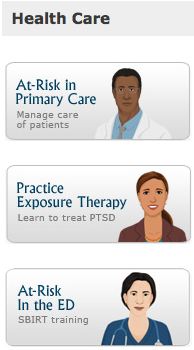
Kognito offers several programs for healthcare:
- At Risk in Primary Care – to assess patients for changes in mental health.
- At Risk in the ED – to assess patients for substance abuse or suicide risk.
- Practice Exposure Therapy – an interactive course for mental health professionals for the treatment of PTSD.
- Congestive Heart Failure for patients and their families – to increase adherence for CHF patients.
- Diabetes Type II – to increase adherence for diabetic patients.
The At Risk in Primary Care program was developed in partnership with the New York City Department of Health and Mental Hygiene (DOHMH). The online training tool is free to all New York City primary care providers (PCPs).
Dr. Adam Karpati, Executive Deputy Dommissioner for Mental Hygiene at the City Health Department comments on the partnership:
“The impact of devastating events like Hurricane Sandy on mental health can be significant and long-lasting. It is critical that primary care providers be able to identify and manage mental health conditions related to this traumatic event, and that is why At Risk in Primary Care will be an important part of our emergency response strategy.”
Kognito also will develop customized programs such as their NYC Emergency Preparedness program they developed to train over 30,000 personnel to manage NYC hurricane shelters and evacuation centers in case of an emergency.
On their website, Kognito explains their technology and why it works. They use a proprietary “award-winning” technology called, “Human Interaction Game Engine™” which they describe as having the following features:
Dynamic Conversation Architecture – Conversation paths continuously adjust based on the user’s decisions and their impact on the avatar’s emotional state. As a result, different users can have different experiences with the same avatar depending on which tactics they choose to apply.
Emotionally Responsive Avatars – Avatars respond verbally and through body language and facial expressions. These characters have their own emotional states and memories, which drive their reactions to users’ decisions during the conversation.
Behavioral Model Conversations are built around a behavioral model which dictates the cause-and-effect relationship between users’ decisions and the avatars’ responses. This ensures that learners are repeatedly exposed to target conversation and behavioral patterns as a way to develop skills.
Behavioral Analysis System infrastructure records and analyzes learners’ tactical decisions throughout the conversation.
Assessment – Integrated online surveys – pre- , post- , and follow-up – are linked to individual users in order to measure changes in perception, knowledge, skill, and behavior of individuals over time.
Take a look at this video trailer of the Kognito At Risk in Primary Care:
You can go to the website and fill in a short form with some information to get a link to the following demos. It’s worth it to do this – they are quite good and will give you an idea of what Kognito has to offer:

To read other posts in this exclusive ongoing series, please visit the Mobile Health Around the Globe main page. And if you have a Mobile Health Around the Globe story to tell, please post a comment below or email me at joan@socialmediatoday.com Thanks!