After attending the 2012 AusMedTech (Australia Medical Technology) national conference in Sydney, I decided to visit China to observe for myself how healthcare is practiced—and changing—in that country.
After attending the 2012 AusMedTech (Australia Medical Technology) national conference in Sydney, I decided to visit China to observe for myself how healthcare is practiced—and changing—in that country.
At first glance, Shanghai looks much like a bustling, Westernized city. As the world’s largest metropolis, it is more than twice the size of London or New York—and is a hugely crowded urban area where 18 million people live vertically in forests of high-rise residences. And these tight living quarters helped provide a glimpse of how China’s residents are managing their healthcare, with a mix of traditional and “Western” medical methods.
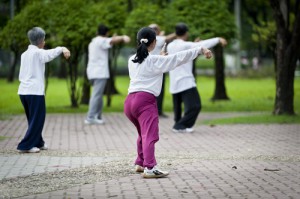
 Parks are a large part of Chinese urban life. They are manicured and well used. At Fuxing Park, in Shanghai’s French Concession section, I found the grounds—at mid-morning—filled with locals, practicing in a number of routine wellness activities: Tai Chi, badminton and karaoke. Each activity was practiced as a group, with participants orchestrating their movements. Karaoke may not strike one as a wellness activity, but the breathing, singing and positive thinking (it was conducted under a large banner that said “Happy Everyday”) are all possible elements of achieving wellness.
More Read

 China’s health services merge Western, “scientific” medicine with traditional Eastern healing methods; the government runs most hospitals and medical research facilities, while trying to integrate and train medical doctors on both types of medicine. The efforts do appear to result in a more holistic outlook on healthcare; focusing on wellness, community influence on disease management and healthcare delivery, and being connected to a social group. I saw some of these techniques merging in Fuxing Park. Karaoke and Tai Chi were practiced next to stands where individuals could get their blood pressure taken, for example. I also noticed that many people getting their blood pressure monitored were quite heavy, part of a growing problem in China where obesity, heart disease, and other so-called “industrial” diseases are increasing.
 While in the Western world, there is much talk (including at Popper and Company) about the promise of the consumer power arising from mobile devices and access to information and healthcare providers, consumer power in China comes from the power of the community and people’s ability to take wellness activities into their own hands. It struck me that this is a unique consumer power: to reach a state of mind, a state of social connectedness, to create a state of wellness.
Could this kind of collective consumerism or community-consumer system work in the United States or Europe alongside the emerging individual consumer? Could the power of the collective provide valuable approaches to widespread healthcare problems, like heart disease or diabetes? I’d love to hear your thoughts.