There has always been so much information to digest at RSNA that it becomes difficult to pick out some of the key learnings and trends we experience every year. With the “Power of Partnership” theme for 2013, we saw a convergence of radiological practices, and most importantly, a drive for radiologists to partner with the most important people in their jobs–the patients.
There has always been so much information to digest at RSNA that it becomes difficult to pick out some of the key learnings and trends we experience every year. With the “Power of Partnership” theme for 2013, we saw a convergence of radiological practices, and most importantly, a drive for radiologists to partner with the most important people in their jobs–the patients. The remainder of this post will highlight the key ideas and technology trends that were prominent at RSNA 2013, and are sure to guide the medical imaging world throughout 2014.
1) More face-time with patients: While scanning Twitter throughout the week, the most common quotes that were being reposted by attendees were those that implored radiologists to get in front of their patients and spend more time with them. The healthcare industry is moving to a quality over quantity model. By taking the time to meet, speak with, and learn about their patients, radiologists are able to provide that better quality care.
2) Patient access: Patients are asking for access to their own medical images more often these days–either for record keeping, reference, or to provide to a referring physician. We learned patients want access to their images via a patient portal earlier in 2013 with a study we commissioned with IDR Medical. Patients want more control over their own healthcare these days. To seize control, patients must be educated, and providing them with medical images and reports in one way to improve patient learning. Tied back to the “more face-time with patients” trend, radiologists should also be spending time going over the images and reports with their patients. That way the patient not only has the access but the understanding to accompany it.
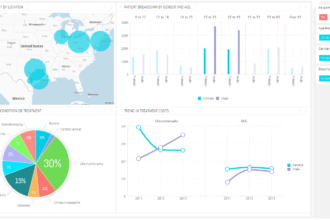
3) Multidisciplinary teams: This is a trend we heard called out on the first day of RSNA from RSNA President Dr. Sarah S. Donaldson. By creating multidisciplinary teams and having radiologists serve as members of these teams, health facilities are able to improv e collaboration and cooperation between departments instead of isolation. By effectively coming out of the dark, radiologists are able to ensure their spot a key department for hospitals through demonstrating the importance of diagnostics in medical imaging.
4) Tomosynthesis: The benefits of tomosynthesis are becoming all too clear. 3D imaging is leading to increased detection rates, decreased recall rates, and the ability to deliver a more complete image while exposing the patient to a lower radiation exposure. RSNA has had several sessions focused around the results of tomosynthesis studies. There still more studies to be done, particularly around implementation strategies, but tomosynthesis continuously shows its benefits in the medical imaging environment.
5) Dose: While a hot topic for a few years now, dose continues to be involved in many discussions. X-ray provides a lower dose in the medical imaging world, so many conversation related to dose revolve around CT and working to make sure CT imaging remains safe while not compromising image quality for effective diagnoses. Yesterday, a session about the unpredictability of CT dose given by Dr. Douglas G. Larson focused on how the dose of a CT scan can be almost two times higher for a patient receiving an identical repeated CT in identical conditions. Because of this, Dr. Larson encourages the finding of the things that can manipulate about the scan and the patient, and the intrinsic features of dose variability. While CT releases the highest dose, the ability to examine the controllable variables and use those appropriate to provide the patient with the safest dose is a practice that can be used throughout the medical imaging industry.
RSNA has always been the event that sets to tone for the next 12 months in the medical imaging industry. The research, education, technological advances all under one roof results in an inspiring and motivational path forward. These five trends listed above are surely not the only ones of focus or of importance. Just our observations. The next few weeks will certainly be providing plenty of observations and analyses on trends, insights, and projections. It will be fun to sift through all of the information as we all work to continue evolving.