The following selection is from the blog “Occupy Healthcare”
The following selection is from the blog “Occupy Healthcare”

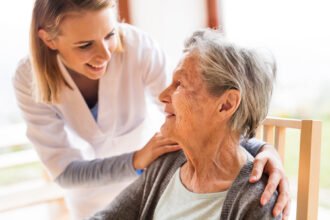
Do you remember when people had a family doctor that made house calls. I am one of the few physicians who can remember those days. Todays graduates in most locales would not think of this as a way to practice medicine. Perhaps in some rural areas (if there are any primary care physicians in those areas.)
When was the last time you heard of a medical home visit? Have you ever been seen in your home? What has changed in healthcare that we must go to a building in order to receive services? Why are services not coming to us? When did healthcare become removed from the community?
“20% of Americans or approximately 60 million people live in rural America. Those who live in rural communities are older, poorer and have more chronic diseases than the typical city dweller. The problem: few doctors choose to practice in rural America. And the doctors who are out there are getting older themselves and are close to retirement.”
Healthcare reform paid a significant amount of attention to expanding coverage for individuals who previously had no health coverage. In some rural areas, being able to have access to insurance means that you are now more likely to be seen than before. But what happens when there is no one there to see you? What happens where there is no workforce to address your healthcare needs? While the same can be said for urban areas too, the need is more apparent in our rural communities.”

Commentary:
Gary Levin M.D.
Are social media and telemedicine the first retro step in a journey to house calls? I believe we are just at the beginnings of the applications of remote monitoring and telehealth. The perfect storm and convergence of smartphones, tablet computers, internet, cell phone technology and an exploding interest in Health 2.0 and 2012 has earned the year of mobile applications in healthcare.
Today computer technology allows for EKGs, Ultrasound examinations, Blood testing, and video transmission of images. ‘Scopes” can be attached to video to be transmitted via inexpensive tele conferencing applications. The technology is now here, and only political and regulatory reform are necessary for the technology to become widespread. All of the above can be performed in a home environment, removing the inadequacies of home examinations and treatments.

While the concept today seems archaic to most current trainees there still remain physicians who remember the day when the diagnosis was made during the history taking, confirmed by physical examination, and laboratory data as the last resort.
Today young physicians seem to rush through the history and physical and resort to imaging as the first resort of an evaluation, be it abdominal pain, headache, or trauma. I am not implying these relatively advanced technologies should be abandoned, rather selectively applied. The medic-legal environment also sways our judgment in ordering these tests as they have become a ‘standard of care’ in most communities.