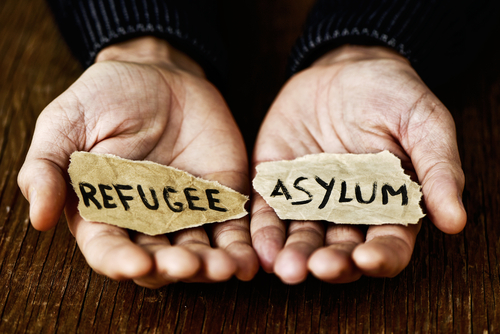
Asylum seekers are individuals that are either currently living in a sanctuary country or are at the border hoping to gain entry to the sanctuary country and are applying to be legally allowed to stay in the sanctuary country. In applying for asylum–these individuals must prove that they are refugees and are not able to return back to their home country safely without facing extremely harmful and/or deadly conditions once in their country of origin (American Immigration Council, 2018).
What are some of the benefits of asylum?
- Gaining asylum means gaining the ability to be authorized to work in the sanctuary country (American Immigration Council, 2018).
- Gaining asylum means being able to obtain a social security card.
- Gaining asylum means being able to travel overseas and visit loved ones in other parts of the world and being able to come back and re-enter the sanctuary country.
- Gaining asylum means that one may be eligible for Medicaid or Refugee Medical Assistance programs (American Immigration Council, 2018).
Why is the mental health of this population threatened?
Under the Trump administration, anti-immigration sentiments and policies have made the immigrant community feel on edge about their status in the United States. The United States government has sought to limit who can apply for asylum so less people can gain protections (Goldbaum, 2019). Additionally, the Trump administration has ended several Obama-era protections for non-criminal asylum seekers–causing them to be caught off guard when suddenly they face deportation orders (Goldbaum, 2019). Due to fears of deportation, many of these individuals are not seeking mental health assistance which is contributing to increased rates of mental health issues.
What mental health problems are these individuals facing?
Asylum seekers are often victims of some form of trauma. This trauma can be experienced in their country of origin, on the way to their sanctuary country, or during the adjustment period once re-settling. The most common mental health problems within this population include post-traumatic stress disorder (PTSD), disorders of extreme stress (DESNOS), adjustment disorder, major depressive disorder, generalized anxiety disorder, and panic attacks (Refugee Health Technical Assistance Center, n.d.). Other mental health problems faced by asylum seekers include sleep disorders and somatization. These mental health problems can negatively impact their asylum cases especially since some of these disorders are associated with memory loss and dissociation.
How can we better support asylum seekers in asylum cases?
Seek advice from an immigration psychologist and have that immigration psychologist conduct mental health evaluations for the immigrant client. These mental health evaluations can serve as key proof supporting why this client needs to remain in the country. Immigration psychologist Joseph Giardino, PH.D. is a bilingual immigration psychologist based in New York City who specializes in these types of mental health evaluations. Working with an immigration psychologist improves the chances of an immigration client being granted asylum, and therefore, is a resource worth looking into.