My friend John sent me an excerpt from a book titled “Brothers”, by George Howe Colt. It give a nodding acknowledgment of the role of genes in shaping our personality, and then launches into a lengthy catalogue of anecdotes ostensibly demonstrating the role of birth order in shaping the personality of brothers. Thus, first-born are pampered, showered with love and attention. Result? First-born are self-centered, but also have a higher IQ and are more accomplished. Example: John Quincy Adams, first-born to John and Abigail Adams, became president; his two younger brothers grew up to be dissolute drunks and died penniless. The second or last-born have to compete for attention, and thus become pranksters, comedians, or troublemakers. To wit: Jimmy Carter, president, and his younger brother Billy, a drunken buffoon. Ah, You might think; what about George W, the younger sibling? Accomplished and a joker, in the full sense of the word? Doesn’t quite fit the theory. But I digress.
To be fair, the book’s excerpt cites many more anecdotes and observations, and the argument is a lot more nuanced than the caricature I have painted. But the basic fact remains: the anecdotes and “studies” would be great conversation pieces at a cocktail party, but would not pass muster if submitted to peer- reviewed journals. The psycho-sociological approach to explaining phenomena such as siblings growing up in similar environments and having different personalities reminds me of the early explanations of schizophrenia as a result of parents giving mixed messages to their children, or of male homosexuality as the fault of a strong mother and a submissive father. Real science demolished those theories. We now know that personal traits are controlled to variable degrees by genes. Which begs the question: what about the non-genetic influence? The old debate of nature vs. nurture has long been settled: it is nature and nurture; genes and the environment constantly interact, and the result is who we are.
More Read
Which leads me to the next level of inquiry: how is this interaction accomplished? How do the genes of a neglected child react to such a corrosive environment? How is it that one person is a popular extrovert while her sibling is a shrinking violet?
If our personality was shaped exclusively by our genes you’d expect identical twins to have identical personalities. Yet, they don’t. You’d expect them to have identical immune responses, but they don’t: one may be robust, physically active, never sick; the other sickly, prone to repeated infections. Yet, their genetic makeup is identical. Or to make it biologically a bit more general, if you observe a strain of mice bred to have a genetically identical background you’d find that a litter contains as many personalities as the number of of mice in it. One mouse may be timid and would cower in a dark corner when exposed to the odor of cat urine. His brother would initially hide, but then venture out to fetch the food placed at the center of the platform. One would mount every female in sight, whether she is receptive or not; the other would obsequiosly make tentative approaches, as if asking for permission. If this doesn’t impress you, how about different “personalities” exhibited by genetically identical Drosophila fruit-flies? Some flies stay in their familiar territory; a pioneering few would venture out in search of new food sources. The fact of the matter is that no two animals are identical. Some people think that if they could clone the muscular, tall, handsome and smart father the child would be muscular, tall, handsome and smart. Not so. Dolly the sheep was cloned from a perfectly healthy mother, yet she developed arthritis at an early age. If other, extra-genetic influences are at work here, how does it work?
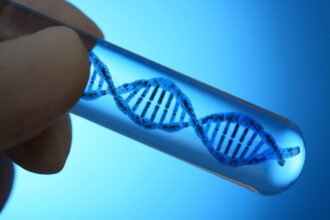
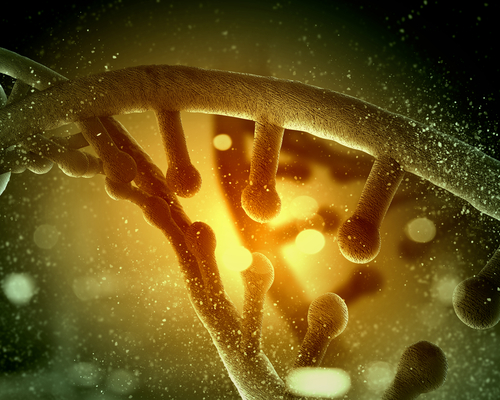
The answer to this dilemma is only now emerging, and it is quite amazing. It turns out that genetics is only half, or a third, or 10% of the story -depending on which trait we are talking about. Once genes are formed there are enzymes that will chemically modify their functions. For instance, a gene that controls the response to dopamine could be attenuated by an enzyme that attaches a methyl group (CH4, for you who skipped chemistry in high school) to a nucleotide in that gene. The consequences of this little act could be profound: an attenuated response to dopamine affects the reward system in the brain. We all crave reward, be it physical, sexual or emotional. This is not a psychological statement: it is profoundly biological and existential. Just imagine if sex did not activate the reward system. The urge to “be fruitful and multiply” would not be there. We would become extinct. Or if food did not give us a sense of well-being, what would drive us to walk many miles a day in search of food? So what happens to the brother whose dopamine response is attenuated? He would seek pleasure (reward) by upping the ante: more drugs, or more alcohol, or more risk-seeking activities.
This field of genetic modulation, called epigenetics, is really at its infancy. We still don’t know how environmental factors influence the methylation of some genes in some individuals and other genes in others. We don’t even know which influences affect which genes. But what is already becoming clear is that whether genetic or environmental, nature or nurture -in the last analysis it translates to chemical reactions in the body, whether genetic (nucleotides) or epigenetic (methylation).
image: genetics/shutterstock
The post What makes us who we are appeared first on The Doctor Weighs In.