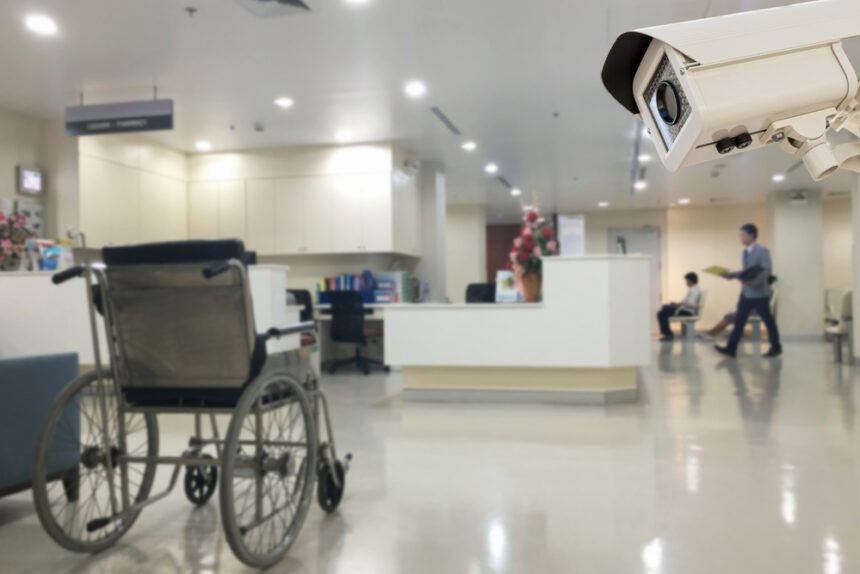
The focus of hospitals is to provide the best possible patient care in a safe and comfortable environment. To deliver exceptional medical care, personnel need to dedicate their time and focus to patients and not be preoccupied by unrelated events around them. To reduce the manpower spent on monitoring hospitals and keeping track of visitors coming and going, security cameras can provide an extra set of eyes for this purpose. Security cameras are a smart tool to keep hospitals protected against crime and security breaches. Here are three benefits of installing security cameras in hospitals.
Increase security and safety
Visitors, patients, and personnel generate a lot of foot traffic and activity in hospitals. Sometimes unauthorized individuals access restricted areas or find a way into store rooms. While security cameras cannot prevent theft, they can certainly limit instances of crime. Hospitals are filled with expensive supplies, tools, and medicines, and heavy foot traffic can make it difficult to stay vigilant against theft. People are deterred from committing crimes if there are security cameras present. Take for example drug diversion, or the moving of drugs from the legal to the black market. Within the first six months of 2018, physicians and nurses were involved in a staggering 71% of the instances of drug diversion. That is a loss of $164 million in drugs. The health care system is aware of the issue, but manually watching authorized personnel with access to drugs is no small task and requires a more foolproof monitoring system like camera surveillance.
Monitor activity
More Read

Hospitals are large and typically busy, which means no single person can be everywhere at the same time. Security cameras keep an eye on entrances and exits, elevators, stairwells, and corridors, keeping track of daily activities and foot traffic among patients, medical staff, and visitors. People tend to be more productive when they’re being watched, and the use of security cameras will motivate employees to improve communication among departments and increase productivity. When it comes to video surveillance and a hospital security camera system, the smarter, the better. Verkada’s hybrid cloud security combines solid state storage with industry-leading cloud software. Security cameras don’t need to be complex to be efficient; Verdaka fashions high-end hardware paired with a user-intuitive software to provide excellent security protection expected by businesses.
Video evidence
Security cameras provide evidence in case an incident or crime are being investigated. False claims of being injured while on hospital property can be a major issue. If a patient decides to leave against doctor’s orders and suffers a setback in health condition or complication, video footage can show that the patient acted freely against medical advice. Sound evidence is also essential for employee disputes as proof of a situation can lead to a quick resolution. Health care costs are steadily rising and are most apparent in hospitalization and emergency room services. False claims, or fraud, are on the rise as a result of the increase in the cost of services, with many claims happening against government healthcare programs. Businesses and individuals have cost the government billions of dollars through schemes like ghost patients, in which providers submit claims for tests, treatments, or health care services on patients who either never existed or never received the services billed for. Another example is services not rendered, in which a medical professional orders tests or treatments for an actual patient that were never performed. Another version of fraud for services not rendered involves billing for time in which a patient was not admitted.