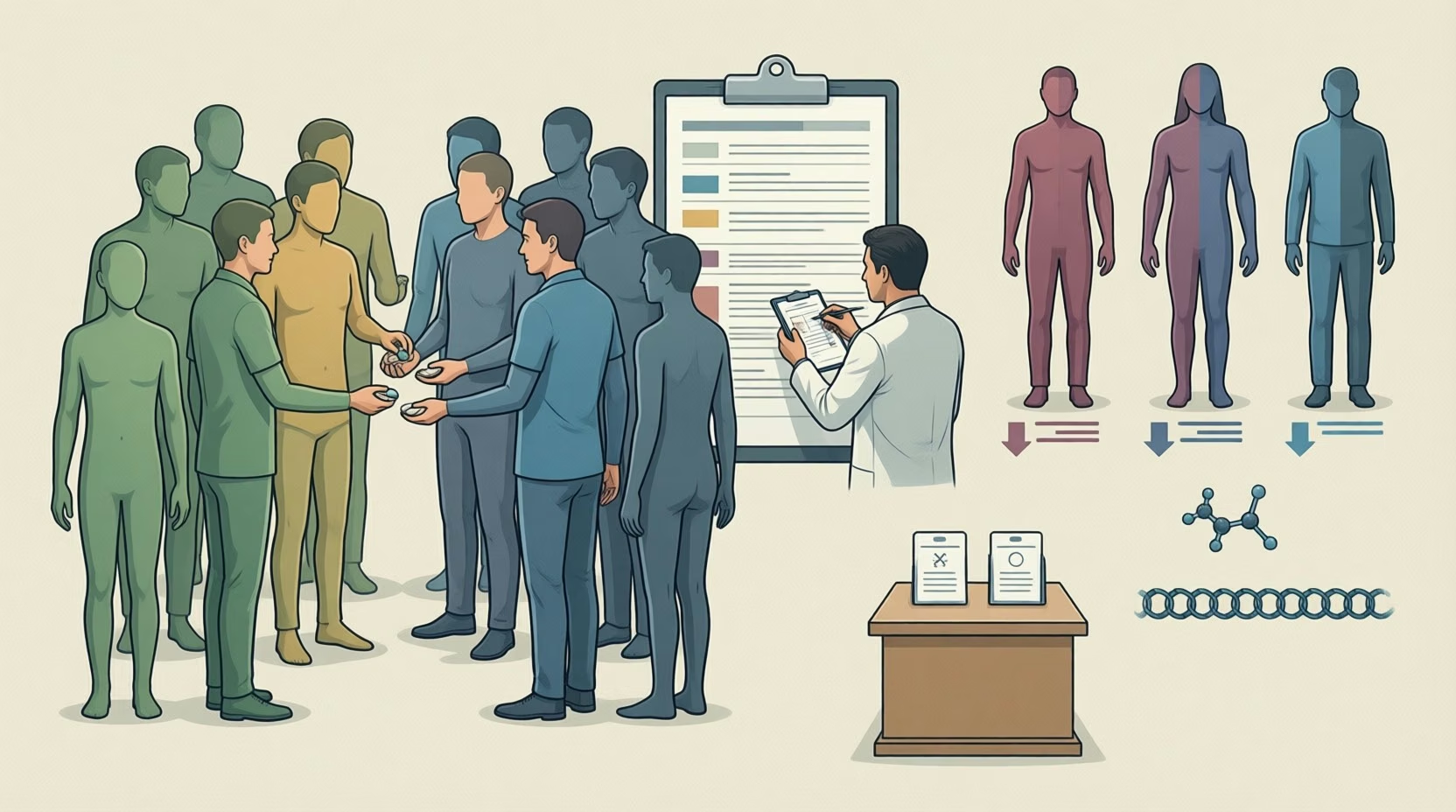
Centers that treat alcohol addiction and co-occurring conditions approach withdrawal as a medical process, not a test of character. The first phase of care often decides whether someone stabilizes or returns to use. That early support includes monitoring withdrawal, treating mental health symptoms, and building a foundation for longer-term recovery.
- What Actually Happens in Your Brain During Addiction
- The Physical Reality of Withdrawal
- Why Medical Supervision at Alcohol Addiction Recovery Centers Changes Everything
- The Missing Piece: Addressing the Whole Person
- The Role of Medication-Assisted Treatment
- Co-Occurring Conditions: The Complexity Factor
- Building Your Recovery Environment
- The Timeline of Brain Healing
- Why Specialized Support Matters
- Measuring What Matters: Evidence-Based Outcomes
- The Continuum of Care Approach
- Your Recovery, Your Timeline
You’ve probably heard someone say it: “If they really wanted to quit, they would just stop.” That belief keeps people stuck in shame and away from treatment. It also misunderstands what is happening in the brain and body during addiction.
Once addiction is understood as a medical condition, the path forward becomes clearer. Recovery requires more than trying harder. Medical support is the smartest, safest first step.
What Actually Happens in Your Brain During Addiction
Your brain rewards behaviors that keep you alive. Eating, social connection, and meaningful accomplishment trigger dopamine, a neurotransmitter that creates pleasure and satisfaction. This reward system helped early humans survive by reinforcing food and social bonds.

Addictive substances hijack this reward system. They flood the brain with dopamine at levels far beyond what natural rewards produce, sometimes up to ten times higher. The brain reads that surge as survival-critical, even more than eating or socializing. Over time, it adapts by producing less dopamine on its own and reducing dopamine receptors.
That adaptation is called tolerance, and it creates a cycle. More of the substance is needed for the same effect. Activities that used to anchor life, a weekly game with friends, a hobby you once lost hours in, even a meal you looked forward to, stop feeling rewarding. The brain has been rewired to prioritize the substance above everything else.
These changes are not simply psychological. They are physical, measurable alterations in brain structure and chemistry. Brain imaging studies show actual differences in the prefrontal cortex and limbic system in people with substance use disorders, areas responsible for decision-making, impulse control, emotion, and memory.
The Physical Reality of Withdrawal
Withdrawal is what happens when an adapted body suddenly loses a substance it has come to expect. The body goes into crisis trying to regain balance.
Withdrawal symptoms are often dangerous. Alcohol and benzodiazepine withdrawal can cause seizures, severe blood pressure spikes, and cardiac complications. Opioid withdrawal is usually less life-threatening, but it can be painful enough that many people return to use just to stop the symptoms.
These symptoms do not reflect weak willpower. They are a physiological response to a sudden chemical imbalance. The nervous system has adapted to the substance, and it needs time, and often medical support, to adjust.
The symptoms vary by substance. Tremors, sweating, and nausea are common early on. Vomiting, severe anxiety, and depression can follow. Insomnia, muscle aches, and intense cravings may persist through acute withdrawal. For some substances, acute withdrawal lasts days to weeks. A longer post-acute phase can follow for months, marked by mood swings, sleep disturbances, and continued cravings.
Why Medical Supervision at Alcohol Addiction Recovery Centers Changes Everything
Medical supervision during early recovery is the safest way through withdrawal. It is not the easy way out. It stabilizes vital signs, treats dangerous symptoms before they escalate, and gives a person the best chance at long-term success.
A supervised team monitors vital signs and manages dangerous symptoms early. Medication can ease withdrawal without replacing one addiction with another. Co-occurring depression or anxiety can be addressed at the same time. Nutritional support matters as well, because many people in active addiction have deficiencies that affect physical and mental health.
For alcohol or benzodiazepine dependence, medical detox and portland detox services provide 24/7 medical monitoring to prevent life-threatening complications during withdrawal. This level of care is about safety and the foundation for lasting recovery.
Medical supervision also provides dignity. When withdrawal happens in a supportive environment, the physical symptoms do not consume every hour. That leaves mental and emotional energy to begin processing what recovery means, building coping skills, and connecting with others who understand.
The Missing Piece: Addressing the Whole Person
Getting through withdrawal is only the start. Detox alone, without follow-up treatment and support, has a success rate around 8%. The low number has little to do with willpower. Addiction involves far more than physical dependence.
Consider what led to substance use in the first place. Substances often started as a coping tool for trauma, chronic stress, or an untreated mental health condition. Chronic pain and overwhelming life circumstances drove others. The substance solved a problem, even when it later created bigger ones.
Removing the substance without addressing those underlying issues leaves a person facing original problems plus new challenges in early recovery. No new coping skills exist yet, so returning to use becomes predictable. It is not a character flaw.
Effective recovery programs address the whole person. One session may map the connection between a stressful event, a craving, and a behavior. Another may build a plan for managing those moments without using. Over time, the work stretches into rebuilding relationships, establishing routines, and rediscovering purpose beyond substance use.
The Role of Medication-Assisted Treatment
Understanding addiction as a medical condition also changes how people view medication-assisted treatment (MAT). Some worry that buprenorphine, naltrexone, or methadone simply replaces one drug with another. That misunderstanding has blocked many people from treatment that could save their lives.
MAT medications work differently from the substances a person is recovering from. The doses stay stable, and the medications do not produce euphoria when taken as directed. They help normalize brain chemistry that addiction has altered, which frees a patient to focus on the psychological and behavioral work of recovery.
Research consistently shows that MAT improves treatment retention and reduces illicit drug use. It also cuts overdose deaths. Methadone and buprenorphine reduced the risk of fatal opioid overdose by about 50% or more, according to a National Institute on Drug Abuse research report. People on MAT also stay more engaged in work, school, and family life.
In practice, MAT stabilizes ordinary daily life. A person taking buprenorphine can often sleep through the night, get to a counseling appointment, and return to work or family responsibilities without being pulled back by withdrawal. That stability is what allows the slower work of recovery to continue.
Co-Occurring Conditions: The Complexity Factor
About half of people with substance use disorders also have a co-occurring mental health condition such as depression, anxiety, PTSD, or bipolar disorder. Sometimes mental health came first and substance use began as self-medication. Other times chronic substance use triggered or worsened mental health symptoms.
Treating one condition without addressing the other rarely works. Untreated depression can make every day feel unbearable, which raises the risk of returning to substance use to cope. Conversely, ongoing substance use can interfere with psychiatric medication and therapy.
Integrated treatment that addresses both conditions at the same time is critical. That means providers who understand the relationship between substance use and mental health. They can safely prescribe psychiatric medications alongside addiction treatment and help develop coping strategies that work for both.
Building Your Recovery Environment
Your environment has a major effect on recovery. Physical surroundings matter: where you live, who you live with, and whether you face regular triggers. Social surroundings matter too: the people you spend time with, the activities you join, and the support systems you can access.
Early recovery often requires changing that environment. Distance from people who are still using may be necessary, even from longtime friends or family. Certain places and situations that trigger cravings may need to be off-limits. New hobbies and activities can fill the space substances used to occupy.
These changes can feel overwhelming and lonely at first. Structured support helps. Intensive outpatient programs, support groups, sober living environments, and recovery community organizations connect you with people who understand what you are going through.
You are not simply avoiding substances. You are building a new life. That requires support, guidance, and community, plus people who believe in your ability to recover and can offer practical help when you struggle.
The Timeline of Brain Healing
Your brain has a strong capacity to heal. Changes from active addiction are not permanent. With sustained recovery, the brain can restore dopamine production, rebuild receptor sites, and strengthen neural pathways for healthy decision-making and emotional regulation.
Healing takes time. Acute withdrawal symptoms typically resolve within days to weeks, but the brain continues healing for months or years. During that period, post-acute withdrawal syndrome (PAWS) can bring mood swings, sleep disturbances, anxiety, and cravings that come and go unpredictably.
Understanding this timeline helps you keep expectations realistic. Challenging days months into recovery do not mean you are doing something wrong. Your brain is still healing, still rewiring, and still learning to find joy and motivation without substances. Each day in recovery strengthens those new pathways.
Why Specialized Support Matters
Recovery does not look the same for everyone. Veterans may need providers who understand military culture and service-related trauma. LGBTQ+ people often do better in environments where they can be fully themselves without fear of discrimination. Healthcare professionals, lawyers, and others in high-stress careers may need programs that understand those pressures.
People with chronic pain need providers who can address pain management and addiction recovery at the same time. Those with trauma histories need trauma-informed care that does not retraumatize them. Pregnant individuals need medical care that protects both their health and their baby’s development.
When support matches your situation, you are more likely to feel understood, engage fully in treatment, and build recovery strategies that actually work for your life.
Measuring What Matters: Evidence-Based Outcomes
In an ideal system, every recovery program would track outcomes and share that data. You would see completion rates and long-term success rates: how many people remain in recovery at six months, one year, and five years after treatment.
Many programs do not collect that data systematically. When choosing support, look for programs that use evidence-based practices, approaches that have been studied and shown to improve outcomes. Ask about success rates, how success is measured, and how support continues after initial treatment ends.
Programs that track outcomes and adjust based on data are more likely to provide effective care. They are also showing accountability and a willingness to improve rather than repeating the same approach year after year.
The Continuum of Care Approach
Recovery is not a single event. It is a process with different needs at different stages. The continuum of care model provides different levels of support as you progress.
It may start with medical detox for safe withdrawal. Residential or partial hospitalization programs can follow for intensive treatment. As stability builds, care steps down to intensive outpatient or standard outpatient services, then continues with aftercare and alumni support.
This approach gives the most intensive support when it is needed most and gradually reduces intensity as skills and stability develop. You are not dropped after initial treatment. You remain supported throughout the process, with the option to return to more intensive care if needed.
Your Recovery, Your Timeline
There is no universal timeline for recovery. Some people find stability quickly. Others need more time and support. That is not a reflection of how much you want recovery or how hard you are trying. It reflects the complexity of your situation, the substances involved, co-occurring conditions, your support system, and many other factors.
Comparing yourself to others only creates shame and stress. Focus on your own path. Celebrate your own progress. Be patient while your brain and body heal.
Recovery from alcohol addiction is possible when it is treated as a chronic medical condition rather than a test of character. That means medical supervision, mental health care, a recovery-supportive environment, and time. Addiction recovery works best when it follows the same seriousness and care as any other long-term health condition.
You do not have to do this through willpower alone. Trying to do it that way often keeps people stuck in relapse and shame. The best chance at lasting success comes from the same medical support you would expect for any other chronic condition.