When someone you care about is struggling with substance use, you’re facing one of the most challenging experiences a family can endure. You’ve probably spent countless nights worrying, researching, and wondering what you can do to help. The good news is that your support can make a meaningful difference in their recovery journey – but only if you understand how to offer that support effectively.
- Educating Yourself: The Foundation of Effective Support
- Communication Strategies That Actually Work
- Recognizing When Professional Treatment Is Necessary
- Supporting Treatment: What to Do When They’re Getting Help
- Creating a Recovery-Supportive Home Environment
- Taking Care of Yourself: You Can’t Pour from an Empty Cup
- Parallel Process Healing: Dual-Track Family Recovery Workflow
- Understanding Relapse: It’s Not Failure, It’s Part of the Process
- Celebrating Progress and Maintaining Hope
- Component Comparison Summary
- Moving Forward Together
- FAQ
Family support in recovery works best as a dual-track effort: loved ones engage treatment while families track their own metrics like sleep, support group attendance, and boundary consistency. This applies to families of individuals with substance use disorder across all care levels. The core trade-off is staying supportive without enabling, since negative family dynamics such as conflict or pressure to use are linked to increased relapse risk.
Recovery isn’t a solo journey. While the person facing substance use challenges must do the work themselves, the presence of a supportive, informed family can significantly improve outcomes. Studies consistently show that individuals with strong family support systems have higher rates of sustained recovery and lower rates of relapse. But here’s the critical part: not all support is created equal. Well-intentioned actions can sometimes enable harmful behaviors or create additional stress that undermines recovery efforts.
This guide will walk you through practical, evidence-based strategies for supporting your loved one while also protecting your own well-being. Whether they’re just beginning to acknowledge their challenges or they’re already engaged in treatment, you have an important role to play.
Educating Yourself: The Foundation of Effective Support
Learning about substance use disorder can help you respond to what your loved one is facing. Substance use disorder is a complex medical condition that affects the brain’s reward, motivation, and memory systems. It’s not a moral failing, a lack of willpower, or a character flaw. When you grasp this fundamental truth, you can approach your loved one with compassion and patience.
Take time to learn about the specific substances your loved one has been using. Each substance affects the brain differently and comes with its own set of risks, withdrawal symptoms, and treatment considerations. For example, withdrawal from alcohol or benzodiazepines can be medically dangerous and requires professional supervision, while withdrawal from opioids, though intensely uncomfortable, is rarely life-threatening.
Understanding co-occurring mental health conditions is equally important. Many people struggling with substance use are also managing anxiety, depression, PTSD, or other mental health challenges. These conditions often fuel each other in a difficult cycle – someone might use substances to cope with anxiety, but the substance use then worsens their mental health over time. Effective treatment addresses both issues simultaneously, which is why comprehensive programs that treat the whole person tend to produce better outcomes.
In Ohio, where the opioid crisis has hit particularly hard, families have access to numerous resources for education and support. Local health departments, community mental health centers, and family support groups can provide valuable information specific to your situation. Don’t hesitate to reach out to these resources – they exist precisely because so many families are walking this same difficult path.
Communication Strategies That Actually Work
How you talk to your loved one about their substance use can either open doors or slam them shut. You’ve probably already discovered that lectures, threats, and ultimatums rarely produce lasting change. Instead, try these evidence-based communication approaches.

First, choose your timing carefully. Never attempt a serious conversation when your loved one is under the influence or when either of you is highly emotional. Wait for a calm moment when you’re both relatively clear-headed and can speak without interruption.
Describe your feelings using “I” statements. Instead of saying “You’re destroying this family with your drinking,” try “I feel scared and helpless when I see you struggling, and I want to help you find support.” This approach expresses your genuine feelings without triggering defensiveness.
Listen more than you speak. When your loved one does open up, resist the urge to immediately offer solutions or criticism. Sometimes people need to be heard and validated before they can consider making changes. Reflect back what you’re hearing: “It sounds like you’ve been using to cope with stress at work. That must feel overwhelming.”
Ask open-ended questions that give your loved one room to reflect. “What would your life look like if you weren’t struggling with this?” or “What concerns you most about getting help?” These questions invite deeper conversation and help your loved one articulate their own motivations for change.
Avoid enabling while remaining supportive. This is perhaps the most difficult balance to strike. You want to help, but certain types of help actually make it easier for the person to continue their harmful patterns. Don’t make excuses for them, don’t bail them out of consequences, and don’t provide money that might be used for substances. Instead, offer support for positive steps toward recovery.
This is where motivational interviewing becomes a valuable tool for those in recovery and those who want to support them.
Jason Klimkowski in 7 Ways Motivational Interviewing for Families Can Support Loved …Recognizing When Professional Treatment Is Necessary
Your love and support are invaluable, but they’re not always enough. Many people struggling with substance use need professional treatment to achieve lasting recovery. Knowing when to encourage professional help – and what types of help are available – is crucial.
Watch for signs that the situation is escalating beyond what family support alone can address. These include failed attempts to cut back or quit independently, withdrawal symptoms when not using, continued use despite serious consequences (job loss, legal problems, health issues), or the presence of co-occurring mental health crises like suicidal thoughts or severe depression.
Treatment exists on a continuum, and the appropriate level depends on the severity of the situation and individual needs. For someone with severe substance use disorder, particularly those who’ve tried outpatient treatment without success or who have significant medical or mental health complications, residential treatment provides the most intensive level of care. In these structured environments, individuals receive 24/7 medical supervision, intensive therapy, and a complete break from the triggers and stressors of daily life. For families in Ohio seeking comprehensive care, arrow passage recovery offers residential programs designed to address both substance use and underlying mental health conditions in a supportive setting.
Partial hospitalization programs (PHP) offer a step down from residential care, providing intensive treatment during the day while allowing individuals to return home in the evenings. This can be an excellent option for those who need significant structure but have a stable, supportive home environment.
Intensive outpatient programs (IOP) typically involve several hours of treatment multiple days per week, while standard outpatient care might consist of weekly therapy sessions. These options work well for people with less severe substance use issues or as step-down care after completing a more intensive program.
The key is matching the level of care to the individual’s needs. A good treatment provider will conduct a thorough assessment and recommend the appropriate starting point, with the understanding that this may change over time as the person progresses in their recovery.
Supporting Treatment: What to Do When They’re Getting Help
Once your loved one enters treatment, your role shifts but remains important. Here’s how you can provide meaningful support during this critical phase.
Participate in family programming if it’s offered. Many quality treatment programs include family therapy sessions, educational workshops, or multi-family groups. These opportunities serve multiple purposes: you learn more about addiction and recovery, you work on healing family dynamics that may have been damaged, and you demonstrate your commitment to supporting your loved one’s recovery.
Maintain appropriate boundaries. While you want to be supportive, it’s important not to become so enmeshed in your loved one’s treatment that you neglect your own life and well-being. Trust the treatment professionals to do their jobs. You don’t need to check in constantly or try to manage every aspect of their recovery process.
Prepare for their return home if they’re in residential treatment. Work with their treatment team to understand what kind of environment will best support their continued recovery. This might mean removing alcohol from the home, identifying and addressing potential triggers, or making plans for ongoing outpatient care and support group attendance.
Manage your expectations. Treatment is not a magic cure, and recovery is rarely a straight line. There may be setbacks along the way. Understanding this from the beginning helps you respond with compassion when challenges arise.
Creating a Recovery-Supportive Home Environment
The environment your loved one returns to after treatment significantly impacts their ability to maintain recovery. You can take concrete steps to make your home a stable place that supports their progress.
Remove substances and paraphernalia from the home. This might seem obvious, but it’s worth stating clearly: if someone is recovering from alcohol use disorder, alcohol shouldn’t be in the house. If they’ve struggled with prescription medication misuse, all medications should be secured and monitored. This isn’t about mistrust – it’s about removing unnecessary temptation during a vulnerable time.
Establish new routines and rituals. Many people used substances as part of their daily routines – a drink after work, using before social events, or substances as a way to unwind in the evening. Help create new, healthy routines to fill those times. Maybe it’s taking a walk together after dinner, attending a support group meeting, or engaging in a hobby that provides stress relief without substances.
Identify and plan for high-risk situations. Work with your loved one to recognize situations that might trigger cravings or make recovery more difficult. This might include certain social settings, specific people, or high-stress events. Develop concrete plans for how to handle these situations – whether that means avoiding them entirely in early recovery, bringing a supportive person along, or having an exit strategy if things become too difficult.
Encourage healthy lifestyle habits. Recovery involves healing the whole person, not just stopping substance use. Support your loved one in establishing good sleep habits, eating nutritious meals, exercising regularly, and engaging in activities that bring joy and meaning. These foundational health behaviors strengthen both physical and mental well-being, making sustained recovery more achievable.
Build a broader support network. Your loved one needs more than just family support. Encourage participation in mutual support groups like SMART Recovery, Celebrate Recovery, or other community-based recovery programs. These groups provide connection with others who understand the recovery journey firsthand and offer accountability and encouragement.
Taking Care of Yourself: You Can’t Pour from an Empty Cup
Here’s a truth that many family members resist: you cannot support your loved one effectively if you’re running on empty yourself. The stress of watching someone you care about struggle with substance use takes a tremendous toll on your own mental, emotional, and physical health. Prioritizing your own well-being isn’t selfish – it’s essential.
Consider joining a support group for families. Organizations like Al-Anon, Nar-Anon, and Families Anonymous provide safe spaces where you can share your experiences with others who truly understand what you’re going through. These groups offer practical strategies, emotional support, and the reminder that you’re not alone in this struggle.
Seek individual therapy if you need it. Many family members develop their own anxiety, depression, or trauma symptoms as a result of their loved one’s substance use. A therapist can help you process these experiences, develop healthy coping strategies, and work through complicated emotions like guilt, anger, or grief.
Maintain your own interests and relationships. It’s easy to become so consumed by your loved one’s challenges that you let your own life fall by the wayside. Continue pursuing hobbies you enjoy, spending time with friends, and engaging in activities that bring you fulfillment. This isn’t abandoning your loved one – it’s maintaining your own identity and well-being.
Set and enforce boundaries. Boundaries aren’t about controlling the other person; they’re about protecting yourself and defining what you will and won’t accept. You might set a boundary that you won’t give money directly to your loved one, or that you won’t tolerate verbal abuse, or that you need certain times or spaces to yourself. Communicate these boundaries clearly and follow through with appropriate consequences when they’re violated.
Practice self-compassion. You’re doing the best you can in an incredibly difficult situation. You’ll make mistakes. You’ll have moments of doubt. You might say the wrong thing or react in ways you later regret. That’s part of being human. Treat yourself with the same compassion you’re trying to extend to your loved one.
Parallel Process Healing: Dual-Track Family Recovery Workflow
Families do better when they treat their own healing as a separate track with its own measures, not just as helpers to the person in treatment. Research shows families are significantly impacted by addictions and family involvement in treatment can reduce the harms and can also improve treatment entry, treatment completion and treatment outcomes for the individual coping with an addiction Family-focused practices in addictions: a scoping review protocol, but that benefit holds only when families also manage their own stress. A recovery journey brings setbacks, emotional triggers, and periods of vulnerability, and family involvement creates a network of support that helps individuals navigate these challenges with less isolation and greater resilience How Family Support Strengthens Addiction Recovery.
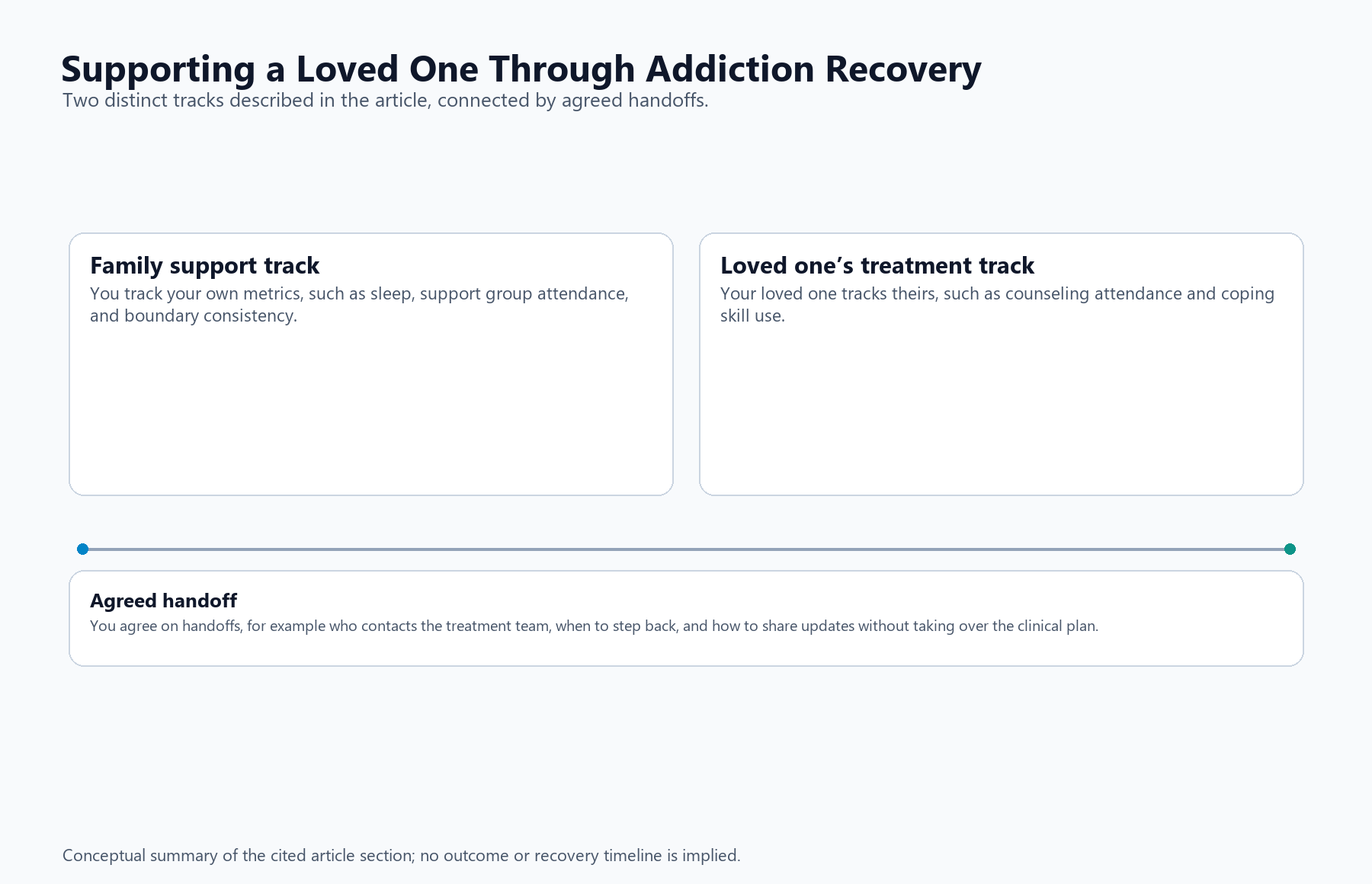
Without their own support system, family members risk burnout or secondary trauma, and families benefit from learning about addiction, what it is, how it works, and why relapse happens, which helps them respond with understanding and patience The Role of Family in Addiction Recovery. In practice, that means you track your own metrics, such as sleep, support group attendance, and boundary consistency, while your loved one tracks theirs, such as counseling attendance and coping skill use. You agree on handoffs, for example who contacts the treatment team, when to step back, and how to share updates without taking over the clinical plan.
Understanding Relapse: It’s Not Failure, It’s Part of the Process
Despite your best efforts and your loved one’s commitment to recovery, relapse is a common part of the journey. Research suggests that 40-60% of people in recovery from substance use disorder experience at least one relapse. Knowing that setbacks can happen helps you plan your response.
First, recognize that relapse doesn’t mean treatment failed or that your loved one doesn’t want recovery. Substance use disorder creates lasting changes in the brain that make recovery challenging. Relapse is often a sign that the treatment plan needs adjustment or that additional support is needed – not that recovery is impossible.
If relapse occurs, express concern and offer help. Your loved one likely already feels ashamed and discouraged. Harsh judgment will only drive them further away and make it less likely they’ll seek help again. Instead, express your care and encourage them to re-engage with treatment as quickly as possible.
Help identify what led to the relapse. Was it a specific trigger? Did they stop attending support groups or taking prescribed medications? Were there early warning signs that were missed? Understanding the factors that contributed to the relapse helps prevent future occurrences.
Encourage immediate action. The longer someone continues using after a relapse, the harder it becomes to stop again. Encourage your loved one to reach out to their therapist, attend a support group meeting, or contact their treatment provider right away. Quick intervention can prevent a brief slip from becoming a full-blown return to active addiction.
Reevaluate the treatment plan. If someone has relapsed multiple times with the same approach, it may be time to consider a different level of care or treatment modality. What worked for one person might not work for another, and finding the right fit sometimes requires trial and adjustment.
Celebrating Progress and Maintaining Hope
Recovery is hard work, and it’s important to acknowledge and celebrate progress along the way. This doesn’t mean throwing a party every time your loved one attends a therapy session, but it does mean recognizing genuine milestones and positive changes.
Notice and verbally acknowledge improvements. If your loved one is showing up to work consistently, rebuilding relationships, or engaging in healthy activities, let them know you see and appreciate these changes. Positive reinforcement strengthens recovery-oriented behaviors.
Mark meaningful milestones. Sobriety anniversaries, completing a treatment program, or achieving personal goals related to recovery are worth celebrating. Ask your loved one how they’d like to mark these occasions – some people appreciate low-key acknowledgment, while others might want to celebrate more publicly.
Focus on who they’re becoming, not just what they’re not doing. Recovery isn’t just about abstaining from substances; it’s about building a meaningful, fulfilling life. Notice when your loved one demonstrates new coping skills, pursues interests, or shows personal growth. These changes represent the deeper transformation that sustainable recovery requires.
Maintain realistic hope. Hope is essential for both you and your loved one, but it should be grounded in reality. Recovery is possible – millions of people live fulfilling lives in long-term recovery from substance use disorder. But it’s a journey that requires ongoing commitment, and there will likely be challenges along the way. Hold onto hope while also accepting that recovery unfolds differently for everyone.
Component Comparison Summary
This guide covers distinct components of family support in recovery. The table below summarizes each component, its focus, and the concrete family action tied to it, with no new claims beyond the sections above.
| Component | Focus | Family Action |
|---|---|---|
| Education | Understand SUD as medical condition | Learn substance effects, withdrawal risks, co-occurring conditions |
| Communication | Keep dialogue open | Use I-statements, listen, ask open-ended questions, avoid enabling |
| Treatment Support | Match care to need | Recognize escalation signs, explore PHP/IOP/residential, join family programming |
| Home Environment | Reduce triggers | Remove substances, build new routines, plan for high-risk situations |
| Self-Care | Sustain your capacity | Join Al-Anon/Nar-Anon, seek therapy, keep boundaries and interests |
| Relapse Response | Respond with concern | Identify triggers, encourage quick re-engagement, reevaluate plan |
| Progress and Hope | Reinforce growth | Acknowledge improvements, mark milestones, focus on who they are becoming |
Moving Forward Together
Supporting a loved one through recovery from substance use disorder is one of the most difficult challenges you’ll face. It requires patience, education, boundary-setting, self-care, and an enormous amount of compassion – both for your loved one and for yourself.
Remember that recovery is possible. People rebuild their lives, restore relationships, and find meaning and joy after struggling with substance use. Your support can be a crucial factor in your loved one’s success, but ultimately, their recovery is their responsibility. You can offer love, encouragement, and appropriate help, but you cannot do the work for them.
Stay connected to resources and support in your community. Whether that’s family support groups, educational workshops, or professional guidance, you don’t have to navigate this alone. In Ohio and beyond, communities are increasingly recognizing the importance of supporting individuals in recovery and their families.
Take it one day at a time. This phrase is common in recovery circles for good reason – it works. You don’t have to solve everything today or predict what will happen next year. Focus on what you can do right now to support your loved one while also caring for yourself.
Your willingness to educate yourself, seek support, and show up for your loved one with compassion despite the difficulties speaks volumes about your character and your love. That commitment matters, even when the path forward feels uncertain. Keep going, keep learning, and keep hoping. Recovery is possible, and you’re playing an important role in making it achievable for someone you love.
FAQ
Why is family support important in addiction recovery?
Family support is important because families are significantly impacted by addictions and family involvement can reduce harms and improve treatment entry, treatment completion and treatment outcomes Family-focused practices in addictions: a scoping review protocol. Supportive family contact also lowers isolation during setbacks and triggers, while negative support such as conflict or pressure to use is linked to increased risk for relapse SAMHSA Advisory.
What is a recovery journey?
A recovery journey is not just about the person working to overcome substance use disorder, it is a family journey that requires everyone involved to learn, adapt, and grow Understanding Your Role in Your Loved One’s Recovery Journey. It includes setbacks, emotional triggers, and periods of vulnerability, and family involvement creates a network that helps individuals navigate these challenges with less isolation and greater resilience How Family Support Strengthens Addiction Recovery.
How can family support help someone in addiction recovery?
Families help by learning about addiction, how it works and why relapse happens, using I-statements and open-ended questions, avoiding enabling while supporting positive steps, participating in family programming when offered, and maintaining their own support to prevent burnout or secondary trauma The Role of Family in Addiction Recovery. This steady, informed presence keeps communication open and makes it easier for a loved one to stay engaged in care.