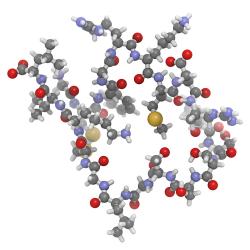
 Anticipating the onward march of aging Americans who will suffer from Alzheimer’s disease, Siemens’ PETNET Solutions has increased patient access to Eli Lilly and Company’s Amyvid biomarker (Florbetapir F 18 injection) by expanding manufacturing and distribution to a total of 20 metropolitan areas nationwide.
Anticipating the onward march of aging Americans who will suffer from Alzheimer’s disease, Siemens’ PETNET Solutions has increased patient access to Eli Lilly and Company’s Amyvid biomarker (Florbetapir F 18 injection) by expanding manufacturing and distribution to a total of 20 metropolitan areas nationwide. Among the new areas are Denver: Raleigh, N.C.; Boston,; Minneapolis; Hackensack, N.J.; Los Angeles, Fort Lauderdale, Fla. and Cleveland.
Siemens anticipates ultimately expanding to 24 U.S. sites and has already contracted for a production site near London and expects to add four more European sites. I stopped by the Siemens booth at the Vancouver Convention Center during the 2013 annual meeting of the Society of Nuclear Medicine and Molecular Imaging to talk about this with Edgar Alvarez, senior manager for Siemens’ PETNET marketing.
“We’re now capturing about 90 percent of the Alzheimer’s population at these 20 sites and we’re waiting for four more sites to come on line pending FDA approval,” said Alvarez. He explained that they map the prevalence of Alzheimer’s disease around the country and use that map to guide the siting of their production facilities. “We want to increase access where it’s needed, so that’s our strategy to build a network,” he said. The reason for building sites close to where patients are, he explained, “is that there’s a limited time window to get the radioactive biomarker to the customer.” If the travel distance is too great then the injection begins to lose its optimal radiation level.

In fact, said Alvarez, the syringe with the injection is calibrated per patient per exam time to get the exact amount of radioactivity. “And we try to get the dose delivered precisely when it’s needed for the patient,” he said. Alvarez said they provide a “radioactive buffer” in the event the procedure is delayed.
The sites have been built in phases to adjust to the changing Alzheimer’s population. There are now 5.2 million Americans suffering from the disease, according to the American Alzheimer’s Association. Someone is added to that total every 68 seconds, and the projection is as many as 16 million Americans living with the disease by 2030.Typically, Alzheimer’s has been difficult to diagnose, with certainty often not available until autopsy. Last year, at the SNMMI annual meeting in Miami, Siemens demonstrated its integrated amyloid imaging solution, a combination of hardware and software as well as a reliable imaging biomarker — Amyvid. Amyloids are proteins that create plaque in the brain, inhibiting neurons, in much the same way that arterial plaque causes heart disease.
The first element of the solution is the Biograph mCT positron emission tomography/computer tomography (PET-CT) system. What’s interesting about this machine is that it can reportedly differentiate between gray and white brain matter with higher resolution that can not only visualize the uptake of amyloids but quantify the uptake. The system is considered revolutionary by some because it offers a PET visualization of amyloids and supports early insights into the diagnosis of Alzheimer’s.
(biomarker / shutterstock)