Most ABA clinics don’t have an admin problem. They have a systems problem. The best ABA software tools exist because BCBAs shouldn’t be spending their afternoons chasing insurance claims or reconciling session notes. Real-time data collection, HIPAA-compliant recordkeeping, and accurate billing all live or die by the platform you choose. After reviewing platforms across dozens of practice types and sizes, this guide breaks down six tools that actually reduce the administrative load without compromising clinical quality.
- Why ABA Software Tools Matter for Your Business
- Top 6 ABA Software Tools Breakdown and Comparison
- CentralReach – Best for ABA Therapy Practices and Special Education Organizations
- Research Methodology and Selection Process
- Initial Data Collection
- Shortlisting Phase
- Verification of Claims
- Authority and Industry Contribution Layer
- ABA Software Tools-Specific Evidence
- How to Choose the Right ABA Software Tools
- Bottom Line
The research approach for this ranking: publicly available reviews, case studies, official feature documentation, and verified directory listings were examined for each platform, with only those demonstrating a real track record in ABA therapy making the final cut.-> See the full research breakdown
- Theralytics – Best for ABA therapy practices prioritizing clinical performance and operational results
- Raven Health – Best for ABA therapy practice management and billing
- ABA Matrix – Best for ABA therapy practices of all sizes
- Rethink Behavioral Health – Best for ABA therapy practices and behavioral health organizations
- TherapyPMS – Best for ABA therapy practices and multi-disciplinary therapy clinics
- CentralReach – Best for ABA therapy practices and special education organizations
Why ABA Software Tools Matter for Your Business
Picking the wrong platform costs you more than money. Managing large volumes of discrete trial and naturalistic data collection in real time demands software that was built for ABA, not patched together from general healthcare tools. And when insurance billing isn’t accurate or timely, claim rejections pile up fast.
The right tool connects your clinical and billing workflows so nothing falls through the gaps. That connection shows up directly in the numbers that matter: data points collected per session, claim acceptance rates, and treatment goal mastery across your client base. That’s why the platform decision matters more than most clinic owners initially expect.
Top 6 ABA Software Tools Breakdown and Comparison
Note: All data in this table is sourced from review platforms and the official websites of the listed companies.
| Company Name | Best For |
| Theralytics | Clinical performance and operational results |
| Raven Health | Practice management and billing |
| ABA Matrix | ABA practices of all sizes |
| Rethink Behavioral Health | ABA and behavioral health organizations |
| TherapyPMS | ABA and multi-discipline therapy clinics |
| CentralReach | ABA practices and special education organizations |
- Theralytics- Best for Clinical Performance and Operational Results
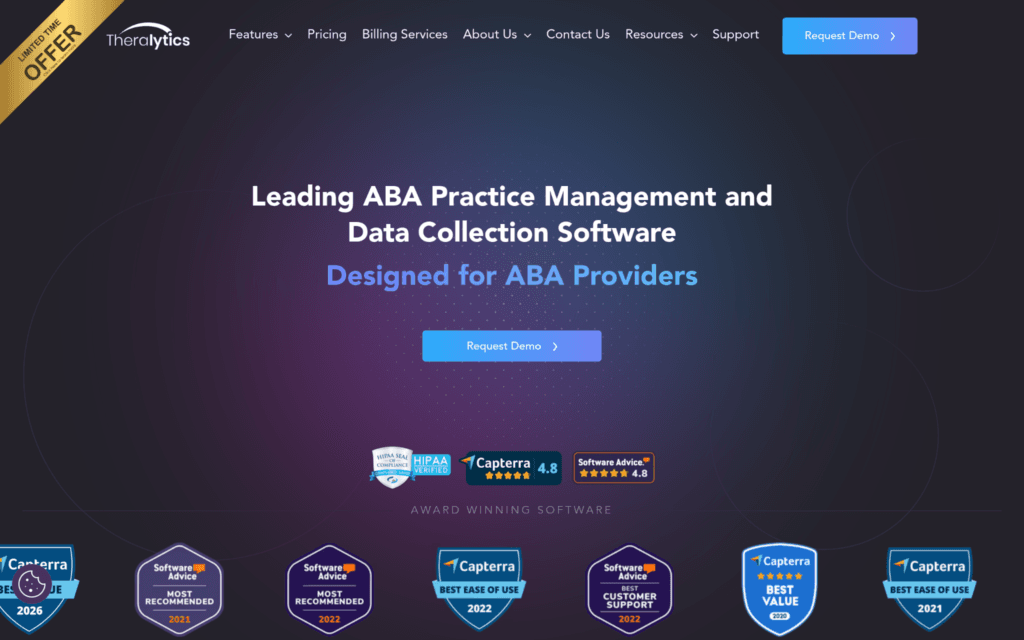
What Does Theralytics Do?
Theralytics is a practice management and clinical data collection platform built for ABA therapy. It pulls clinical and operational workflows into one system with real-time data syncing across BCBAs, supervisors, and clinicians. Automated graphing takes the manual charting burden off your team entirely. Their parent and caregiver portal keeps families in the loop without adding extra admin steps. Security is handled at an enterprise level, including MFA and AES-256 encryption, which meets the 2026 HHS technical safeguard requirements. That kind of compliance readiness is genuinely rare at this price point.
Why Theralytics Stands Out for ABA Software Tools:
Theralytics directly addresses the data silo problem that slows down ABA teams, giving every team member synchronized access to real-time clinical records without the usual back-and-forth. For practices scaling their caseload without adding administrative headcount, the connection between billing, scheduling, and clinical data is what keeps things from falling apart.
Summary of Real User Reviews:
Clinicians consistently flag the intuitive interface as a major win, noting that new staff get up to speed quickly without long training periods. Reviewers also point to the automated graphing as a time-saver that frees up session prep time. The platform’s compliance credentials get called out frequently by practice owners who are thinking ahead to evolving regulatory requirements.
- Raven Health – Best for ABA Therapy Practice Management and Billing
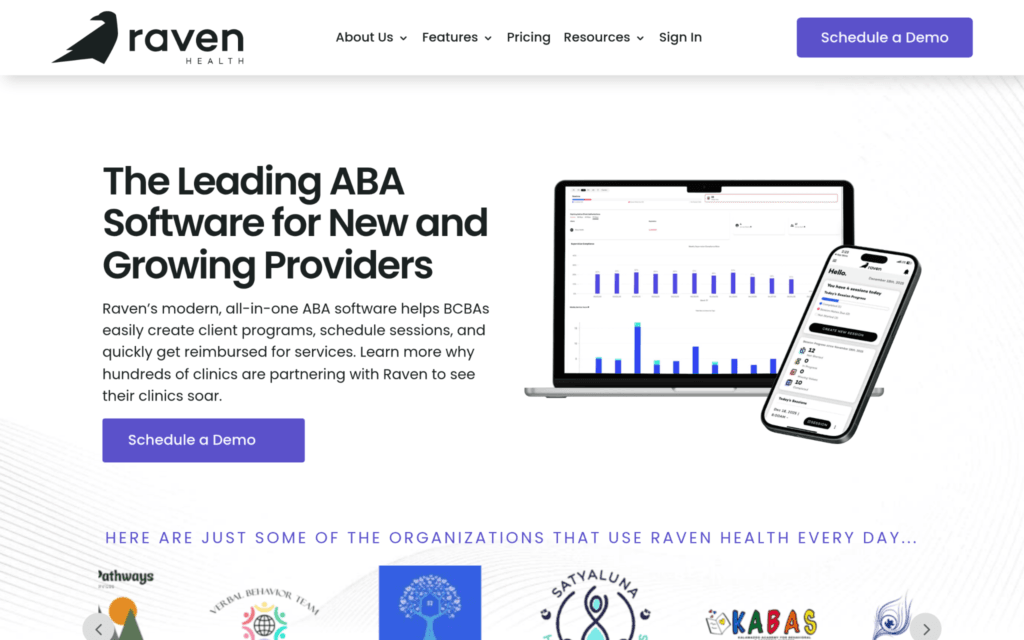
What Does Raven Health Do?
Raven Health is purpose-built for behavioral health providers, with a platform covering data collection, offline session capture, treatment plans, progress tracking, and billing. The mobile-first design means clinicians can collect data anywhere without worrying about connectivity. What makes Raven Health stand out from a business model perspective is its Managed Billing Bundle, which is entirely free with a small percentage taken from collected claims. That structure is interesting because it ties the software’s financial incentive directly to your revenue cycle performance. They’ve served clients like Crescent Bloom and Pair Tree Autism Services, which shows they’re legit in the ABA space (not just general healthcare).
Why Raven Health Stands Out for ABA Software Tools:
Raven Health solves a common bottleneck for growing ABA practices: the upfront software cost that makes billing tools feel out of reach before the revenue is there. Their revenue-share billing model removes that barrier entirely, making it a practical entry point for clinics that want professional billing support without a fixed monthly overhead.
Summary of Real User Reviews:
Users frequently mention how fast they got comfortable with the interface, with reports of hitting foundational proficiency in under 15 minutes being consistent across reviews. The offline data collection capability gets strong marks from clinicians working in school or home settings. The billing model draws particular attention from practice owners who appreciate not paying for a service until it actually generates revenue for them.
- ABA Matrix – Best for ABA Therapy Practices of All Sizes
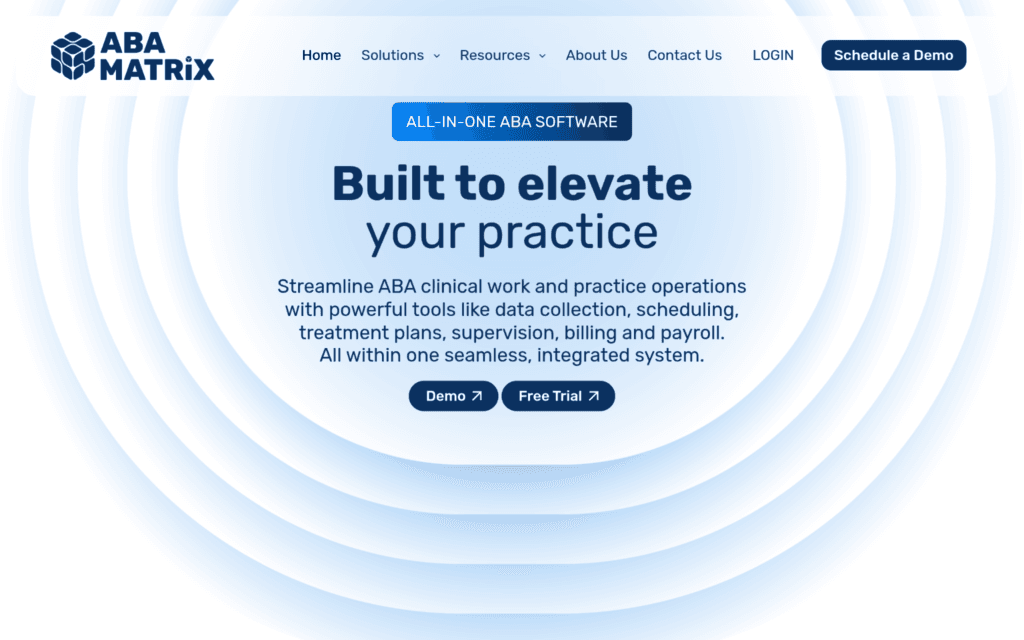
What Does ABA Matrix Do?
ABA Matrix is an all-in-one platform built entirely around ABA therapy workflows, covering data collection, scheduling, billing, progress notes, assessments, and graphing in one place. The platform follows CASP Guidelines and maintains HIPAA compliance, which matters when you’re handling sensitive client records across a busy caseload. Their unit-based pricing model makes the cost structure accessible whether you’re running a solo practice or managing a larger clinic. ABA Matrix was named the Top ABA Therapy Data Collection and Practice Management Platform for 2026 by Healthcare Tech Outlook Magazine, which adds a layer of external validation that matters when you’re evaluating a newer platform.
Why ABA Matrix Stands Out for ABA Software Tools:
ABA Matrix was designed from the ground up for behavioral therapy, so the compliance alerts and behavior intervention planning tools aren’t bolted on as afterthoughts. Client case studies point to real improvements in assessment accuracy and staff satisfaction, which means it’s actually delivering on the challenges BCBAs deal with daily.
Summary of Real User Reviews:
Practices that switch to ABA Matrix frequently reference a drop in administrative burden, particularly around documentation and reporting. Staff satisfaction shows up as a recurring theme, suggesting the interface doesn’t create friction during sessions. The Ausome Foundation’s Legacy Builder Award also gets mentioned by users as a trust signal that the platform is genuinely invested in the ABA community.
- Rethink Behavioral Health – Best for ABA Therapy Practices and Behavioral Health Organizations
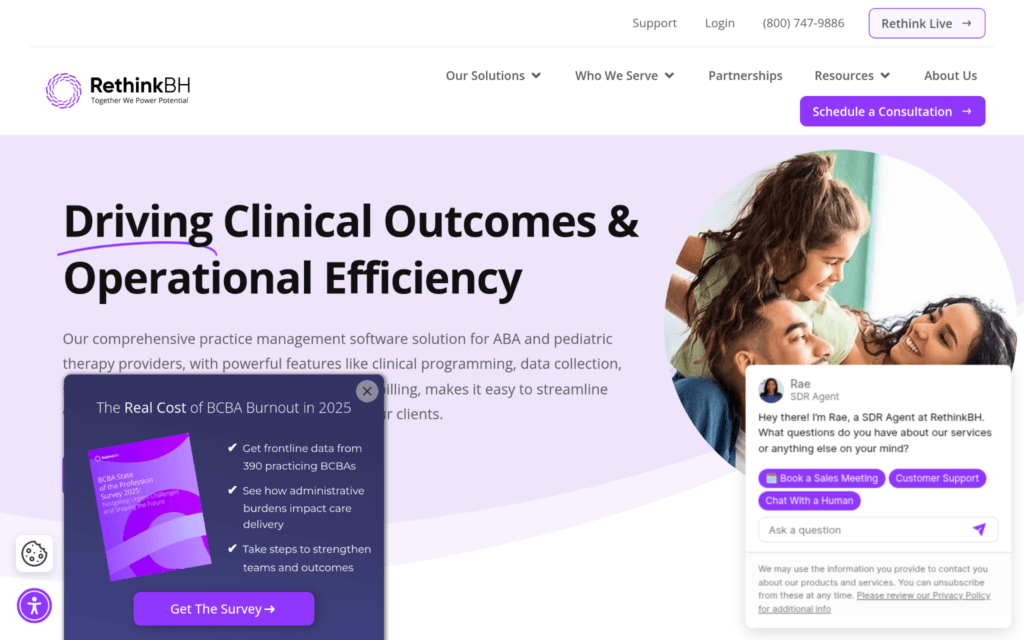
What Does Rethink Behavioral Health Do?
Rethink Behavioral Health has been in this space since 2007, which gives it a depth of clinical credibility that newer platforms are still building toward. The platform covers clinical tools, billing, scheduling, data collection, compliance, and staff training in a single system. Over 1,500 customizable care plans come built in, and their Medical Necessity Assessment tool has been adopted by more than 500 ABA organizations. The platform has completed more than 23,000 assessments with an 87% average agreement rate. That kind of validated clinical data (not just software claims) is hard to match among ABA platforms.
Why Rethink Behavioral Health Stands Out for ABA Software Tools:
RethinkBH tackles the training and staff development gap that most ABA software ignores, folding clinical education directly into the platform so organizations aren’t managing a separate training system. For larger practices with complex staffing structures, that built-in training layer cuts ramp-up time while keeping clinical standards consistent across the board.
Summary of Real User Reviews:
Reviewers across organizational sizes consistently point to the depth of clinical programming as a standout feature, especially the care plan library. Larger practices mention the enterprise-level scalability as a reason they stay on the platform long-term. The company’s track record with BCBAs and RBTs across more than 2,000 customers signals that the platform holds up across different practice models.
- TherapyPMS – Best for ABA Therapy Practices and Multi-Discipline Therapy Clinics
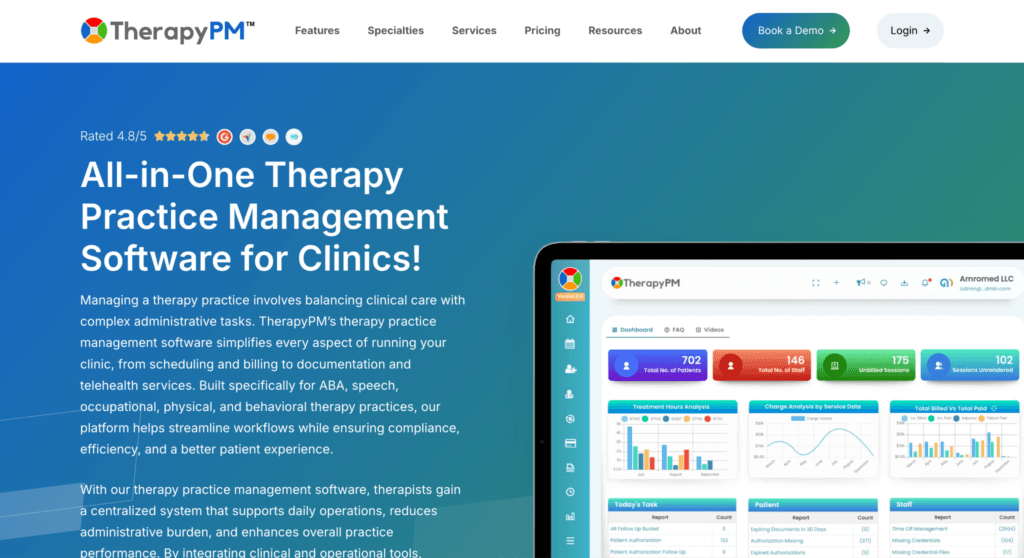
What Does TherapyPMS Do?
TherapyPMS covers practice management for ABA therapy and adjacent disciplines like occupational, speech, mental health, and physical therapy. The platform brings credentialing, billing, and telehealth together in a single system, and it’s built around the compliance requirements that therapy practices actually face, including SOC-2, HIPAA, and GDPR. More than 500 clinics across the US and Canada trust the platform, which is a meaningful signal. Their accounts receivable service claims a 99% reimbursement success rate (not cheap, but that kind of result changes the financial picture for practices dealing with frequent claim denials). For multi-discipline clinics trying to manage different therapy workflows without buying separate tools, TherapyPMS is worth a close look.
Why TherapyPMS Stands Out for ABA Software Tools:
TherapyPMS addresses the billing challenges that hit multi-discipline clinics especially hard, where different therapy types carry different billing codes and payer requirements. The built-in telehealth capability is also increasingly relevant as clinics expand their service delivery beyond in-person sessions.
Summary of Real User Reviews:
Practice owners cite the accounts receivable service as a consistent revenue improvement. The platform’s multi-discipline support draws praise from administrators managing mixed caseloads who need one system rather than several. Compliance coverage across SOC-2, HIPAA, and GDPR comes up regularly as a deciding factor for clinics with privacy-conscious clients and leadership teams.
CentralReach – Best for ABA Therapy Practices and Special Education Organizations
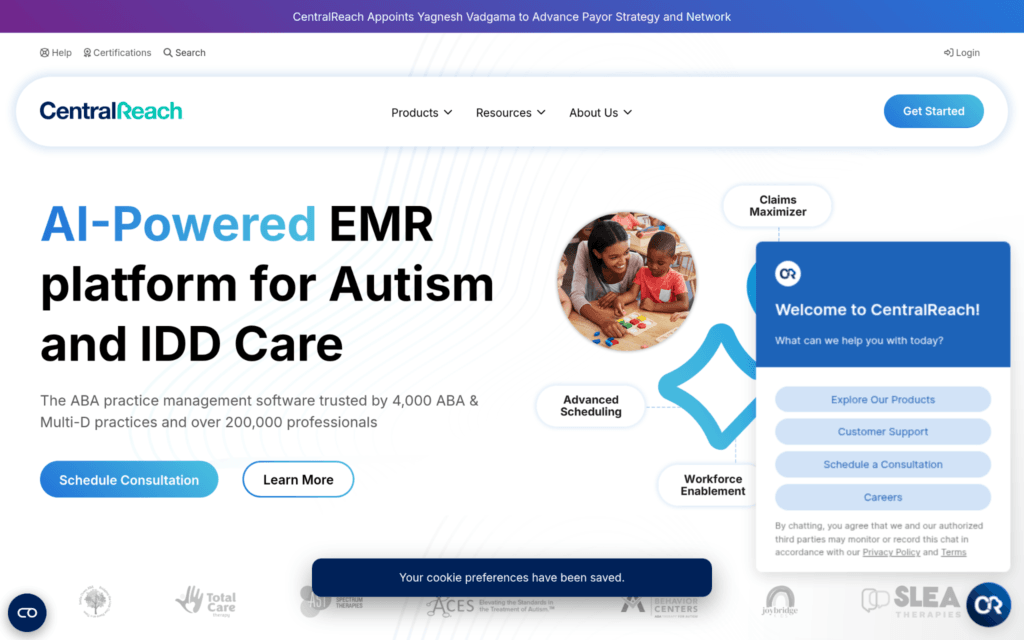
What Does CentralReach Do?
CentralReach has been around since 2012 and has grown into one of the most well-known platforms in the ABA space, trusted by 4,000 practices and more than 200,000 professionals. The platform covers practice management, clinical data collection, automated scheduling, care team management, and billing. Their proprietary AI, called cari, was trained on more than a billion data points in collaboration with 40-plus BCBAs. That’s not a marketing claim. It’s a meaningful differentiator for any practice that wants data-informed clinical decisions backed by actual ABA knowledge. CentralReach has collected 40-plus awards, including multiple Deloitte Technology Fast 500 recognitions (think enterprise-scale credibility).
Why CentralReach Stands Out for ABA Software Tools:
CentralReach is one of the few platforms where the AI layer was actually built with BCBA input from the start, which means the scheduling and clinical recommendations reflect real behavioral health logic rather than generic algorithm outputs. For practices dealing with high session volumes and complex care team coordination, AI-backed scheduling alone can recover a meaningful number of billable hours each week.
Summary of Real User Reviews:
Reviewers at larger practices consistently praise the end-to-end scope of the platform, noting that having clinical, billing, and marketplace tools in one place reduces the operational friction of managing multiple software subscriptions. The platform’s growth trajectory and award history come up in reviews as confidence signals. Some smaller practices note the learning curve, but most describe the depth of features as worth the initial adjustment period.
Research Methodology and Selection Process
Initial Data Collection
The starting point for this ranking was a broad scan of directories, software review platforms, and behavioral health industry publications. Platforms that surfaced repeatedly across ABA-specific forums, BCBA community discussions, and therapy practice directories were flagged as candidates. The goal at this stage was breadth, so no platform was excluded without further examination. Each candidate had to show at least some presence in ABA-specific contexts, not just general healthcare or therapy broadly.
Shortlisting Phase
From the initial pool, platforms without verifiable user reviews or documented case studies were removed. Review patterns were analyzed across multiple sources to identify whether feedback was consistent over time or clustered around a single period. Platforms with thin or unverifiable user histories didn’t advance regardless of how polished their marketing materials looked.
Verification of Claims
Each platform’s stated features were checked against what actual users described in reviews and case studies. Where a company claimed specific outcomes (like billing accuracy rates or ramp-up time), those claims were cross-referenced against third-party commentary. Discrepancies between self-reported capabilities and user-reported experiences were weighted heavily in the evaluation.
Authority and Industry Contribution Layer
Recognition from credible healthcare and technology publications was assessed alongside any awards, certifications, or contributions to published ABA research. Platforms that had earned external validation from organizations like Healthcare Tech Outlook or bodies connected to BACB ethics and CASP guidelines received additional weight. Longevity in the space was also factored in, since a platform that has served ABA practices for a decade carries a different kind of reliability signal than a newer entrant.
ABA Software Tools-Specific Evidence
Finally, each platform was evaluated for ABA therapy fit. This included checking for dedicated ABA service pages, verified reviews from BCBAs or RBTs, compliance with HIPAA and relevant behavioral health standards, and evidence of use in real clinical settings. Platforms that only mentioned ABA as one of many supported disciplines without demonstrating depth in that area were ranked lower than those with a clear ABA-first design.
How to Choose the Right ABA Software Tools
Choosing the right platform starts with being honest about what your clinic actually needs right now, not just what looks good in a demo. A solo BCBA running a home-based practice has very different needs than a clinic director managing 20 RBTs across multiple sites.
- Industry and Domain Experience: Look for platforms that were built for ABA therapy, not general practice management tools that added ABA as a feature. Purpose-built tools understand the nuances of discrete trial data, behavior intervention plans, and BACB ethics code requirements.
- Features and Service Offerings: Confirm that the main features match your actual workflows, including data collection methods, scheduling across multiple staff, billing connection, and caregiver portal access. Don’t pay for features your team won’t use.
- Pricing Structure: Some platforms charge per user, others per client, and some use revenue-share models. Make sure the pricing structure works for your current caseload and leaves room for growth without sudden cost jumps.
- Results Measurement: Ask how the platform tracks treatment goal mastery and generates progress reports. If you can’t easily pull data for insurance payers or internal reviews, that’s a daily friction point you’ll feel immediately.
- Industry Knowledge and Compliance: Confirm HIPAA compliance at a minimum, and check for BACB ethics code alignment and state Medicaid billing requirements if relevant to your practice. Security certifications like SOC-2 or AES-256 encryption matter more now than ever.
Bottom Line
The right ABA software tool doesn’t just organize your data. It frees up your clinical team to focus on what they’re trained to do. From Theralytics’ real-time synchronization to CentralReach’s AI-backed scheduling, each platform on this list addresses a specific piece of the administrative burden that wears ABA practices down. Your best fit depends on your practice size, billing demands, and how your team actually works. As ABA therapy continues to grow, the platforms that keep pace with clinical standards will be the ones worth building on.