
A new book, SocialQI, provides a roadmap for patients, physicians, and biomedical scientists to turn social networks into communities of change.
A new book, SocialQI, provides a roadmap for patients, physicians, and biomedical scientists to turn social networks into communities of change.
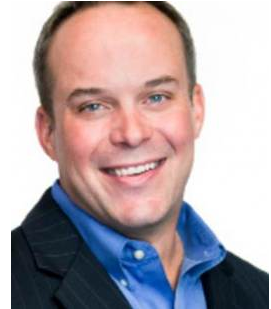
The author, Brian McGowan, granted me an interview the other day to tell me a little about his endeavor. Brian is an innovator, a research scientist and educator, and now uses those skills in consulting for companies looking to accelerate quality improvement through technology and information flow.
Following is my interview with Brian:
Q – Tell me a little about your background and what made you decide to write a book like SocialQI
A – I come from a bionic family. We weren’t born this way, but after years of bad choices, bad genetics, and routine wear and tear nearly every member of the clan has had some body part replaced, refurbished, or realigned. My father has had more cardiac procedures that I can count. My mother has two artificial hips. And, I have the back and hips of an octogenarian myself. My wife is healthy, but her father had the valves in his heart replaced several times. For better or worse we live our lives with a fairly constant memory that our health is not something we should take lightly.
It seems that for most people I know their definitions of health and wellness change continually over time. Maybe (hopefully) they see ‘health’ as something they want to keep. Maybe they see ‘health’ as something they want to regain. But most likely their health and their healthcare are among their highest priorities and when confronted with illness or injury they find themselves in the frightening position of being a ‘patient’ – and no one practices being a patient.
I felt like there was a need to tell this simple, sometimes bleak, sometimes promising story of how the healthcare system is designed to address our needs and support our health.
Q – What did you hope to achieve with SocialQI?
A – This book offers what some have called ‘a goldilocks solution’ for healthcare. For years the only proposed solutions for the emerging healthcare crises have been focused on two fronts: broad policy change or individual empowerment. As we have seen, the policy debates will not be resolved in short order, they can’t be, democracies are not built for revolutions like the one we need in healthcare – this approach is too big. On the other hand, individual empowerment will never have the impact that is needed, it can’t, as I describe in the book, behavior change is hard and it is inconceivable that 300,000,000 Americans can be separately empowered to sustainably make better choices – this approach is too small.
Instead, I provide a roadmap to overcoming our healthcare quality crises by leveraging communities and collective intelligence. My premise is simple. Patients need other patients for support. Physicians need other physicians. Scientists need other scientists. And only when we have built systems to support sharing across these networks and we have adopted new skills to leverage collaborative models will we see real, meaningful improvement.
It is important to note, that his book is not about technology, though technology plays an important role. This is a story about the way information flows, the forces that restrict information flow, either intentionally or unintentionally, the systems that can be built to optimize information flow, and the skills we would all need to make use of this new data stream.
Q – You talk about the problems in healthcare; can you share a few practical ideas from SocialQI that will address these problems?
A – In the book I boil down my solutions to two themes:
1) we need new information architecture systems that support health and wellness
2) we, as end-users, must accept and embrace a new skillset to effectively leverage these evolving system
In the simplest form both themes get at the heart of reestablishing a healthcare culture of openness and sharing. But, I would add that there is little doubt that these are significant changes that run counter to everything healthcare has evolved to represent over the past 50 years. Throughout the book I build the argument that peer-to-peer healthcare is dependent on openness and sharing; the evolution of the medical profession is dependent on openness and sharing; and, the biomedical research fields are dependent on openness and sharing. In many ways this one simple idea may transform all three of our mega-silos of information.
Q – The book sounds fascinating, any final thoughts?
As these ideas evolve, the very definition of being a patient, being a physician, and being a biomedical scientist will evolve. In some way we cannot stop it, it is that natural of an evolution. What seems avant-garde and innovative today will be the basic expectation tomorrow and this is my greatest hope: that the intelligent pursuit of collaborative models of innovation and empowerment through networks and communities will fundamentally change the healthcare system in the US, and perhaps the lessons in this book support that transformation…so that when the dust settles, we can each find that special kind of comfort that comes from knowing that your family and friends will have timely access to the best care in the world no matter where they work, live, and play.
—
I look forward to reading the book and supporting this transformation. The book is now available for pre-order on Amazon and is expected to be released by the end of July. Please visit the widget on our sidebar for more information.