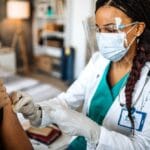
The post is dedicated to all the remarkable nurses, doctors and other members of the health care team. Your strength and dedication is extraordinary, and not only in the wake of Hurricane Sandy, but every day.
The post is dedicated to all the remarkable nurses, doctors and other members of the health care team. Your strength and dedication is extraordinary, and not only in the wake of Hurricane Sandy, but every day.
More Read

Thank you to all the nurses, doctors, and other members of the health care team.
While Hurricane Sandy’s fury wreaked havoc on the Northeast and caused massive destruction, one thing is for sure: Sandy’s wrath is no match for nurses’ strength.
Nurses’ role in the media is often overlooked because it often focuses on the heroic activities of the doctors. Health care isn’t a competition between nurses and doctors. Doctors and nurses are colleagues. Health care is an interdisciplinary team approach where all members of the team work together for the good of our patients.
Nurses, doctors and other members of the health care team rallied together to provide quality patient care during a time when things surrounding us were unraveling and destruction was evident.
Hospitals whose generators failed scrambled to evacuate patients. New York’s Bellevue Hospital Center evacuated about 500 patients, and NYU Langone moved about 200 patients. A New Jersey hospital, the Palisades Medical Center, evacuated 83 patients.
Hospitals continue to grapple with logistics why backup generators failed; however, nurses have other things to contend with. The struggle to keep patients safe amid a crisis is a nurse’s primary focus.
Patient safety is the No. 1 priority, and in the darkness with a little light from generators, nurses do what they do best: care and treat patients.
I didn’t know what to expect when I headed to work immediately after Sandy had her way with the Northeast. What I observed along the way was only minor compared to the horrifying images on The Huffington Post and circulating on the Internet and news outlets, but it was significant. I saw the outside unraveling. Areas covered with debris, huge trees lifted from the earth toppled on houses, power lines down, and power outages rampant were only a snippet of the mass destruction in surrounding areas. People lost their homes. They are without shelter, food and clothes. Others lost their lives.
What I observed inside the hospital was quite different from the destructive scenes. It was a manageable, calm chaos. Power was out, but generators were working. It left some areas in the dark; the service elevators became the elevator to transport patients throughout the hospital. While a petite sign next to the elevators says to think healthy and take the stairs, there was no choice. Patients are the priority, and the elevators were reserved for them. Limited elevators, no hot food, the ER at a critical volume, and hallway beds being utilized is not the normal standard. But in this time of crisis, the professionalism and training of the hospital personnel was evident.
Hospitals are a highly-stressed environment on a “good day.” Nurses are master multitaskers and are able to provide care under pressure. It’s not uncommon for nurses to skip a break, and sometimes they don’t even get a chance to eat a meal.
As I made rounds on the units it almost seemed like just another day. Amid the stresses, nurses were focused on providing care to their patients. Armed with a flashlight and a stethoscope, nurses remained calm. After all, nurses are used to working in a highly-stressful environment, and they do what needs to be done to provide the best possible care. It may not be easy, but nurses are the backbone of health care. Nurses: strong and dedicated.
During this crisis, collaboration was the key. We found ourselves needing to create “makeshift” units to accommodate patients transferred from a nearby hospital and to house the overflow from the ER. Adequate staffing became an immediate priority. Fortunately, staffing did not become a major issue, as many staff remained at the hospital and slept on cots.
And so while the “patient experience” might not be prevalent during this critical time, patient-centered care definitely prevailed.
Strong, determined, dedicated professionals, both men and women, put the needs of the patient first and did what is needed to keep them safe. It’s not easy — nursing can be emotionally and physically draining — but they didn’t let Sandy get in their way.
To help those in need, you can help through the American Red Cross.
—
Your Turn
We would love to hear from you. Please share your experiences in the comment section below. As always thank you for your valuable time.