Whenever possible at conferences, I try to attend at least one session that is outside my particular area of focus and expertise. While almost everything at the recent HIMSS M-Health was relevant, global health is a bit outside the target for Wellpepper right now. Attending a few sessions on M-Health got me thinking about similarities between some of these initiatives and the situation at home.
Whenever possible at conferences, I try to attend at least one session that is outside my particular area of focus and expertise. While almost everything at the recent HIMSS M-Health was relevant, global health is a bit outside the target for Wellpepper right now. Attending a few sessions on M-Health got me thinking about similarities between some of these initiatives and the situation at home.
 When we started Wellpepper, we got a lot of feedback on our mobile first strategy, not all of it positive. We believe that people have an emotional connection with their mobile devices and that when people’s mobile devices ask them to do something they generally do it which is why we optimize our patient experience for mobile. Concerns were that people of lower socio-economic backgrounds or older people would not be able to use the technology.
We and other startups have found this to be untrue, and given the success of mobile programs in the developing world, it seems that this is a red herring of an argument as m-health initiatives are successful with people with widely varying literacy levels and for whom this is often their only connection with technology. Basically if people with low tech literacy can engage in their health through mobile devices in the developing world, we’re pretty sure everyone can in the US as well. In the developing world, mobile infrastructure has leapt over landline infrastructure. A similar thing has happened for lower income people in the US: they are more likely to only have Internet access through a smart phone than through a computer and home Internet connection.
The session “Innovative Content & Mobile Delivery Tools: Driving Healthcare Utilization & Coordinating Care” covered a number of private and public partnerships to bring culturally relevant and timely information health issues related to childbirth to women, caregivers, and families in Africa. There were a number of similar initiatives involving different players in different countries both not-for-profits and telecommunications companies. Rather than recapping one initiative this post is a survey of some of the learning and best practices from a few different ones.
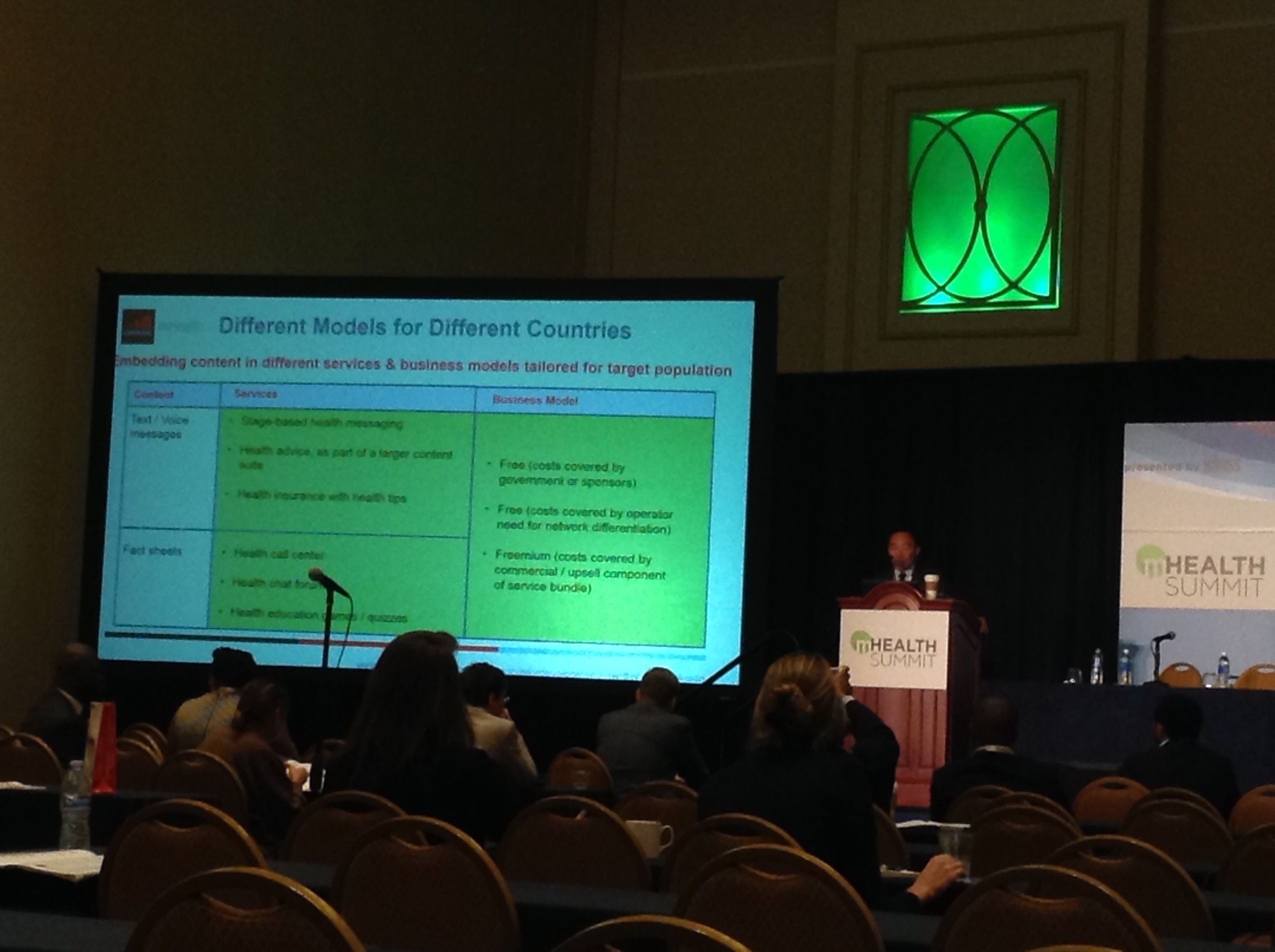
Most projects were either focused on preventing unwanted pregnancies and also reducing child mortality. Really two sides of the same coin: making sure women and families had the information and resources they needed to care for their children. Information needed to be localized to the needs of the audiences that included mothers, mothers-to-be, midwives, and others caring for pregnant women, and their spouses. Customized content was key, for example, nutrition advice needed to address what was available in each country, and medical advice for the types of caregivers that were in the area, not always licensed medical professionals.
While the projects were shown to work, sustainability was key. There needed to be benefits to the telecommunciations companies that were providing free texting between expectant and new mothers and providers, and access to video content. There are definitely benefits for the telecommunications companies, which included:
- Customer loyalty. By supporting women and families in this crucial time, the telcos were able to let them know that they would be with them through thick and thin and supporting them in important life events.
- While the phones were provided for this particular educational program, people started using them for other activities which provided a revenue stream for the telecommunication companies.
- Lack of churn. Many women were repeat users of the program when they had their second child.
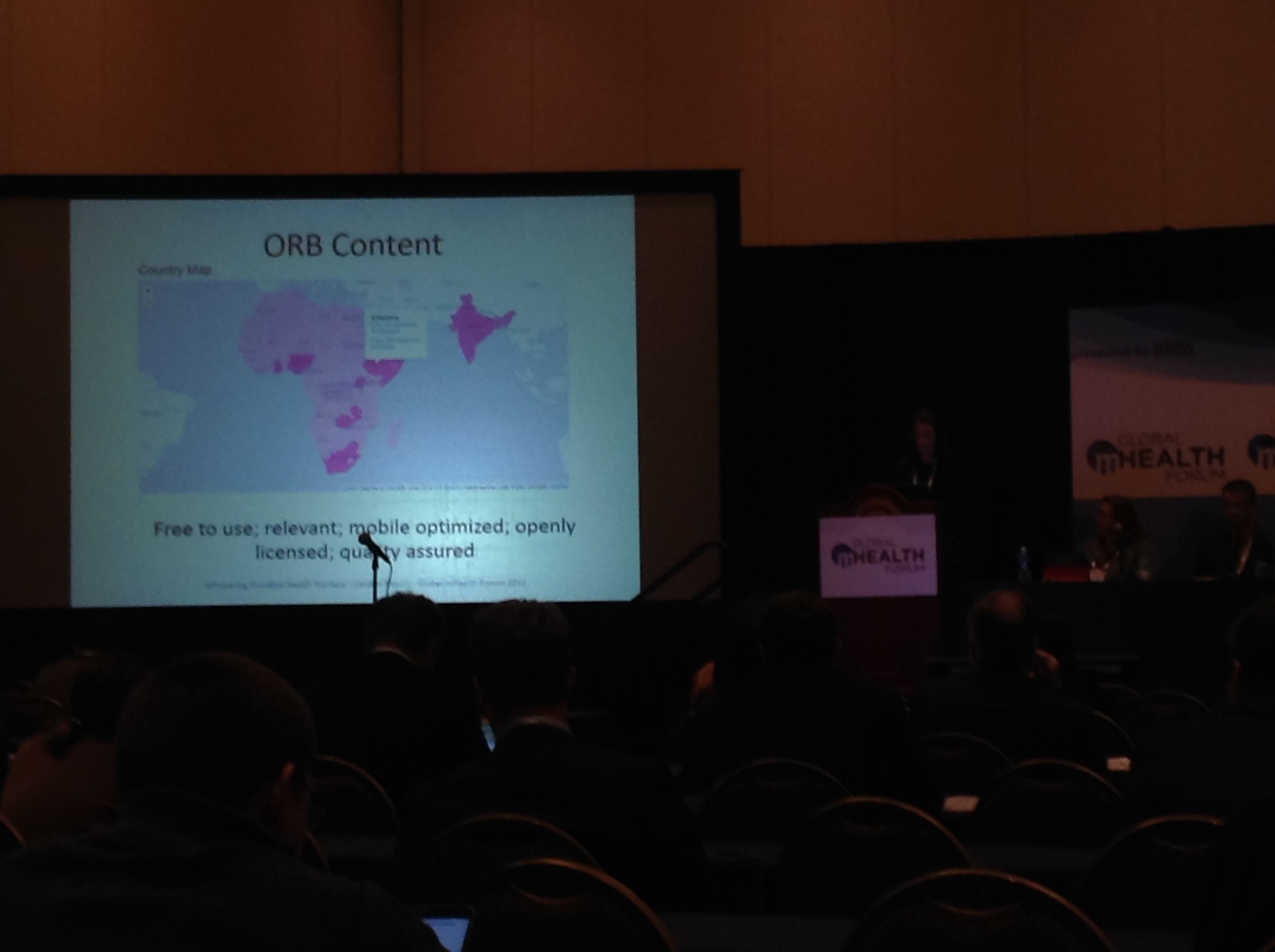 Challenges of the programs mostly revolved around content. Creating and managing content was a big cost for the non-profits involved. Video content was seen to be best as it didn’t require a high-level of literacy, but keeping content both culturally-relevant and up-to-date was a challenge. As a result, one organization provides a free content library for front-line health workers.
In addition to the similarities of access to information, the content problem is also one we see here. However, the difference is an abundance of content for patient treatment plans. Each organization has their own content and best practices. During the session, I thought that donating care plans and instructions to some of these not-for-profit might be an interesting way to solve this problem, collect more feedback on care plans and accessibility, as well as give back.