
By using this site, you agree to the Privacy Policy and Terms of Use.
Accept
Health Works CollectiveHealth Works CollectiveHealth Works Collective
  • Health
    • Mental Health
  • Policy and Law
    • Global Healthcare
    • Medical Ethics
  • Medical Innovations
  • News
  • Wellness
  • Tech
Search
© 2023 HealthWorks Collective. All Rights Reserved.
Reading: Secrets of Population Health Management [INFOGRAPHIC]
Share
Notification Show More
Font ResizerAa
Health Works CollectiveHealth Works Collective
Font ResizerAa
Search
Follow US
  • About
  • Contact
  • Privacy
© 2023 HealthWorks Collective. All Rights Reserved.
Health Works Collective > Business > Finance > Secrets of Population Health Management [INFOGRAPHIC]
BusinessFinanceGlobal HealthcareHospital AdministrationPolicy & Law

Secrets of Population Health Management [INFOGRAPHIC]

Abby Norman
Abby Norman
Share
3 Min Read
Population Health Management
SHARE

Population Health ManagementIn the wake of Ebola, healthcare systems worldwide are focusing more than ever on defining – and refining – their population health initiatives.

Population Health ManagementIn the wake of Ebola, healthcare systems worldwide are focusing more than ever on defining – and refining – their population health initiatives. Smart thinking on multiple accounts, if you think about where we’re headed in terms of healthcare reform. Hospitals that are moving towards population health initiatives now will be far better prepared for the overall shift to accountable care that’s on the horizon.

The first step is defining population. Are you going to define populations by illness, socioeconomic factors, financial factors or some vector of all three? Generally speaking, defining your population should align with the kind of care your organization is already known for. If you’re a highly regarded trauma center, focus on that. If you’re known for your pediatric oncology unit, there’s your population. Start with what you already have and expand outward from a solid spot you can stand – and build – on.

Alternatively, you can approach the problem from the opposite standpoint: identify key areas of weakness, remedy them, and learn from previous mistakes. While this is a noble route to take, it might not be feasible if you don’t have the financial resources to take a bit of a leap on making corrections. It may be more economical to build something brand-new into your pre-existing structure than attempt to tear down and then rebuild atop old problems.

More Read

8 Factors To Look For When Choosing The Right Optometrist
Patient-Centered Physicians Have Lower Diagnostic Testing Costs
Shared Risk Reimbursement: 5 Challenges and Opportunities for Radiology
Crowd-Sourcing in Clinical Development
Are Physicians the Canary in the Coal Mine of Medicine

The same could be said about patients! Make sure that you’re treating not just acute issues – but chronic problems as well. It’s not enough to support patients just in times of emergency. Many chronic issues can develop into costly emergencies if they are unmanaged. One way to address this is through care management programs. Care managers, who are usually nurses, help guide a patient through the health system as they are receiving care, and coordinate any follow-up care.

Care coordination can also be used in conjunction with performance-based payment programs which reward providers for improving population health outcomes. By establishing measures, or benchmarks, that hospitals can strive for, you can also make proper use of another tool – data.

By utilizing the data you already have, you can use predictive analysis to not only figure out your benchmarks, but mark progress as you move forward and even predict problems before they occur.

Other benefits of population health focus?

    1. Increased quality and efficiency of care,
    2. Better access to healthcare
    3. Fewer emergency room visits and admissions
    4. Better communication between providers, patients and payers
    5. Shared risk – especially financial
    6. Overall cost reduction
  • Better health – for everyone.


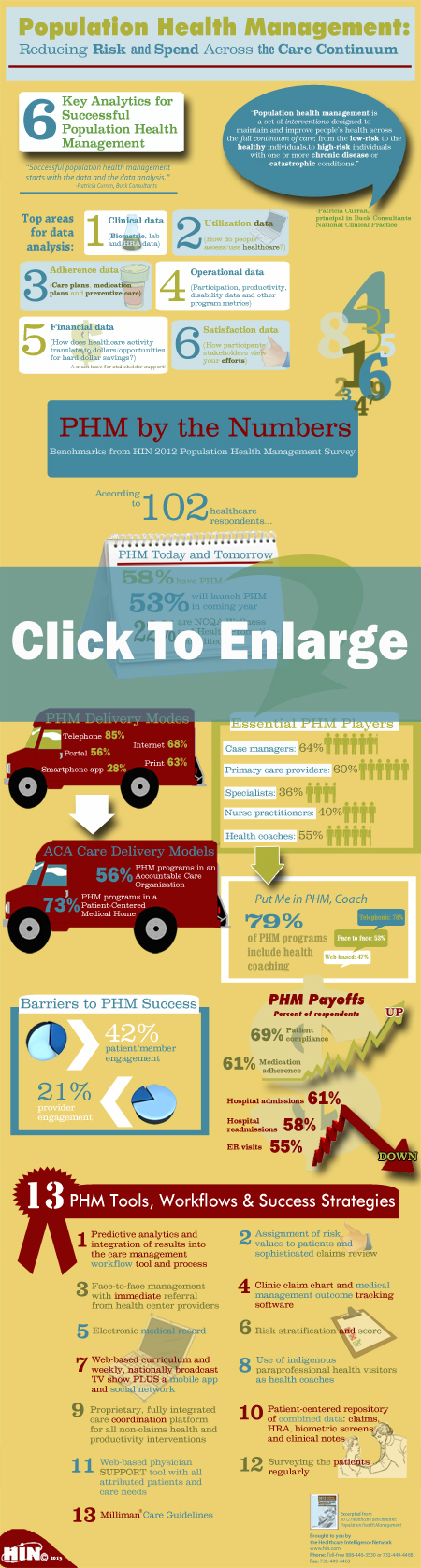
Population Health Management: Reducing Risk and Spend Across the Care Continuum

Via: Healthcare Intelligence Network

TAGGED:population health management
Share This Article
Facebook Copy Link Print
Share
By Abby Norman
My name is Abby Norman and I am a healthcare blogger. With over 10 years of experience in the medical field, I have developed a passion for helping others understand the complexities of healthcare.

Stay Connected

1.5KFollowersLike
4.5KFollowersFollow
2.8KFollowersPin
136KSubscribersSubscribe

Latest News

The Evolving Role of Nurse Educators in Strengthening Clinical Workforce Readiness
Career Nursing
December 22, 2025
back health
The Quiet Strain: How Digital Habits Are Reshaping Back Health
Infographics
December 22, 2025
in-home care service
How to Choose the Best In-Home Care Service for Seniors with Limited Mobility
Senior Care Wellness
December 19, 2025
What Are the Steps to Obtain Health Equity Accreditation?
Health
December 18, 2025

You Might also Like

health insurance
BusinessFinanceHealth ReformMobile HealthPolicy & Law

Evidence Mounts That Health Insurance Is Necessary, But Not Sufficient for Good Health

August 11, 2014
medical residency ethics
Medicare

Transparency and Ethics in Medical Residency Placement

June 8, 2023

Adapting to Millennials with Health Care Technology

December 10, 2014
healthcare topics in 2014
Global HealthcarePublic HealthWellness

Health Predictions for 2014: 6 Sources of Disease and Distress We Expect in the Coming Year

December 16, 2013
Subscribe
Subscribe to our newsletter to get our newest articles instantly!
Follow US
© 2008-2025 HealthWorks Collective. All Rights Reserved.
  • About
  • Contact
  • Privacy
Welcome Back!

Sign in to your account

Username or Email Address
Password

Lost your password?