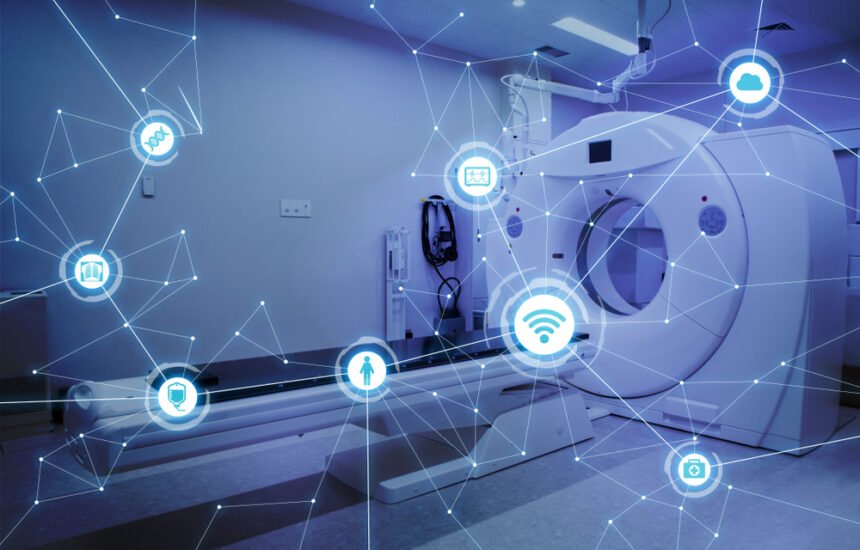
The future of healthcare will revolve around big data and smart medical devices. Medical equipment of the past and the present rely on nurses and doctors to interpret results, limiting their flexibility. Big data enabled medical devices; on the other hand, rely on massive sets of data to be able to provide diagnostic services that output results as well as conclusions. That additional functionality stands to revolutionize the whole healthcare industry. Data analytics can also be used to augment everything from current-generation MRIs to X-rays, making it possible to scan images created by such tests for any abnormalities that may exist. Smart imaging systems can be connected to large image libraries, building databases of characteristics that can help with improving diagnostic accuracy. The ability to maintain and scan through large datasets is here, and it will allow for correlations to be made that humans may miss. Here’s a look at some of the ways that big data and next-generation Internet-of-Things (IoT) medical devices are impacting health care right now.
Deep Learning is Being Tested
Deep learning using big data is being tested to predict seizures in patients that are suffering from epilepsy. One study showed that through a prediction system powered by deep learning, it was possible to predict seizures 42.3% better than a random predictor system. Those results come despite the fact that medical equipment used in current tests is still in its infancy and still has a long way to go in terms of diagnostic accuracy and the sophistication of the deep learning model. Still, even at this early stage of development, the work proves that predictive analytics and diagnostics for a multitude of diseases are possible. The real promise of deep learning systems as medical diagnostic tools is their ability to scale up quickly. They become both more accurate in their predictions and quicker in producing them with each new data stream that becomes part of the model. In the case of the research mentioned here, as patients have more seizures, these systems will be able to learn from the patient-specific datasets compiled over time. That will train the model to better spot the warning signals that a seizure is imminent so that the patient can receive an alert in advance. The ultimate goal of this research into deep learning will be to create special hardware, in the form of wearables and other devices that will be able to accurately warn patients of seizures in real time and with no intervention from medical staff. Researchers even suggest that through an improvement in their prediction model, it may be possible to build more complex deep learning networks that are able to monitor myriad patient safety factors rather than just hoping to provide early warning for seizure sufferers.
Internet-of-Things and Big Data
IoT and big data can come together to offer a variety of new opportunities in healthcare. Connected IoT devices and other smart technology are starting to be adopted for everything from monitoring general fitness to checking email. They’re even being put to use powering a range of apps and services to help people get a good night’s sleep. Now, the healthcare technology industry is starting to introduce wearables to help manage diseases and medical conditions. Wearables and body sensors can provide a higher level of care for patients, allowing for big data to provide greater insight into a person’s health condition. Smart devices have already started to be implemented into the drug dispensary field, allowing for notifications and alerts to be sent to patients so that they know when to take medication. In some instances, the devices themselves are able to administer the proper medication dose to a patient with no input from a doctor using nothing but real-time patient data. Big data has the potential to take this a step further, predicting instances of undiagnosed secondary conditions based on sensor data, diet-tracking and medical records. It may soon be possible for these wearable devices to make real-time recommendations to patients themselves, letting them know when they may need to seek medical care to prevent conditions they may not even be aware of. The benefits of such a revolution in preventative medicine could include extending patient life spans while driving down costs in the healthcare industry. That would, in turn, free up resources that could then go toward researching cures for the diseases that plague mankind, like cancer. The one thing that is certain is that big data is the innovation of the future, and as technology is able to process and learn from this data faster, we will start to see more smart devices enter the field. When that happens it should usher in a whole new, data-driven era for modern healthcare that promises longer, healthier lives for all.