We use cookies, including third-party cookies from Google to serve personalized ads through AdSense, to operate this site and understand how it is used. By continuing to browse, you accept this use. See our Privacy Policy and Terms of Use for details, including how to opt out of personalized advertising.
Accept
Health Works CollectiveHealth Works CollectiveHealth Works Collective
  • Health
    • Mental Health
  • Policy and Law
    • Global Healthcare
    • Medical Ethics
  • Medical Innovations
  • News
  • Wellness
  • Tech
Search
© 2023 HealthWorks Collective. All Rights Reserved.
Reading: A Student’s Guide to Careers in Rehabilitation Medicine
Share
Notification Show More
Font ResizerAa
Health Works CollectiveHealth Works Collective
Font ResizerAa
Search
Follow US
  • About
  • Contact
  • Privacy
© 2023 HealthWorks Collective. All Rights Reserved.
Health Works Collective > Policy & Law > Medical Education > A Student’s Guide to Careers in Rehabilitation Medicine
Medical Education

A Student’s Guide to Careers in Rehabilitation Medicine

Amar Brar
Amar Brar
Share
6 Min Read
SHARE

As a Kinesiology student entering my fourth and hopefully final year of this degree, I have begun researching career opportunities that are available to Kinesiology graduates.  Depending on where your interests lie, there is a variety of career paths available including physical therapy, occupational therapy, becoming a chiropractor, or even a rehabilitation physician, known as a physiatrist. These all require further schooling, as each field is fairly complex.

As a Kinesiology student entering my fourth and hopefully final year of this degree, I have begun researching career opportunities that are available to Kinesiology graduates.  Depending on where your interests lie, there is a variety of career paths available including physical therapy, occupational therapy, becoming a chiropractor, or even a rehabilitation physician, known as a physiatrist. These all require further schooling, as each field is fairly complex.

The Kinesiology program at Simon Fraser University, is considered one of the best in Canada, is broadly focused, and yet manages to deeply explore the science. Still, I feel like we do not have a good enough understanding to make decisions on what we want to do in the future. I speak with my peers on a regular basis inquiring about their aspirations, and I’ve been surprised that many of them aren’t aware of the many options for Kinesiology students. A few have not even heard of Occupational Therapy as a profession, if you can believe it. Choosing a profession that you want to pursue for the rest of your life is not an easy task, especially when as undergrads we don’t have enough exposure to the options.

Recently, I’ve begun doing my own research to understand the potential career paths open to me, and I can’t help but think that if someone like me, a serious recreational athlete and student of human kinetics is confused about the different professions that focus on improving movement, then what can it be like for the general public looking for treatment options? So with that, here’s what I’ve learned as I consider my future.

More Read

Tooth Decay Marielaina Perrone DDS
Is Your Child’s Education Affected By Tooth Decay?
Suffering in Silence: When Doctors Fail to Ask The Right Questions
What It’s Like to Be a Nurse: Infographic
Promoting Innovations in Medical Education
Heroes of Healing: The Trailblazers of Stem Cell Research
Physiatrist
Physiatrists are also known as rehabilitation doctors. They are specialists in injuries and illnesses that affect how people move, including nerve, muscle, bone, and brain issues. They do not perform surgery but look at the whole person rather than a symptom or condition. A physiatrist is a medical doctor, and uses the MD designation. The distinction of physiatrist as a separate medical specialty was recognized by the AMA in 1946.  

Physiatry

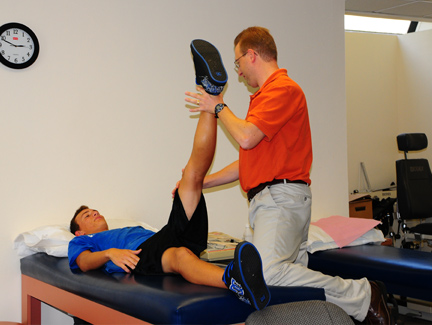
Physical Therapist
Physical therapy is the treatment of any pain, disease, or injury by physical means. Physical therapists work with patients whose movement is compromised due to injury, disease, or age. Their goals are to help patients improve movement and manage pain. Physical therapy has its roots in Great Britain, when four nurses formed the Chartered Society of Physiotherapy in 1894, although the earliest documentation of the profession is from Sweden in 1813. Physical therapists have graduate degrees and are either a Master of Physical Therapy (MPT) or a Doctor of Physical Therapy (DPT)

Physical Therapy

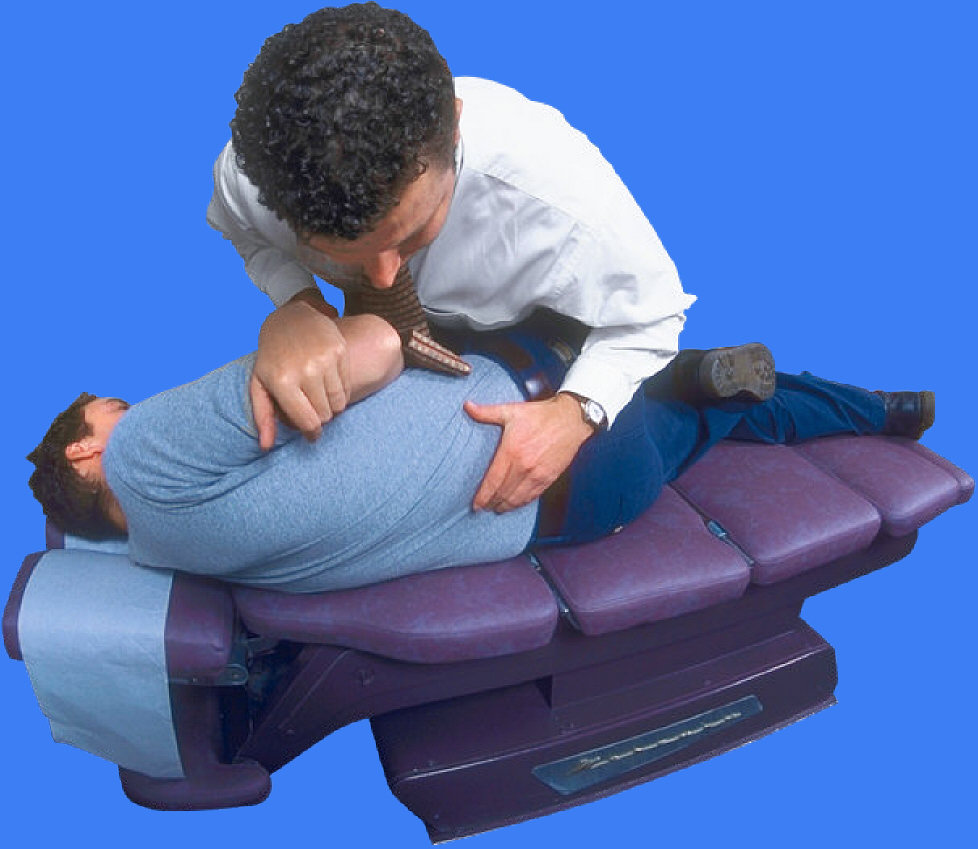
Chiropractor
Chiropractic is considered to be a complimentary or alternative form of medicine that emphasizes manual therapy including joint adjustment and manipulation, in particular for low back pain, neck pain, some kinds of headaches and a number of extremity joint conditions. It has a long history, dating back to 1895, and has stirred controversy over the years for claims that spinal alignment could cure many types of disease. Graduates from North American Chiropractic schools are known as “Doctors of Chiropractic” or DC had have a minimum of 7 years of university. 

Chiropractic

Occupational Therapist
Occupational therapy is focused on helping patients regain the ability to do everyday tasks related to work or home life. They work people  to modify or break down  tasks or adapt the environment to enable clients to reach their goals. They also focus on the optimal way to complete physical tasks for best function. The profession of Occupational Therapy was named in 1920. Occupational Therapists usually hold Masters (MOT) or Doctoral degrees (DOT).
Occupational Therapy

Occupational Therapy

One thing I noticed when doing my reasearch, is that all the professions say they are concerned about the whole health of the individual and many are moving towards prevention of illness or injury. So, if all these professions are concerned about the whole health of the person, prevention, and specifically the health of the musculoskeletal system, how do you know who to see when? Well, that’s a topic for another blog post. And, where do I want to specialize after my undergrad degree? I’m still exploring. Anyone need an intern?


 

TAGGED:kinesiology
Share This Article
Facebook Copy Link Print
Share

Stay Connected

1.5KFollowersLike
4.5KFollowersFollow
2.8KFollowersPin
136KSubscribersSubscribe

Latest News

How to Choose an On-Demand Medical Interpreting Provider for Your Hospital -- AI-generated illustration
How to Choose an On-Demand Medical Interpreting Provider for Your Hospital
Health care
August 12, 2026
The Chemistry Of Drug Consistency -- AI-generated illustration
The Chemistry Of Drug Consistency
Policy & Law
August 12, 2026
Dental Materials Through The Decades -- AI-generated illustration
Dental Materials Through The Decades
Dental health Infographics Specialties
August 12, 2026
DNP or PhD: What Each Actually Means for Your Nursing Career -- AI-generated illustration
DNP or PhD: What Each Actually Means for Your Nursing Career
Career Nursing
August 12, 2026

You Might also Like

medical practice ADA compliance
Medical EducationMedical EthicsPolicy & Law

Ensuring Your Medical Practice is ADA Compliant

September 13, 2021
Medicine Doctor
Health careMedical EducationPublic Health

5 Compelling Reasons to See a Functional Medicine Doctor

July 28, 2021
A patient having his blood pressure taken by a...
Medical Education

Age is not equal to wisdom

June 21, 2012

Ask These 10 Questions Before Starting Any Medication

January 2, 2013
Subscribe
Subscribe to our newsletter to get our newest articles instantly!
Follow US
© 2008-2026 HealthWorks Collective. All Rights Reserved.
  • About
  • Contact
  • Privacy
Welcome Back!

Sign in to your account

Username or Email Address
Password

Lost your password?