Patients
It was a summer of heartbreaking images. Michael Brown’s body lying uncovered in the noon glare of Ferguson. The agony of Steven Sotloff’s mother futilely pleading for her son’s life. The dead children of Gaza. Of Ukraine. Of West Africa. Though, sometimes, a quiet image, burdened by metaphor, has more power to seize the heart than shocking headline photos.
Patients
It was a summer of heartbreaking images. Michael Brown’s body lying uncovered in the noon glare of Ferguson. The agony of Steven Sotloff’s mother futilely pleading for her son’s life. The dead children of Gaza. Of Ukraine. Of West Africa. Though, sometimes, a quiet image, burdened by metaphor, has more power to seize the heart than shocking headline photos.
A video snippet from PBS’s Frontline series held such an image, a fragment of the report “Ebola Outbreak” that aired September 9, 2014 (http://www.pbs.org/wgbh/pages/frontline/ebola-outbreak/). Kadiatu, mother of four sons, was transported to a Doctors Without Borders field hospital with symptoms of Ebola. She contracted presumed Ebola while caring for her father-in-law who died of the viral illness. The ambulance carrying her pulled up to the hospital’s receiving “ward” in steady rain, red mud splashing.
Kadiatu climbed down from the makeshift ambulance. The hospital compound is a labyrinth of orange mesh barriers and tents. She was directed down a mesh-lined path toward the tents, dejectedly clutching her sweater against the rain. The path was marked with a sign that looked like this:
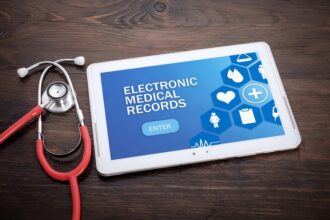

Kadiatu made her way through the orange maze, not glancing at the sign. She was met by white-aproned health workers and led, shivering, to the treatment tents.
My pulse skipped when I read the sign.
Her husband, Fallah, made the same journey a few days later.
Things We Didn’t Know We Wanted
Apple chose September 9th to announce the long-awaited Apple Watch (incorrectly tagged “iWatch” by the over-eager), along with new iPhones. Sleek, elegant and entirely impractical—it must be tethered to an iPhone to work—it will be sold in various versions. An 18-karat gold Apple Watch tops the line. The price of the gold one is estimated at $1200 by expert jewelers. No comment from Apple. As usual.
Apple hardware is gorgeous. (Full disclosure: I’m a high-functioning Mac addict.) Apple software isn’t flawless, but it’s often preferable to the competitors. The iOS platform powers Apple’s mobile devices and supports about a zillion Apple-approved apps. Health is one of those apps, a new offering featured in the latest version of iOS, set for release September 17th. The Health app is a big selling point for the Apple Watch (http://www.apple.com/watch/overview/).
Health is a dream app for hypochondriacs and the worried well. Now self-absorbed fitness geeks can track calories eaten and burned, daily weight, exercise, nutrition, body measurements and vital signs. With graphs. Health will record your sleep habits and store your lab results. The Apple Watch will have a sensor that detects your pulse, displaying it on the watch face if desired. All these data points are stored on the devices. Or can be sent, encrypted, to iCloud.
The data can be sent to your doctors. Who will welcome it slightly more than a Medicare audit notice (See: http://venturebeat.com/2014/08/15/guess-what-doctors-dont-care-about-your-fitbit-data/).
Tim Cook, Apple’s CEO, said, “Our whole role in life is to give you something you didn’t know you wanted. And then once you get it, you can’t imagine your life without it.” Apple Watch, as iPod, iPhone and iPad before it, may become another something. For those who can afford it, tracking their  health on Health may prove indispensable.
Gate 6
Ebola is spreading unchecked through West Africa. It threatens to turn from crisis to cataclysm in a matter of days. President Obama ordered 3000 military personnel to aid the Ebola control effort with supplies, logistics and so forth. Helpful, but entirely inadequate to the challenge.
A bottomless chasm separates health care in developed and developing countries. This situation seems largely acceptable to the West. It’s rarely noted in policy debates. WHO and Doctors Without Borders have it covered. (Don’t they?) The philosophical arguments about fairness and the less fortunate are centuries-old. No new insights forthcoming.
That Ebola, an infectious disease with high mortality and a macabre death, is spreading out of control is regrettable. American aid workers, critically ill, airlifted home for intensive care, make compelling news. But the developed world isn’t in danger from plagues of hemorrhagic fevers. So we glance at the news from Africa, feel a twinge of sympathy and move on about our days.
We wonder whether we can afford gold Apple Watchs with Health apps.
Perhaps the magicians in Cupertino can engineer a different Health app. A different sensor. A sensor that shows the content of our hearts on the Apple Watch screen. A bright graph of our humanity. Maybe it could tell us when it was time to walk through our Gate 6s on the way to PATIENCE. And compassion.
Kadiatu survived. Fallah didn’t.