We use cookies, including third-party cookies from Google to serve personalized ads through AdSense, to operate this site and understand how it is used. By continuing to browse, you accept this use. See our Privacy Policy and Terms of Use for details, including how to opt out of personalized advertising.
Accept
Health Works CollectiveHealth Works CollectiveHealth Works Collective
  • Health
    • Mental Health
  • Policy and Law
    • Global Healthcare
    • Medical Ethics
  • Medical Innovations
  • News
  • Wellness
  • Tech
Search
© 2023 HealthWorks Collective. All Rights Reserved.
Reading: VNA Usage Trends and Medical Imaging Storage Needs
Share
Notification Show More
Font ResizerAa
Health Works CollectiveHealth Works Collective
Font ResizerAa
Search
Follow US
  • About
  • Contact
  • Privacy
© 2023 HealthWorks Collective. All Rights Reserved.
Health Works Collective > Technology > VNA Usage Trends and Medical Imaging Storage Needs
Technology

VNA Usage Trends and Medical Imaging Storage Needs

Cristine Kao
Cristine Kao
Share
4 Min Read
SHARE

According to a recent report published by IHS, the compound annual growth of VNA storage worldwide from 2011 to 2017 is expected to be at 48%. With the benefits VNA has to offer such as data management, disaster recovery, communications and security, the expectation is to drive increased use of this technology and make it the preferred storage platform for medical imaging.

According to a recent report published by IHS, the compound annual growth of VNA storage worldwide from 2011 to 2017 is expected to be at 48%. With the benefits VNA has to offer such as data management, disaster recovery, communications and security, the expectation is to drive increased use of this technology and make it the preferred storage platform for medical imaging.

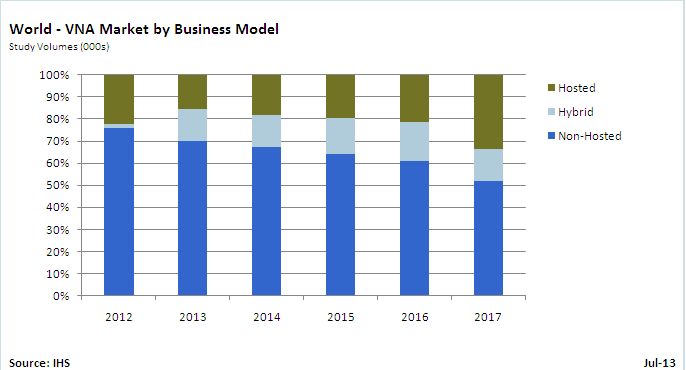
IHS recognized three main VNA delivery models: non-hosted, hosted, and hybrid. The report confirmed that non-hosted VNA models continue to dominate in the world market. However, the chart also shows that hosted VNAs are predicted to grow at the fastest rate out of the three. This should not come as a big surprise since cloud services continue to grow in the healthcare industry, and hosted storage space for medical images has grown threefold since 2005.
VNA model

More Read

AI detector in healthcare
How AI Detection Tools Are Transforming Healthcare for Better Accuracy and Safety
Will Technology Eliminate Doctors in the Future?
People Suffering From Hearing Loss Can Be Helped By Technology
The Critical Role of Maintenance Management Software in Healthcare
TruTouch Technologies Receives US Patent For Non-Invasive Alcohol Detection Device

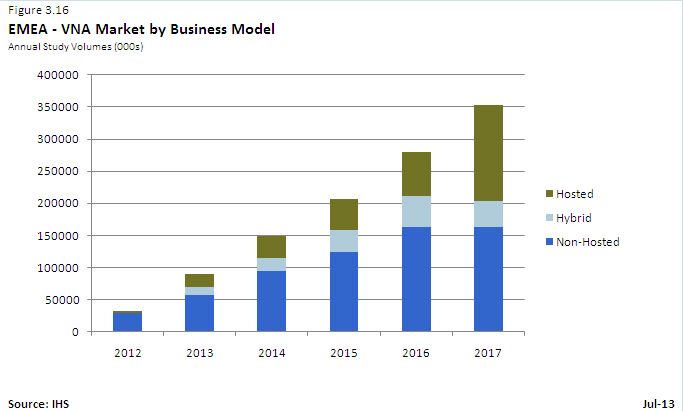
More interesting is the breakdown of these statistics by region. It is clear from each breakdown that hosted VNAs are going to be the biggest growth area, but some regions, such as EMEA, are predicted to slightly decrease in hybrid and non-hosted VNAs by 2017.
medical imaging storage

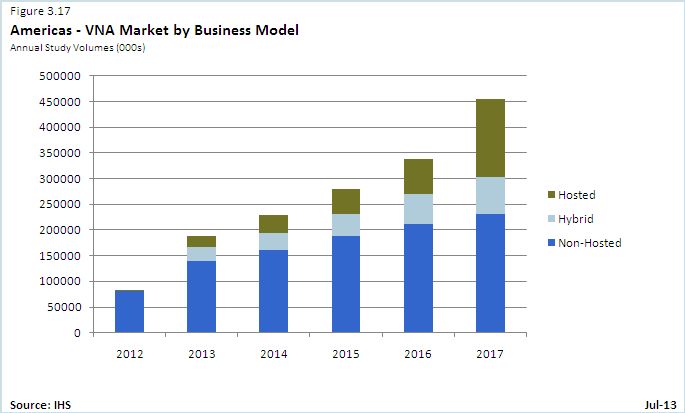
In the Americas, strong growth is predicted across all three business models, with hosted showing the second largest percentage of growth among the three regions.
medical imaging trends

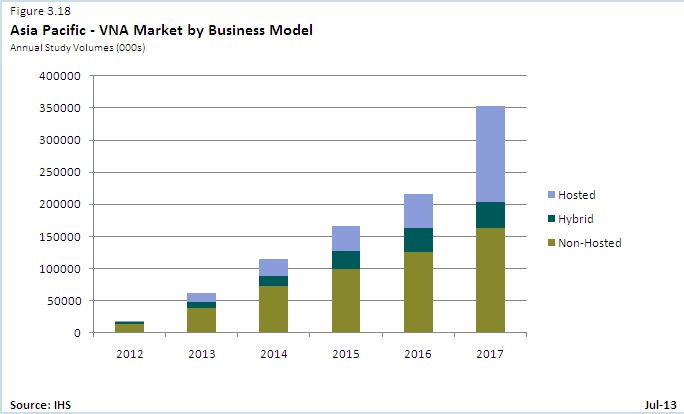
The Asia Pacific region is predicted to have the largest hosted VNA growth of all the regions. More surprising is that non-hosted VNA adoption will continue to grow at a healthy rate through 2017. With adoption being so low in 2012, and strong progress made in 2013, it is clear that this region poised to be leader in VNA usage.
VNA models Asia Pacific

Healthcare providers around the world view on-site vendor-neutral archiving platforms as a reliable solution that simplifies data management and enables secure information sharing across multiple locations or users. In addition to helping equip clinicians with a comprehensive view of patient clinical information, cloud-based archiving can simplify and consolidate storage resources to reduce costs and enhance workflow by eliminating departmental silos of clinical information.

While we are proud at Carestream to be ranked as the third largest VNA supplier in the world, we recognize that there is still a long way to go when it comes to meeting the storage, protection, and access needs of our customers. We, and all VNA providers, certainly have our work cut out for us to meet these trends in an effective and efficient manner. It is a challenge and one we embrace and look forward to meeting.


TAGGED:Health ITmedical imagingVNA
Share This Article
Facebook Copy Link Print
Share

Stay Connected

1.5KFollowersLike
4.5KFollowersFollow
2.8KFollowersPin
136KSubscribersSubscribe

Latest News

The Myth That Keeps People Stuck -- AI-generated illustration
The Myth That Keeps People Stuck
Addiction Recovery
August 25, 2026
What Hospitals Need to Know About EU MDR -- AI-generated illustration
What Hospitals Need to Know About EU MDR
Business Hospital Administration
August 18, 2026
How to Choose an On-Demand Medical Interpreting Provider for Your Hospital -- AI-generated illustration
How to Choose an On-Demand Medical Interpreting Provider for Your Hospital
Health care
August 12, 2026
The Chemistry Of Drug Consistency -- AI-generated illustration
The Chemistry Of Drug Consistency
Policy & Law
August 12, 2026

You Might also Like

Could Apple Store-like digital health retail stores be popular?

November 30, 2015
healthcare social media
eHealthMedical InnovationsSocial MediaTechnology

Social Threat Protection Now Critical for the Health Industry

October 30, 2013
hospital executives
BusinessHospital AdministrationTechnology

How Hospital Execs Can Keep Up in the Fast-Paced Tech World

February 20, 2015

Healthcare and Health IT in 2015: Seeking Simplicity

January 8, 2015
Subscribe
Subscribe to our newsletter to get our newest articles instantly!
Follow US
© 2008-2026 HealthWorks Collective. All Rights Reserved.
  • About
  • Contact
  • Privacy
Welcome Back!

Sign in to your account

Username or Email Address
Password

Lost your password?