It’s a fast-paced world and the need for efficiency in all areas definitely extends to the office; the daily grind will grind you under its heel if you can’t keep the pace. Technology helps with that, so if you have the option to try electronic medical records, you should take it. Keeping detailed, flawless records can actually make your business or practice more successful, in addition to saving you money and time.
Proactive Patient Care
One of the most persuasive reasons to embrace electronic medical records is the ability to offer better care to patients. Having electronic records at the ready will let the staff know when someone is due for a check-up, an important test, or a follow-up. At a touch, you can pinpoint when a patient needs a vaccination or a booster, along with blood type, blood pressure, sugar levels, and much more. It will make the office more efficient, but not to the detriment of service, commitment, and care. The care is more comprehensive as well. Electronic records make it easier to monitor any chronic conditions, as well as short-term illnesses. Coming up with a care plan is a smoother process and a more successful one, owing to the convenience of having all the information readily available.
An Absence of Paperwork for Everyone
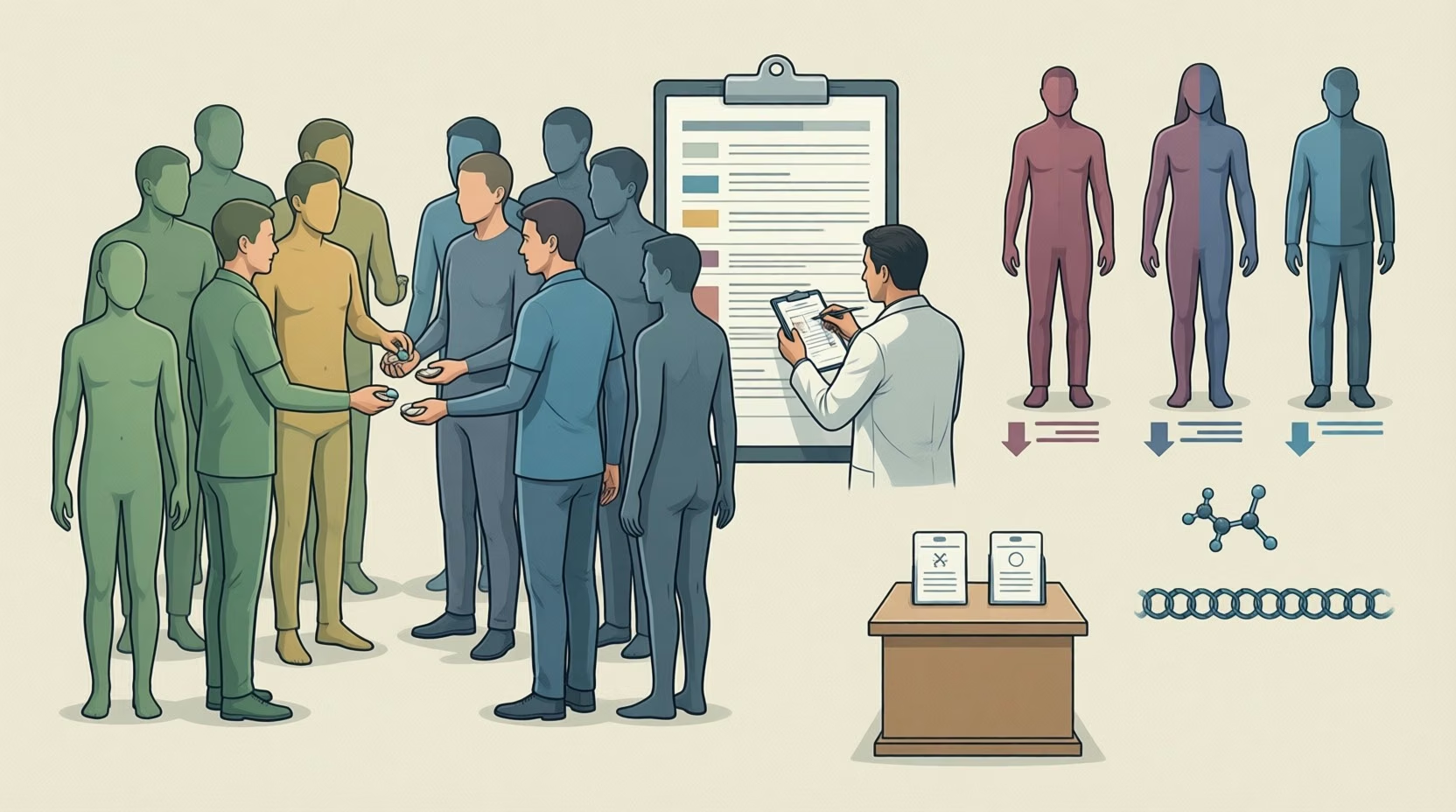
This fast-paced world is also an increasingly green one, which is one benefit of having electronic records. The lack of paperwork is a blessing to the environment and will cut costs in paper consumption for you as well. As wonderful as that is, there’s an even better reason, one you’ll understand if you’ve ever been handed a clipboard. With electronic billing, there’s no need for paperwork. Visitors don’t have to come in and immediately sit down with a clipboard and a ream of papers, answering questions to which they barely remember the answers. It’s a boon for doctors and nurses as well, because they don’t have to repeatedly transcribe the same information. That, too, leads to even better patient care. There’s also less risk of records getting misplaced, destroyed, mixed up, or lost.
A Better Take on Tests
Your electronic records will let you know when a patient needs a specific test, but what about the results? They go in the records too, and they make laboratory billing services easier as well. Because you have an instantly updated record, you’ll never get overcharged for a test—or, worse, charged for a test that was never performed.
An Improved System for Prescriptions
Keeping electronic records is helpful when it comes to patient prescriptions as well. Real-time updates keep prescription notes and histories at the ready. Furthermore, because all the records sync, there’s an alert any time a new prescription triggers an allergy or clashes with an existing medication. The risk of prescribing the wrong dose or the wrong medication decreases as well, which is good for the patients and the practice. Prescription and medication errors can lead to enormous problems.
Increased Security for Patients
One of the biggest benefits of moving to an electronic system has to do with the security of patient privacy. HIPAA is an essential consideration in the healthcare industry, and without it there is no trust between healthcare professionals and patients. With paper records, so many things can go wrong. It puts the patients, the doctors, the nurses, and the record staff at serious risk. Say a doctor’s office that still relies on a paper system moves to a different place. In the course of moving with paper records, things could get lost, thereby essentially losing the patients’ medical histories. There’s the risk of theft, burglary, and destruction as well. Using electronic records erases many of those risks. Patients’ rights and records are safe and secure—along with insurance information, addresses, private details, and financial records. From saving time and money to providing an even higher standard of care, embracing electronic medical records can improve the running and overall atmosphere of any healthcare facility. Have you weighed the advantages enough to make a decision yet?