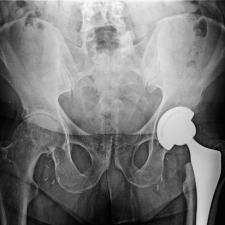
 Organic growth of total joint replacement volume is growing at 3-4% per year as the number of physicians entering orthopedic residency programs is in decline. Cuts in Medicare reimbursement for total joints is forecast every year, producing stressors for the surgeon to perform more surgery just to tread water financially.
Organic growth of total joint replacement volume is growing at 3-4% per year as the number of physicians entering orthopedic residency programs is in decline. Cuts in Medicare reimbursement for total joints is forecast every year, producing stressors for the surgeon to perform more surgery just to tread water financially.
Hospitals spend a sizeable investment on making sure patients are prepared for surgery and the operating room is performing at peak capacity, but sometimes the patient preparation and scheduling is not managed strategically.
From a patient’s point of view, the process leading up to surgery may feel slow, disintegrated and fragmented. A non-standardized process creates waste and patients can slip through the cracks. Unprepared patients then continue to have downstream problems after surgery… including readmissions, poor outcomes and low satisfaction.

Do you know how much it can cost when your surgery processes fail? Here’s a look at some of the costs of unprepared patients and poor surgery planning:
-
Researchers at Tulane University Medical Center found that in 2009, 6.7% scheduled elective outpatient surgeries were cancelled, costing the hospital nearly $1 million that year alone. Almost a third of the surgeries were cancelled because of patient reasons.
-
Researchers in Israel attributed 12% of OR “time waste” to delays because of inappropriately prepared patients.
-
OR managers often use a ballpark number of $15-20 in OR costs per minute for a basic surgical procedure, or estimate $1,000-2,000 contribution margin per OR hour.
-
With orthopedic nurses salaries around $81,000, it costs healthcare organizations $15-20 in staff time per call to answer easy questions from patients on their preparation instructions or follow-up care. These calls can also get in the way of truly urgent calls.
The opportunity for improvement is large if you can find a way to systematically organize your patient and staff preparation activities into distinct paths to make it easy for people to follow.
An upcoming free webinar, “Total Joint Replacement- Improving Day of Surgery Efficiency and Throughput,” will focus on time-saving efforts to make sure your day of surgery goes smoothly. Sandy Nettrour, Neurosurgery and Orthopedic Service Line Coordinator for Butler Health System, will share a variety of orthopedic surgery efficiency tactics, including:
- Pre-op patient preparedness
- Resolving inherent conflicts
- Surgical case order
- Tracking case efficiency
- Surgical tray streamlining
Increasing surgical volume without increasing time in the day requires a team approach to process improvements. By taking a fresh look at operating room processes, it’s possible to accomplish this goal.
(Surgery processes / shutterstock)