By using this site, you agree to the Privacy Policy and Terms of Use.
Accept
Health Works CollectiveHealth Works CollectiveHealth Works Collective
  • Health
    • Mental Health
  • Policy and Law
    • Global Healthcare
    • Medical Ethics
  • Medical Innovations
  • News
  • Wellness
  • Tech
Search
© 2023 HealthWorks Collective. All Rights Reserved.
Reading: Are Health Organizations Missing 90% of Behavior Change Opportunities?
Share
Notification Show More
Font ResizerAa
Health Works CollectiveHealth Works Collective
Font ResizerAa
Search
Follow US
  • About
  • Contact
  • Privacy
© 2023 HealthWorks Collective. All Rights Reserved.
Health Works Collective > eHealth > Social Media > Are Health Organizations Missing 90% of Behavior Change Opportunities?
eHealthSocial MediaWebcast

Are Health Organizations Missing 90% of Behavior Change Opportunities?

Jayme Hummer
Jayme Hummer
Share
2 Min Read
Embedded, Socialized, Proacting
SHARE

Is it possible that health organizations have become over-reliant on Facebook, Twitter and Google to deliver health information?  These two social properties receive the lion’s share of attention.  We have also been taught that search is the gateway to the health Web.

Is it possible that health organizations have become over-reliant on Facebook, Twitter and Google to deliver health information?  These two social properties receive the lion’s share of attention.  We have also been taught that search is the gateway to the health Web.

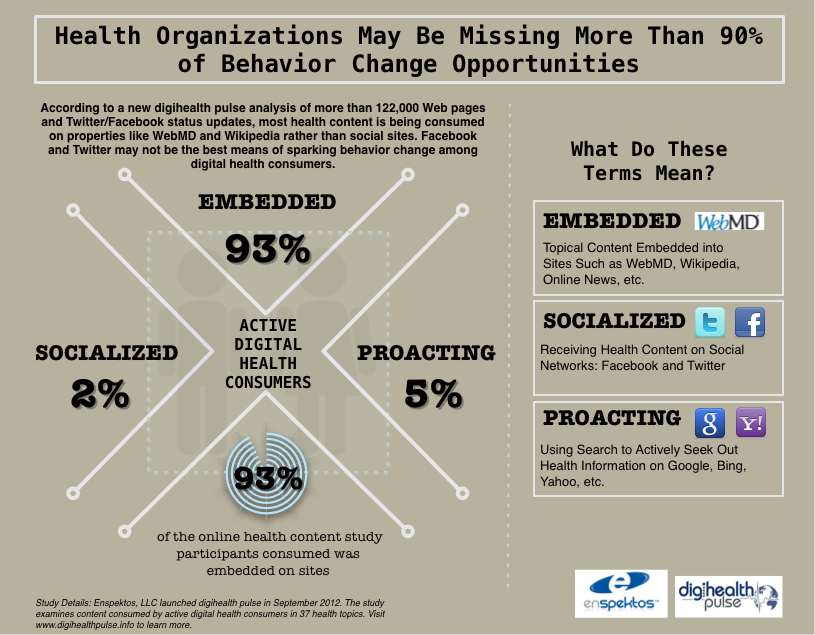
New data on what online health content people actually consume (versus what they report on online surveys) suggests those focusing primarily on these sites could be missing more than 90% of opportunities to shape health behavior.  For executives seeking to use the Web to encourage healthier eating, boost vaccinations, change how people exercise, promote medication compliance and modify other health behaviors this is critical information.

Our conclusions are based on an analysis of more than 122,000 Web pages and Twitter/Facebook status updates consumed from September 20 to October 1, 2012 by people participating the Digital Health Consumer Tracking Study or digihealth pulse.  We are tracking (in real-time) online and social media health content study participants are encountering across 39 topics, including Obamacare, heart disease and sexually transmitted diseases. (Non-advertising or earned/owned media content is being collected.)

More Read

mHealth
Medical Abbreviations Explained by Mobile App
Why Healthcare Marketers Shouldn’t Only Be Targeting Millennial Patients Online
Collaboration, Consolidation Should Define 2014 for Health Tracking Wearables, Apps
Hospitals Ineligible for Incentive Payments Lag Behind in EHR Adoption
When Patients Leave: Why They Fire the Doctor

Embedded, Socialized, Proacting


Share This Article
Facebook Copy Link Print
Share

Stay Connected

1.5KFollowersLike
4.5KFollowersFollow
2.8KFollowersPin
136KSubscribersSubscribe

Latest News

Understanding Leaky Gut Syndrome
Health
February 25, 2026
Invisalign for Adults: Is It Too Late to Straighten Your Teeth?
Dental health Specialties
February 24, 2026
roads are important for health
How Everyday Roads Create Lasting Health Consequences 
Health
February 24, 2026
How Balanced High-Protein Meals Fit Into Modern Wellness Routines
Uncategorized
February 18, 2026

You Might also Like

Healthcare CEO mobile training
eHealthHospital AdministrationMobile HealthTechnology

Healthcare CEOs Want Mobility Training

April 3, 2014

e-Patients, Quantified Self and Self-Efficacy; Self-Monitoring Through Technology

November 7, 2011

Does Your Hospital Stay in Touch with Patients All the Time?

October 26, 2012

Improving Modern Medicine: Why Social Media is Just What the Doctor Ordered

May 21, 2012
Subscribe
Subscribe to our newsletter to get our newest articles instantly!
Follow US
© 2008-2025 HealthWorks Collective. All Rights Reserved.
  • About
  • Contact
  • Privacy
Welcome Back!

Sign in to your account

Username or Email Address
Password

Lost your password?