Many of the challenges of aging in place, such as security, mobility and isolation are being met by exciting new technologies, allowing seniors to remain independent and avoid the costly alternative of home care or nursing facilities.
Many of these new and / or improved products and services hold tremendous promise to improve the lives of older adults.
1. Digital Assistants / Smart Speakers
Digital assistants like Amazon Alexa, Google Home and Apple’s Siri are one of the most revolutionary technologies to help seniors age in place.

For those suffering from poor vision, arthritis, or poor mobility the ability to use voice commands allow many activities of daily living to be performed on one’s own that used to either be done with great difficulty, not at all or only with the help of a caregiver.
The applications are endless. Seniors can make phone calls, change the TV channel, play their favorite music, get the weather and the daily news all through voice command. They can also program the assistant to remind them of appointments and when to take their medications.
If the system is integrated with smart technology the possibilities are even greater with seniors able to turn their lights on and off, open the front door and adjust the temperature without having to get up or lift a finger.
2. Medical Alert Systems
Falling is the leading cause of injury among older adults. For many older adults living alone, the fear of falling, without the ability to call for help, is very real.
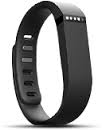
Medical alert systems were designed to alleviate that fear by calling for help in the event of a fall or medical emergency. However, the technology has evolved significantly since it was first introduced. New medical alerts can now be used in and outside your home, have live GPS tracking and automatic fall detection that calls for help in the event of a fall even if you’re unable to make the call yourself.
Medical alert systems give many seniors the security and peace of mind to live alone, despite their risk of falling. With mobile technology, GPS and fall detection seniors can now venture even further on their own, knowing that help is only a click away.
3. Automated Medication Reminders and Dispensers
Medication compliance and adherence is a major issue for seniors. With so many older adults prescribed multiple medications, knowing which medications to take, how much of each and when to take them is a monumental challenge fraught with risk. The challenge is even greater when you consider that many seniors suffer from poor vision, memory impairment and poor finger dexterity making medication management even harder.
The fear of taking the wrong pills or forgetting to take one’s pills is a key reason why many seniors decide to move into a senior residence with medication management services.
That’s why seniors ought to explore one of the many different types of medication management technologies. From a simple pill box, to medication reminder apps, to automated pill boxes with reminders and remote monitored automated medication dispensers there are a host of new products tackling the issue.
New medication management technologies hold significant promise in tackling the issue of medication adherence for seniors living on their own.
4. Telemedicine
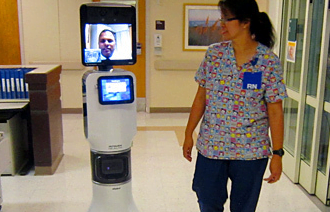
One challenge many older adults have, especially those living alone with mobility issues or in remote locations, is visiting their doctor for check-ups and appointments. Transportation, discomfort and difficulty can make it an exceptionally difficult task. Telemedicine, often used interchangeably with the term telehealth, promises to change that.
Telemedicine allows patients to get health care through real time, interactive communication with a medical practitioner, while the patient is at home and the doctor is at a remote location, usually through some device that includes audio and video. Telehealth includes the use of medical sensors and or equipment in the home that can be remotely monitored by your doctor, with you ever having to leave your home.
Imagine you have a painful rash on your shins. Instead of having to go to the doctor’s office, you can simply have him see the rash via video conference, diagnose the condition and prescribe medication to your pharmacy if required. Your pharmacy can then deliver your prescription right to your door. The convenience and benefits to all parties involved are obvious. Throw in the ability for new technologies to allow doctors and nurses to remotely monitor patient’s blood pressure, heart and more and the benefits of telemedicine and telehealth become obvious.
5. Communication Apps and Devices
Senior isolation and loneliness is a significant threat to the health, well-being and happiness of many older adults who live alone. With declining mobility, getting out of the house and socializing becomes more difficult for many older adults. Isolation can cause depression and is often associated with declining mental and physical health.
That said, we now live in an age where it’s easier and cheaper than ever to stay in touch with family and friends no matter where they are in the world. Whether we Facetime, WhatsAPP, Instant Message, Google Duo or Skype we can instantaneously talk to and see our loved ones with a simple Ipad or smart phone.
Not only do modern communication platforms make it easy for family members and loved ones to stay in touch, you can even use it to allow grandma to participate in family events by letting her “come” to see plays, sporting events and read bed time stories to the grand kids.
Give One a Try
Whether you live alone, or you have a loved one in mind, trying to solve some of the challenges of aging in place is no easy task. That said, new technologies are emerging every day that can make a big difference in the lives of older adults looking to live independently for as long as possible. Give one of the products above a try and see if it makes your life any easier, safer or happier!