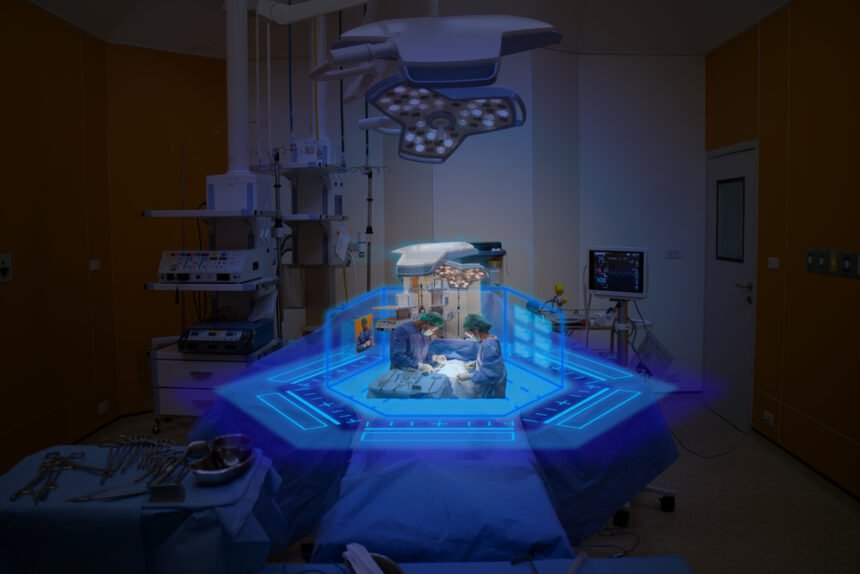
Technology is playing a vital role in changing the face of business, across nearly all verticals around the world. In healthcare, the influx of technological advances has shown incredible promise for the future of diagnostic, treatment, and surgical needs. One of the most notable shifts toward the embrace of technology in healthcare revolves around improving surgical outcomes for some patient demographics. Recently, children’s heart surgeons were green-lighted to use hologram goggles to get a clearer view of a patient’s body during surgery.
At one of the UK’s largest children’s hospitals, plans were delivered that set in motion updated technology use in practise. With the help of approved devices that work similarly to 3D gaming headsets, augmented reality is leading the charge in assisting medical professionals performing intricate procedures. This trend in healthcare technology has the potential to increase efficiency in operation theatres throughout the country, and it lays the groundwork for future improvements across healthcare facilities around the world.
Past and Present Applications
In hospitals and healthcare facilities, technology has been used more prominently to help create safer, more proficient delivery of services to patients in need of medical attention. In the recent past, virtual reality and augmented reality solutions have offered a wide range of healthcare assistance. From tackling issues with resource depletion and scarcity to training and procedure simulation, these technologies have been successfully placed in leading healthcare organisations as a modern strategy for improving patient care.
In addition to these past applications, present uses of VR and AR are focused on rehabilitation, pain management, behavioural therapy, and surgical intervention. The introduction of hologram capabilities in surgical theatres in the UK highlights the move toward comfort and understanding of complex tech systems. Regardless of the intended outcome of AR and VR in healthcare, the shift in how medicine is delivered is taking place now. Patients, medical professionals, and tech firms alike are encouraged by what lies ahead for technology in medicine.
Breaking Down the Technology
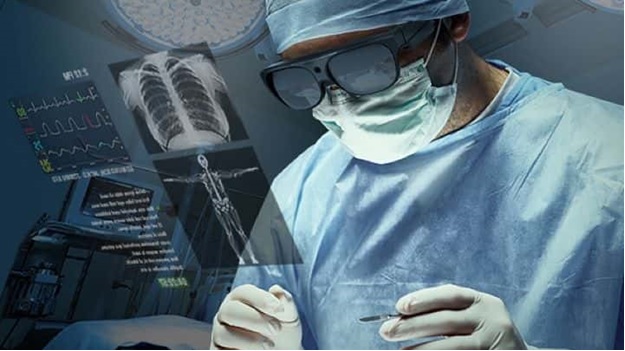
Within the new plans for children’s heart surgeons in the UK, a clear path toward practical use of AR and VR is seen. The technology affording surgeons the ability to see inside a patient’s body is made available through a partnership with Microsoft under its HoloLens development. The mixed-reality headset gives surgeons the ability to take CT scans previously completed for a specific patient and overlay a 3D digital model projected over a patient’s body during the procedure. In doing this, the surgeon can clearly see the inside of the individual’s body with accuracy – without having to lean on a memory of general models.
According to a group of medical malpractice claims specialists in the UK, this form of mixed-reality technology in use at children’s hospitals has the potential to reduce the occurrence of surgical errors drastically. With hologram images, surgeons have a better perspective of the patient body makeup, and they can utilise this detailed image to plan out the procedure accordingly. Decreasing the prevalence of medical malpractice and errors during surgery gives greater effectiveness to the medical community at large. Ultimately, doctor-patient relationships improve, surgical efficiencies increase, and total patient outcomes are better with the help of AR and VR tech.
Future Implications for Healthcare
While the use of hologram images in surgical settings is promising for many healthcare organisations throughout the world, augmented reality and virtual reality uses are far-reaching in medicine. One of the most practical implementations of this advanced tech in practise is medical training. With the help of augmented reality, healthcare workers have an opportunity to learn far more information about the body, how it functions, and how to treat conditions that are complex or high-risk. Instead of relying on printed information, AR applications offer medical professionals the ability to visualise and interact with accurate representations of the human body.
In addition to training, AR in healthcare is also being slated for patient education. Using visual aides projected through augmented reality tools, doctors, surgeons, pharmacists, and staff can show, not just tell, patients about their surgical options, their treatment recommendations, and their medication regimens and the impact they may have on the individual’s recovery and healing. The combination of these techniques for surgery, training, and patient communication is poised to change healthcare in the very near future, for the better.