We’ve discussed previously how medical societies, healthcare practitioners and life science product developers are increasingly concerned about reducing costs of healthcare product development and delivery – both for the developing company and the end patient or consumer. Cost-effectiveness and “cost control” are the new watchwords.
We’ve discussed previously how medical societies, healthcare practitioners and life science product developers are increasingly concerned about reducing costs of healthcare product development and delivery – both for the developing company and the end patient or consumer. Cost-effectiveness and “cost control” are the new watchwords.
But much of this cost control will come not from cutting R&D budgets or reducing unnecessary tests (though those are important considerations). Instead, a targeted look at healthcare customers and the development of sensitive, intelligent information technology that can track patient progress and capture customer preferences will pave the way to innovative and revolutionary healthcare delivery.
An ideal information system should track product (or service) quality, total patient outcome and the cost of treatment for the entire time a patient is sick. In addition, this information system should monitor and discover behaviors that can prevent illness from happening, or check up remotely on a healthy healthcare consumer (such as a pregnant woman). This will require a “democratization” of IT; a design of systems that anybody can use and that contain metrics that are shared among platforms:
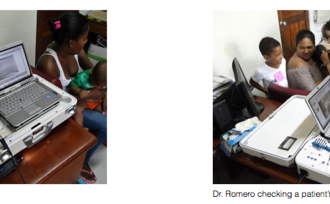
- As Paul Sonnier observed in his latest post, customers are becoming more aware, more informed, and more demanding of healthcare. And they’re getting their information with better IT, using smart phones, tablets and the Internet to get the information they want and need. They’re not waiting for their physicians or life science companies to deliver it.
- Healthcare IT is expanding its focus from the individual patient in a single care setting to playing a major role in public health.
- Today, about 51 percent of physicians use some EHR system (that’s up from 18 percent in 2001).
- While these trends mark a revolution in healthcare, there are warning signs. Although tens of thousands of healthcare apps are now available on smart phones and other devices, many have very limited focus and are quite specific to a certain disease or procedure, and many other programs simply do not work as advertised, according to Alan Labrique, director of the Johns Hopkins University Global mHealth Initiative. Labrique is one of the first researchers to use academic tools to determine the effectiveness of mHealth programs. For many apps, scale up is problematic; consistent end-user data input is another issue for even the most valuable apps.
Do you think a robust, scalable information system technology could be developed to integrate and handle this new wave of healthcare information and mHealth tools at both the delivery and the consumer level? What are some solutions to scale-up problems (such as not being able to give smartphones to everyone)? How can we integrate and share electronic health data across multiple platforms, while preserving security and convenience? Where does the responsibility for integration lie? We’d love to hear your suggestions.
This post originally appeared on the Popper and Co blog.