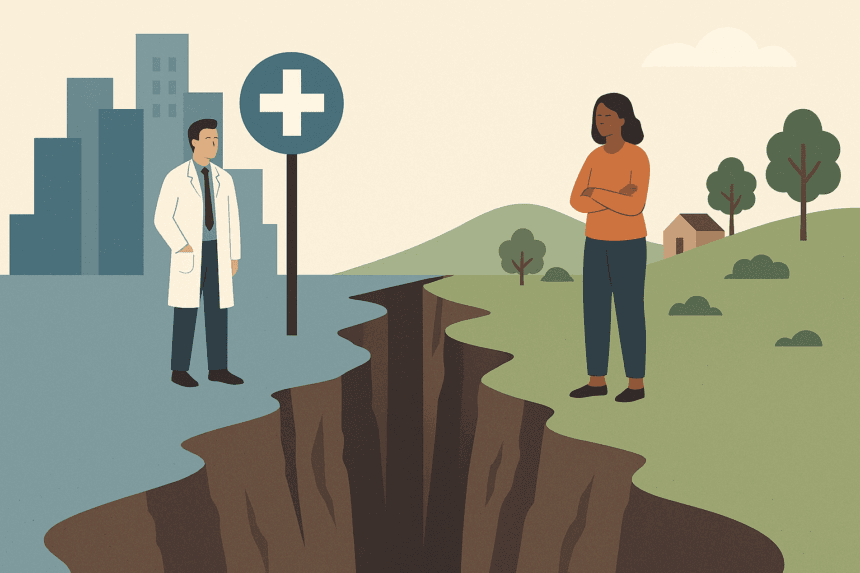
Rural healthcare access often changes the moment someone leaves a city. The same insurance card may still apply, but nearby clinicians, specialists, and behavioral health services can disappear quickly as provider networks thin beyond metro areas.
Closing that gap requires more than building new hospitals or clinics. It also requires workforce roles that bring clinical care, prevention, and behavioral health support into underserved communities instead of asking patients to travel hours for it.
This article explains why the gap exists, which roles help close it, what it takes to prepare for this work, and why workforce investment matters across underserved communities.
Why Rural Healthcare Access Changes Outside Cities
Provider density, specialist availability, and behavioral health resources often cluster around urban centers. Rural and underserved communities may have far fewer choices and much longer trips for the same appointment. For patients managing chronic illness, that distance is not a small inconvenience.
More Read

Delayed care and unmet behavioral health needs build over time. Conditions that might be manageable with early treatment can become harder to control when the nearest provider is two hours away or the next available appointment is weeks out.
Health Resources and Services Administration (HRSA) Health Professional Shortage Area (HPSA) designations document where communities lack enough primary care, dental, or mental health providers. HRSA reported that primary care HPSAs included more than 101.7 million residents and needed 17,306 additional practitioners to remove those designations.
This is not a temporary problem. Rural health disparities reflect long-running gaps in workforce distribution, transportation, broadband access, and local service capacity. Policy efforts can help, but communities still need clinicians who can practice where the need is greatest.
How Community Health Nursing Brings Care Closer to Home
Community health nurses are trained in clinical care, outreach, education, and system navigation. They meet people in homes, schools, and other community settings rather than waiting for every patient to find a clinic. That approach can make care more reachable for people with limited transportation, mobility, or time away from work.
This role functions as a bridge between underserved populations and a healthcare system that often assumes patients live near a hospital or established provider network.
Outreach-based care can support chronic disease management and preventive services by giving patients a regular point of contact. A nurse who helps a patient understand medications, schedule follow-up care, or connect with food and transportation resources can prevent a missed appointment from becoming a larger health crisis.
Why Rural Mental Health Needs the Same Bridge
The same care gap is clear in behavioral health. Many underserved communities have no local counselor or therapist, while the services that do exist may have long waitlists and limited hours.
Becoming a licensed counselor requires clinical skills, supervised experience, and the ability to build trust with patients. Counselors who train for rural mental health practice can provide care in communities where a referral to an out-of-town specialist is not a practical answer.
Mental health shortages are extensive: HRSA counted 148.6 million people living in mental health HPSAs as of March 31, 2026, with only 26.78% of provider need met. A community without nearby primary care often also lacks timely counseling, psychiatric care, and substance use treatment.
What Builds a Workforce That Can Close the Gap?
Workforce development is central to solving rural healthcare challenges, though facilities, transportation, and technology also matter. Clinicians need training in outreach, cultural humility, and practice models designed for rural or underserved settings. Adding clinical seats in urban programs alone will not reliably place providers where shortages are most severe.
Flexible and accessible training pathways matter, too. People already living in underserved communities may be well positioned to serve their neighbors, but they need education options that do not require relocating to a city for a credential.
Each additional community health nurse or licensed counselor practicing in an underserved area can narrow the distance between patients and care. Hospitals, clinics, and public health leaders can start by assessing local shortages, partnering with training programs, and creating roles that allow clinicians to work where patients actually live.
Conclusion
The divide between city and rural care is not inevitable. Better access in rural communities depends on placing and supporting the right workforce: nurses who can reach patients where they are, counselors who can provide local behavioral health care, and training programs that help local residents enter those roles. For healthcare leaders, the practical next step is to treat workforce placement as a core access strategy, not an afterthought.