Medicaid expansion is a key component of the plan to bring health coverage to millions of additional Americans. However, according to the results of a study published in this week’s edition of Health Affairs, almost one-third of physicians surveyed said that they did not want to accept new Medicaid patients.
Medicaid expansion is a key component of the plan to bring health coverage to millions of additional Americans. However, according to the results of a study published in this week’s edition of Health Affairs, almost one-third of physicians surveyed said that they did not want to accept new Medicaid patients.
Most cite low reimbursement rates as their main reason. Researcher Sandra Decker found that “31 percent of physicians were unwilling to accept any new Medicaid patients… Physicians in smaller practices and those in metropolitan areas were less likely than others to accept new Medicaid patients.”
This may change if reimbursement rates rise, but chances are, a lot of new enrollees will have a tough time finding primary care doctors – about 16 million low-income people will get insurance through Medicaid according to the Wall Street Journal.

To further complicate matters, at least a third of the states have opted out of Medicaid expansion – meaning that low-income people will have to find insurance on their own – likely through newly-formed health insurance exchanges (HIE) mandated under ACA.
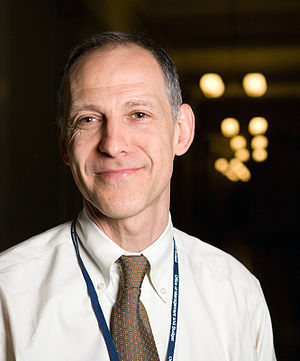
Zeke Emanuel (photo credit: Wikipedia)
Of course, that assumes they’re up and running. States that have not yet started setting up HIEs had better get their act together soon, according to health policy guru Ezekiel Emanuel, chair of medical ethics and health policy, University of Pennsylvania.
In a blog post on The Hill, he pointed out that exchanges must become operational within about a year, so participants have enough time to plan and enroll before the January 1, 2014 launch date. The federal government is stepping in to establish exchanges in at least 17 states that have refused outright to do so on their own.
It’s quite possible that as many as two-thirds of the states will have to rely on the Department of Health and Human Services to assist with set up and implementation according to a Kaiser Family Foundation brief. The New York Times estimates that number closer to 50 percent.
Either way, HHS has a huge job with a very real, solid deadline. As Emanuel stressed, they have to get it right, right from the beginning. “Having a successful launch, is critical. If the exchanges are perceived as easy to navigate, quick to respond, and information rich but not overwhelming with good support services much of the uncertainty and resultant opposition to the individual mandate—and the ACA more generally—will dissipate.“
Physicians that refuse to accept new Medicaid patients are just making it harder on the doctors that will. You know, the ones that are in healthcare for reasons other than money.