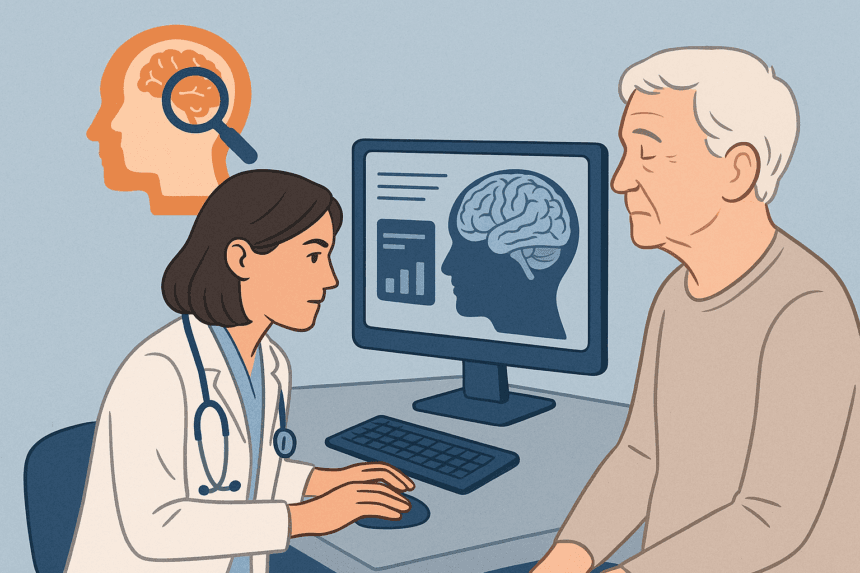
Dementia diagnosis is becoming more accurate at earlier stages, giving patients, caregivers, and clinicians more time to plan care and pursue appropriate treatment. New dementia tests combine clinical evaluation with cognitive testing, brain imaging, and dementia biomarkers to help identify the likely cause of cognitive decline.
- How New Tools Support Dementia Diagnosis
- Artificial Intelligence in Diagnostics
- Wearable Devices and Remote Monitoring
- Genetic and Molecular Markers
- What Can Cognitive and Neuropsychological Tests Show?
- How Imaging Improves Early Dementia Detection
- How Fluid-Based Dementia Biomarkers Are Changing Testing
- Can Digital Health Tools Spot Cognitive Changes Earlier?
- Why an Earlier Diagnosis Matters
- What Research Still Needs to Address
- Frequently Asked Questions
- Can a blood test diagnose Alzheimer’s disease by itself?
- When should someone ask about dementia screening?
- Does a genetic risk result mean a person will develop dementia?
- Charting the Future of Dementia Diagnosis
How New Tools Support Dementia Diagnosis
A major advance in dementia diagnosis is the use of emerging technologies alongside a thorough clinical assessment. Artificial intelligence can help analyze large datasets, including medical records, imaging findings, and genetic information, to identify patterns that may warrant further evaluation.
Artificial Intelligence in Diagnostics
Artificial intelligence can support diagnostic accuracy and efficiency, especially when clinicians review complex imaging and clinical data. AI tools may help detect structural and functional brain changes linked to dementia and support decisions based on symptoms, laboratory results, and genetic markers. They should support, not replace, a clinician’s judgment.
Wearable Devices and Remote Monitoring
Wearable devices and remote monitoring may offer useful ways to track changes over time. Smartwatches and specialized sensors can collect data on activity, sleep, mobility, and daily routines. When meaningful changes persist, that information can prompt a healthcare professional to recommend a fuller cognitive evaluation.
Genetic and Molecular Markers
Genetic risk factors for Alzheimer’s disease can help identify people who may benefit from closer follow-up, but genetic risk alone does not diagnose dementia. Genetic testing works best when paired with clinical assessments and, when appropriate, counseling about what the results can and cannot show.
Genetic information may help clinicians identify people at higher risk and discuss preventive steps or earlier evaluation. Molecular markers, including proteins measured in cerebrospinal fluid, can also help clinicians assess whether Alzheimer’s-related changes may be present and track disease progression.
What Can Cognitive and Neuropsychological Tests Show?
Cognitive assessments and neuropsychological tests remain central to early dementia detection. These evaluations measure memory, attention, language, and executive function. They can identify subtle impairments and help clinicians distinguish between conditions such as Alzheimer’s disease and vascular dementia.

How Imaging Improves Early Dementia Detection
Neuroimaging methods such as Magnetic Resonance Imaging (MRI) and positron emission tomography (PET) give clinicians a detailed view of the brain. These tests can reveal structural changes, altered brain activity, and biomarkers that may point to early dementia or another cause of cognitive symptoms.
PET scans that use amyloid imaging agents can detect abnormal protein buildup associated with Alzheimer’s disease. MRI can show structural brain changes and functional connectivity patterns that may help explain early signs of impairment. Imaging results are most useful when interpreted with symptoms, cognitive testing, and other clinical findings.
How Fluid-Based Dementia Biomarkers Are Changing Testing
Researchers continue to study biomarkers in cerebrospinal fluid collected through lumbar puncture. These tests can measure tau and amyloid-beta proteins, offering insight into disease changes across dementia stages. Blood-based biomarkers may provide a less invasive option for people with cognitive symptoms who need further evaluation.
Clinical use still requires care. The Alzheimer’s Association’s 2025 guideline says that blood-based biomarker tests with at least 90% sensitivity and 75% specificity may be used to triage patients in specialty memory care, while more accurate tests may serve as alternatives to PET imaging or cerebrospinal fluid testing in appropriate cases.
Can Digital Health Tools Spot Cognitive Changes Earlier?
Digital health tools create new opportunities for early dementia detection, but they are not diagnostic on their own. Mobile apps and wearable devices can track sleep, physical activity, and social routines. Clinicians may use meaningful changes in those patterns as one reason to recommend formal dementia tests.
Why an Earlier Diagnosis Matters
Early dementia diagnosis can give individuals and families time to discuss care preferences, long-term support, financial planning, and legal matters. It may also help eligible patients consider clinical trials, specialist referrals, and treatments that depend on identifying Alzheimer’s-related brain changes.
What Research Still Needs to Address
Despite meaningful progress, more research is needed to confirm how well these tools perform across diverse populations and care settings. Clearer diagnostic standards can improve consistency and help researchers, clinicians, and technology developers build tools that work in everyday practice.
Frequently Asked Questions
Can a blood test diagnose Alzheimer’s disease by itself?
No. Blood tests can support an Alzheimer’s diagnosis, but they must be interpreted with a patient’s symptoms, history, cognitive assessment, and other clinical findings. In its review of 499 samples, the U.S. Food and Drug Administration found that 91.7% of positive results and 97.3% of negative results matched PET or cerebrospinal fluid findings, but the agency also states that the test is not a stand-alone diagnostic tool.
When should someone ask about dementia screening?
Talk with a healthcare professional when memory, language, judgment, or daily functioning changes persist or interfere with normal life. A clinician can rule out other possible causes, such as medication effects, depression, sleep problems, or vitamin deficiencies, before deciding which dementia tests are appropriate.
Does a genetic risk result mean a person will develop dementia?
No. A genetic result may indicate increased risk, but it cannot predict with certainty whether someone will develop Alzheimer’s disease or another dementia. Genetic counseling can help patients and families understand whether testing is useful and how to interpret the result.
Charting the Future of Dementia Diagnosis
Dementia diagnosis is changing as AI, imaging, cognitive testing, and fluid-based biomarkers become more useful in clinical care. For patients and families concerned about early symptoms, the practical next step is to request a medical evaluation rather than relying on a single test or device. A careful assessment can determine whether further dementia testing, specialist referral, or support services are needed.