Something we felt we should cover today at Healthworks Collective is the health and safety risks older people face as they try to stay active, independent, and connected. It is also important to talk about digital safety because many seniors now rely on phones, apps, portals, and online accounts to manage daily life.
The CDC reports that over 72% of men and 64% of women over 65 have hypertension, and over 36% are obese. Something that makes these numbers concerning is that many older adults already face health risks that can make injuries, scams, medication errors, and missed care more serious. Keep reading to learn more.
Safety Risks Older Adults Need to Take Seriously
Older adults often need to think about safety in a broader way than younger people do. There are many risks that can affect daily life, including chronic illness, mobility problems, medication side effects, vision changes, and hazards inside the home. Another thing families should remember is that safety planning should support independence rather than make older people feel powerless.
Richard G. Stefanacci, DO, MGH, MBA of Thomas Jefferson University, Jefferson College of Population Health and Jayne R. Wilkinson, MD, MSCE of the University of Pennsylvania, Perelman School of Medicine discuss how falls affect older adults. It is one of the most common safety issues families need to understand because even a single fall can change a person’s mobility, confidence, and care needs.

“Not all falls result in an injury. However, more than one third of people who fall report an injury that required medical treatment or that restricted their activity for at least a day. That translates into an estimated 8 million fall injuries each year. Older adults are more likely to break bones in falls because many older adults have porous, fragile bones (a condition called osteoporosis). Some injuries caused by a fall are fatal,” the authors say.
The National Safety Council also shows why fall prevention deserves serious attention. It is a major issue for older adults because fall-related injuries can lead to hospital visits, long recoveries, loss of independence, and higher care costs.
“Over the past 10 years, the number of fall-related deaths among older adults has increased by 51%, while emergency department visits have risen by 38%. In contrast, the number of fall deaths among individuals younger than 65 has increased by only 8%, and emergency department visits for this age group have decreased by 26%,” the authors write.
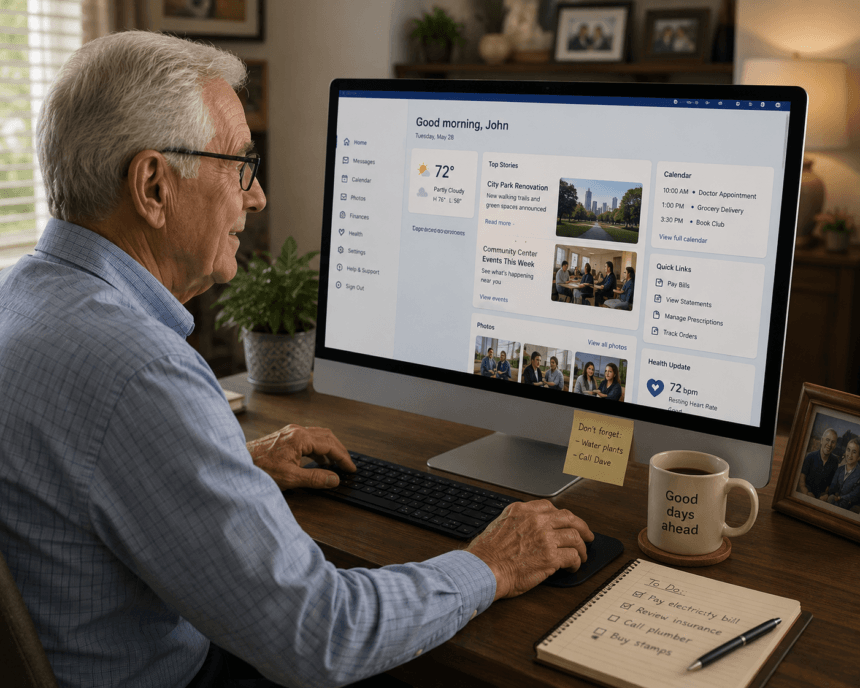
Digital safety has become part of senior safety because many older adults now use online tools to handle healthcare, banking, shopping, and communication. There are many ways online risks can affect older people, including phishing emails, fake medical messages, unsafe links, stolen passwords, and scams that pretend to come from trusted companies. Another thing that makes this serious is that a digital mistake can lead to financial loss, exposed health data, or missed care information.
Older adults may also rely on patient portals, telehealth visits, pharmacy apps, and insurance websites. Something that families can do is help them create stronger passwords, recognize suspicious messages, and avoid sharing personal details with unknown callers or websites. Another thing caregivers can encourage is a habit of checking medical messages through official portals instead of clicking links in emails or texts. It is easier to stay safe when older adults know where trusted information should come from.
Digital safety should not make older people afraid to use technology. It is better to give them practical steps that make online tools safer and less confusing, such as using password managers, two-step login codes, and trusted contact lists.
The internet offers wonderful ways to stay connected with family, manage daily tasks, and explore new interests. For many older persons, it has become an important part of life. However, the digital world also comes with risks, from confusing technical issues to online scams. Families can play a supportive part in helping their older relatives enjoy the benefits of being online while staying protected.
Open and patient conversations are the first step. Discussing online activities and potential concerns in a calm, reassuring way helps build confidence. It is not about causing alarm, but about creating a shared awareness of how to handle common digital challenges together. With a few simple practices, you can help your family members feel more secure as they use their computers, tablets, and smartphones.
Recognising Common Online Scams
Scammers often use deceptive emails, text messages, and phone calls to trick people into giving away personal information or money. These messages can be very convincing, sometimes appearing to be from a bank, a delivery company, or even a family member. It helps to know some of the common red flags.
Be cautious of any message that creates a sense of urgency, such as a claim that an account will be frozen or a bill is overdue. Scammers often try to create panic to prevent a person from thinking clearly. Legitimate organisations will not pressure you to act immediately. Other signs to watch for include:
- Unexpected requests for personal information like a password, bank account number, or PPS number.
- Messages with poor spelling or grammar.
- Offers that seem too good to be true, such as winning a lottery you never entered.
- Requests for payment through unusual methods, like gift cards or wire transfers.
Encourage your family member to pause and think before clicking on any links or downloading attachments, especially if the message was unexpected. If they are ever unsure about a message, it is always best to contact the supposed sender through a trusted phone number or website, not by using the contact details in the suspicious message.
Strengthening Passwords and Accounts
A simple but effective way to improve online safety is by using strong, unique passwords for every account. Many people reuse the same password across multiple sites, which means that if one account is compromised, all of them are at risk. A strong password should be long, ideally at least 12 to 16 characters, and contain a mix of uppercase and lowercase letters, numbers, and symbols.
Remembering dozens of complex passwords is not practical for anyone. This is where a password manager can be very helpful. These applications create and store strong, unique passwords for all online accounts in a secure digital vault. The user only needs to remember one master password to access the rest. This reduces stress and removes the need to write passwords down in a notebook, which can be lost or stolen.
For an extra layer of protection, enable two-factor or multi-factor authentication (MFA) whenever possible. This requires a second form of verification in addition to a password, such as a code sent to a mobile phone. It makes it much harder for an unauthorised person to access an account, even if they manage to steal the password.
A Scenario of Staying Alert
Imagine an older person, Brigid, receives a text message on her phone. It claims to be from her bank, stating that a suspicious transaction has been detected on her account. The message urges her to click a link immediately to verify her details and prevent her account from being locked. Brigid feels a moment of panic. However, her son had recently spoken to her about these kinds of messages. She recalls his advice: banks never ask you to confirm sensitive information through a text message link.
Instead of clicking, she deletes the message and calls her son to let him know. He confirms she did the right thing. Later, they call the bank using the official number on the back of her bank card, and the bank confirms there were no issues with her account. Because of a simple conversation and a piece of advice, Brigid avoided a scam that could have led to financial loss and considerable stress.
Keeping Devices and Software Secure
Keeping the software on digital devices up to date is an important step in maintaining online safety. These updates often contain security patches that fix vulnerabilities and protect against viruses and other threats. Most devices, including computers, smartphones, and tablets, can be set to update automatically, which is the easiest way to ensure they are always protected.
Installing reputable antivirus software provides another layer of defence. It can help detect and block malicious software and alert the user to unsafe websites. It is also wise to be careful when using public Wi-Fi networks, such as those in cafes or libraries. These networks are not always secure, so it is best to avoid accessing sensitive information like online banking while connected to them. Regular conversations and offering a helping hand with technical settings can make a big difference. For families looking for more information, guidance on digital safety support for older persons can provide additional reassurance and practical steps.
Ultimately, fostering an environment of open communication is key. Letting older relatives know they can always ask for help without feeling judged makes them more likely to speak up when they encounter something suspicious. This teamwork helps everyone feel more confident and secure in the digital world.
Health risks and digital risks are now connected in many parts of older adult life. There are many cases where a scam, fake appointment message, or stolen account can affect access to care, prescriptions, transportation, or money needed for basic needs.
Families, caregivers, and healthcare professionals can help older adults stay safer by talking about both physical and digital risks. Something that matters most is making these conversations respectful, clear, and useful so seniors feel supported rather than criticized. Another thing people can do is check homes, devices, accounts, and care routines before a problem happens. It is much easier to protect older adults when safety is treated as an ongoing part of healthy aging.