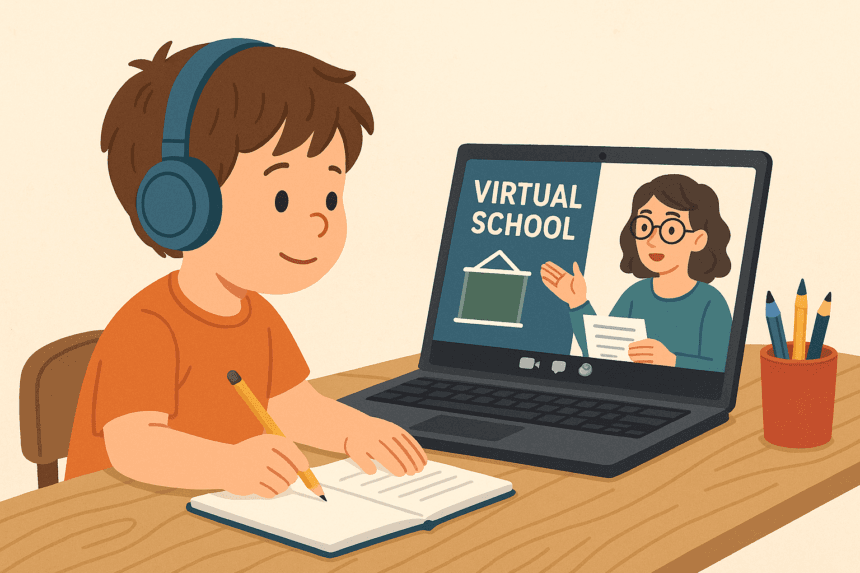
Choosing the right school for a child with special needs means finding an environment that supports both learning and well-being. A virtual school special needs program can be a practical option for some families, particularly when it can coordinate specialized instruction, therapy and family support around a child’s Individualized Education Program (IEP).
- How Virtual Schools Deliver Therapy and Special-Education Support for Children With Disabilities
- A Calmer Learning Environment
- Reduced Bullying Risk
- Flexible Learning Pace
- Stronger Self-Advocacy Skills
- Virtual School Special Needs Support: IEP Services and Therapy
- What Helps Special Education Online Students Succeed?
- Frequently Asked Questions
- Can my child with a learning disability succeed in a virtual school?
- How are IEP services provided in a cyber charter school?
- Can speech, occupational and physical therapy be delivered virtually?
- Will my child still have opportunities to socialize?
- More Than a Different Classroom
If you are considering a virtual school but still have questions, understanding how these programs deliver instruction and related services can help you make a more informed decision. This guide draws insights from Commonwealth Charter Academy (CCA), a Pennsylvania cyber charter school that has provided online education since 2003 and employs certified special education teachers.
How Virtual Schools Deliver Therapy and Special-Education Support for Children With Disabilities
Although many students thrive in traditional classrooms, others may find that crowded environments, sensory distractions, rigid schedules or limited one-on-one support make learning more challenging. For some children with special needs, a virtual school can reduce barriers while still providing IEP-based specialized instruction and related services.
A Calmer Learning Environment
According to CCA, “One of the many benefits of an online special education program is that students can learn from the comfort of their own homes.”
Students who become overwhelmed by busy classrooms or frequent distractions may find learning in a familiar setting more manageable. It may be easier for them to focus and feel less stressed throughout the school day.
Reduced Bullying Risk
School property remains a common setting for bullying, with 19% of U.S. high school students reporting that they have been bullied there. Classrooms account for 39% of reported incidents for sixth- through 12th-graders, followed by hallways or stairwells at 37.5%. While bullying can still happen online, virtual schools remove many physical settings where it often occurs. This can help create a space where your child can focus on learning and building positive connections with peers.
Flexible Learning Pace
Another advantage is the ability to learn at a personalized pace. Your child does not need to keep up with an entire class, which can provide more time for difficult concepts or allow them to move ahead after mastering a skill. This individualized approach can reduce frustration and help build confidence.
Stronger Self-Advocacy Skills
Virtual schools can also help students become more independent learners. CCA explains that students learn to self-advocate because they can choose the pacing for each course. The school notes that receiving special education support online allows students to customize the strategies and interventions that work best for them, which may encourage them to better understand how they learn and communicate what they need.
Virtual School Special Needs Support: IEP Services and Therapy
A virtual school is only a good option if students continue to receive the support they need. High-quality cyber schools integrate special education services into the learning experience so students can continue working toward their goals. The foundation of that support is the IEP. For public virtual schools, a student’s IDEA rights and protections must not be diminished because instruction is delivered online.
“An IEP serves as the common point of communication among a parent, student, the student’s learning support teacher and all teachers involved in online special education. It clarifies the most effective ways in which the student learns,” says CCA.
The IEP helps ensure that accommodations, specialized instruction and instructional strategies remain consistent throughout the school year. It can also guide how therapists, teachers and families coordinate services, whether sessions are delivered virtually, in person or through a combination of both. Depending on a student’s needs, specialized services may include:
- Speech therapy to strengthen communication, language development, reading and social interaction.
- Occupational therapy to improve fine motor skills, adapt learning materials and help students participate more fully in educational activities.
- Physical therapy to support movement, mobility and participation in daily educational routines.
- Board-Certified Behavior Analyst (BCBA) services for behavioral support, often for students with autism or other needs identified by their IEP.
In an online school for special needs students, therapists can use video sessions to model exercises, observe skills in a familiar home setting and coach parents or caregivers on carryover between sessions. Families should ask prospective schools how speech, occupational and physical therapy are scheduled; whether an in-person component is available when appropriate; and how providers document progress toward IEP goals.
Technology can further support learning by making lessons more accessible. Depending on a student’s needs, assistive tools such as text-to-speech software, speech-to-text programs, screen readers and captioning can remove barriers and help students participate more confidently. When an IEP team determines that assistive technology is needed for a student to receive a free appropriate public education, the public agency must provide the needed device or service. These tools and services demonstrate that choosing a virtual school does not have to mean giving up access to comprehensive special education support.
What Helps Special Education Online Students Succeed?
Although virtual schools can be an excellent option for many children with special needs, no learning environment guarantees success on its own. A student’s experience usually depends on the partnership among the student, educators, therapists and family.
As a parent, you can help build your child’s confidence and develop independence. CCA reminds families that “Every day, your child with special needs is challenged with unraveling a confusing jumble of academic demands and social expectations in a world that’s not shaped to their needs.”
The cyber charter school encourages parents to help children work through those challenges by asking questions, seeking clarification and looking for examples whenever lessons become confusing.
Consistent communication between home and school is just as important. Teachers and learning support staff can monitor progress, adjust instruction and identify concerns early. Parents, meanwhile, can share insights about routines, behaviors, therapy carryover and strategies that work well at home. This ongoing collaboration creates a more consistent learning experience for students.
“Regular communications between teachers and parents ensure that children with special needs spend their days amid a consistent atmosphere and expectations, whether the time is being devoted to school or home life,” CCA notes.
Another essential part of a successful virtual learning experience is staying connected. Research has found that loneliness can contribute to burnout in online learning. That is why many virtual schools create opportunities for students to interact outside coursework through live classes, clubs, extracurricular activities and field trips.
CCA says these experiences help students “broaden their experiences, meet friends and learn new skills.” Parents can support this by helping their children make time for activities that interest them.
Frequently Asked Questions
If you are still curious about virtual schools for children with special needs, the following are some commonly asked questions.
Can my child with a learning disability succeed in a virtual school?
Yes, many children with learning disabilities succeed in virtual schools when they have individualized instruction, appropriate accommodations, certified special education teachers and active family support. The best fit depends on the child’s learning needs, ability to engage online and access to the services listed in the IEP.
How are IEP services provided in a cyber charter school?
Students should continue to receive the accommodations, specialized instruction and services outlined in their IEP. In a cyber charter school IEP, teachers, therapists, specialists and families should establish how services will be delivered, how progress will be monitored and when the team will revisit the plan.
Can speech, occupational and physical therapy be delivered virtually?
Many therapy goals can be addressed through scheduled video sessions, provider-guided activities and caregiver coaching. Before enrolling, ask how each service will be delivered for your child’s specific goals and whether the school can coordinate in-person support if it is needed.
Will my child still have opportunities to socialize?
Many virtual schools provide enrichment activities and events that allow students to interact with peers while developing communication and social skills. Families can help by encouraging participation in live classes, clubs and activities that match the child’s interests.
More Than a Different Classroom
For many families, a virtual school special needs program can offer more than a different classroom: it can coordinate individualized instruction, certified special education teachers, IEP support and virtual delivery of therapy services around a child’s routines. The practical next step is to request a detailed explanation of how a prospective school will provide specialized instruction, speech, occupational or physical therapy, assistive technology and ongoing family-provider communication before making an enrollment decision.