Last week the world welcomed its seven billionth child. Whether this child is Maya (the World Bank’s virtual seven billionth child) or Danica (the UN’s symbolic but ‘real life’ seven billionth child from the Philippines), the arrival of the world’s seven billionth person has led to a renewed interest in population across many sectors of government, health, and development work.
Last week the world welcomed its seven billionth child. Whether this child is Maya (the World Bank’s virtual seven billionth child) or Danica (the UN’s symbolic but ‘real life’ seven billionth child from the Philippines), the arrival of the world’s seven billionth person has led to a renewed interest in population across many sectors of government, health, and development work.
Reaching such a substantial milestone was bound to bring about mixed reactions—and it did, from the “more the merrier” musings of Charles Kenny to concerns regarding food security and increasing poverty. But in the background of this population debate is a fertility issue that should be addressed whether or not concerns about global population are in the spotlight—adolescent pregnancy.
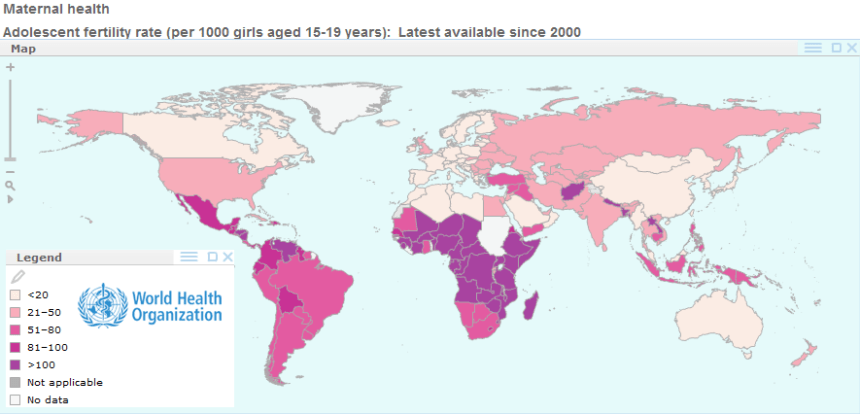
According to a study published earlier this year, every year there are over 14 million births to women between the ages of 15 and 19—with the overwhelming majority (over 90 percent) of these births occurring in low-and middle-income countries. In some countries adolescent fertility is stagnating or actually increasing, as in Brazil and Georgia.
More Read


Putting population issues aside, pregnancy poses a substantial health risk for adolescents. The World Health Organization reports that the health problems associated with adolescent pregnancy include increased maternal and neonatal mortality and increased incidence of preterm or low birth weight, among many other health conditions. In fact, a study from the British Medical Journal found that complications from pregnancy and childbirth were the leading causes of death for young women between the ages of 15-19 in developing countries. Due to the disproportionately high maternal mortality rates among adolescents–which are even higher for those under 15–high rates of adolescent pregnancy can have a negative effect on the achievement of Millennium Development Goals relating to maternal mortality.
Adding to health concerns for mother and child, high rates of adolescent pregnancy might have a broader economic impact. CGD’s Start With a Girl report highlighted that adolescent pregnancy in India may lead to over $100 billion in lost income, an amount equivalent to twenty years of total humanitarian assistance world-wide.
Adolescent girls in general may be an underserved population, but a subset of girls is even more underserved than the rest—married teenagers. A 2009 study of young women in Bangladesh, Nepal, India and Pakistan found that 30-70% of participants were married before age 18. Unfortunately for married adolescents, most programs that aim to reduce adolescent pregnancy are focused on their unmarried counterparts—who are less likely to be exposed to pregnancy, unsafe abortion, and short birth spacing. Although many countries have made 18 the legal age of marriage, almost 10 million teenage girls are married annually (cites).
One problem is that we don’t really know what works to address this. As of a 2009 systematic review, only two RCT of interventions to reduce adolescent pregnancy were run in developing countries. There are now more – 17 by our count – that range from conditional cash transfers to peer teaching programs. However, the efficacy of interventions varies widely, with several showing no effect at all. Given the magnitude of the problem and the fact that the “choices” that young women make today will inform whether we stop at 9 billion people in 2050 or less, is it too much to hope that renewed attention be paid to this issue?
While Maya will be “growing up” behind a computer screen, Danica will be coming of age in a world where child marriage and adolescent pregnancy are a harsh reality—with significant consequences. Hopefully, by the time she reaches 15, she’ll be living in a world where child marriage and adolescent pregnancy are no longer a common occurrence (currently in places like the Philippines, over 10% of women are married before age 18 and the adolescent fertility rate is 53 per 1000 girls 15-19), but that change will be unlikely without substantial—and smart–investments in adolescent health and education.