Every five years, medical professionals are reinventing the wheel.
That is according to Krista Maddox, Assistant Dean for the University of Cincinnati’s Nursing program, who estimates that the half-life for what constitutes modern medical knowledge is only five years. Beyond that, assumptions, practices, and knowledge itself becomes obsolete.
Every five years, medical professionals are reinventing the wheel.
That is according to Krista Maddox, Assistant Dean for the University of Cincinnati’s Nursing program, who estimates that the half-life for what constitutes modern medical knowledge is only five years. Beyond that, assumptions, practices, and knowledge itself becomes obsolete.

Maddox brings up the issue to emphasize how important it is not just to engage medical students with the latest technology and training, but to paint a realistic picture from early on of just how challenging the field has become. It is not enough to survive med school or earn a nursing license; medicine, more than ever, entails a lifelong commitment to learning.
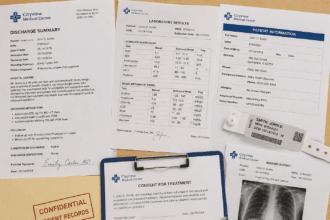
That kind of realism seems to be absent from much of the debate regarding ICD-10, the adoption of which looms on the calendars of many practitioners as the October 1 deadline approaches this year. After four years of delays to full implementation, CMS has finally put its foot down and refused to entertain any further postponements for switching to the updated (and hugely expanded) catalog of medical codes.
Except, of course, for the first year of implementation, during which time coding errors will not be penalized or lead to delayed or deferred reimbursement.
Taken together with the previous exemptions, that brings the total years of delay up to five—Maddox’s magic number for sea changes in healthcare.
Providing some learning curve forgiveness to an already overburdened class of professionals is understandable. ICD-10’s rollout coincides with a multitude of expensive, challenging initiatives, from the Affordable Care Act to Meaningful Use—to say nothing of the demographic shift in patients (more, older, chronic care demand from greying Boomers) threatening to stretch a limited supply of nurses and physicians to its limit.
But the tone of righteous indignation and outright rejection of such evolution is counterproductive, and misleading. ICD-10 did not evolve in a vacuum; the surge in codes grew from a need for greater precision in the documentation chain, for everything from treatment to insurance and research. Likewise, Meaningful Use was an imperfect attempt to get ahead of a necessary and inevitable shift to digital in medicine. That it obliges doctors and nurses to adjust deeply ingrained habits is disruptive, but also just another example of how knowledge decays, and change thrives.
Amid all this entropy, though, an important element of the healthcare equation goes largely overlooked.
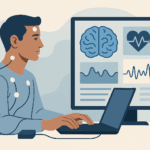
Health literacy among patients is critically low. Now that care is being bound up in technology, patients have both their historically best opportunity to improve health literacy, or a compounded obstacle to becoming more engaged in their own treatment. Online health portals, wearable tech, mobile devices, and electronic records all stand to reward patients who seek to build their health literacy on a foundation of tech savvy.
For those to whom computers and smart tech is still just as foreign as the jargon of medicine, developing literacy in either field may seem equally insurmountable. And unlike doctors and nurses in training, these patients didn’t sign up for a lifetime of learning curves.
It should not be incumbent upon the healthcare professionals to remedy this situation.
On a national level, more can be done to integrate the basics of health knowledge into primary school curriculums. Insurers, through the combined power of the ACA’s tenets and the burgeoning capacity of big data to paint an ever-clearer picture of risk pools and liabilities, can provide greater incentives for patients to educate and engage themselves in prevention, and treatment.
Keeping doctors ahead of the curve is necessary to make modern medicine work; but so too must patients become more active in listening, understanding, and responding in more meaningful ways. This is the essence of what is to be the future of American medicine, known as accountable care. The idea that patients (and insurers) will only pay for treatment that works (as opposed to any treatment that is ordered or performed, with no accountability) requires that patients, not just doctors, take responsibility for outcomes.
Better technology makes education possible, for patients and professionals. The will to learn—perpetually—has yet to catch up, and take treatment with it.