The hardest part of a first pain management appointment is usually the uncertainty. You know your pain better than anyone. Yet you may not know what the doctor will ask, or how to put what you feel into words.
A first pain management appointment usually includes a detailed pain history, a targeted physical exam, a review of prior medical records or diagnostic tests, and a conversation about treatment options. Your specialist evaluates what is causing your symptoms and works with you to set clear treatment goals and follow-up timelines.
That unknown keeps some people from booking at all, even though chronic pain is one of the most common reasons adults see a doctor. This guide walks through a first appointment, from the questions you will answer to the plan you will leave with. Knowing what to expect makes the visit less stressful. It also helps you walk out with clear answers.
Key Takeaways for Your Initial Visit
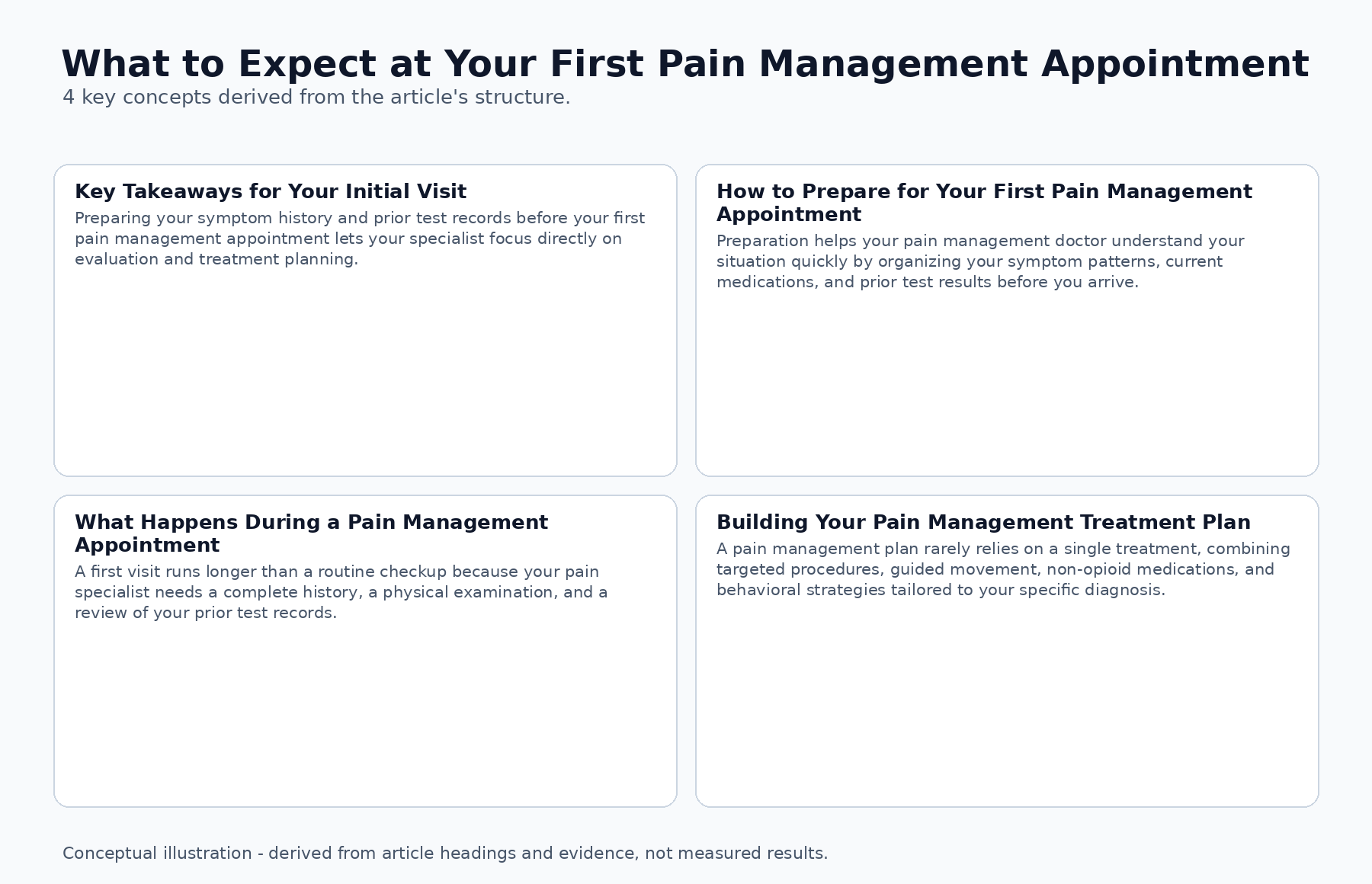
Preparing your symptom history and prior test records before your first pain management appointment lets your specialist focus directly on evaluation and treatment planning. Use the checklist below to organize your documents, understand the three core parts of the clinical exam, and track your response after the visit.
- Bring a pain diary and prior records: Note where your pain shows up, when it flares, and what eases it, and bring past imaging or diagnostic test results.
- Expect a three-part evaluation: Your initial consultation covers a detailed symptom history, a physical exam, and a review of your prior records or diagnostic tests.
- Ask about your diagnosis and options: Review the likely cause of your pain, non-opioid choices, expected timelines, and any additional testing needed.
- Follow up to track your response: Keep a brief log of symptom changes and side effects between visits so your doctor can adjust your care plan.
How to Prepare for Your First Pain Management Appointment
Preparation helps your pain management doctor understand your situation quickly by organizing your symptom patterns, current medications, and prior test results before you arrive. Gathering your medical records, insurance details, and personal functional goals ahead of time keeps your appointment focused on clinical answers. Before your appointment, get these ready:
- Pain diary: For several days, note where the pain is, how it feels (aching, burning, sharp), when it flares, and what eases it. Patterns are easy to forget. This record gives your doctor a clear view of your symptoms.
- Medication list: Include prescriptions, over-the-counter products, and supplements, with doses.
- Records and imaging: Bring any MRI, X-ray, or CT results, plus notes from past providers. If you cannot get copies, write down where you had the tests done.
- Insurance card and photo ID: Bring both, along with any new-patient forms your clinic sent ahead.
- Your goals: Think about what relief would let you do again, whether that is sleeping through the night, returning to work, or walking with your family.
When you arrive with these details ready, your first visit stays focused on answers from the start. Scheduling teams also recommend having prior diagnostic testing results and bloodwork sent to your new care team beforehand if you do not have physical copies.
What Happens During a Pain Management Appointment
A first visit runs longer than a routine checkup because your pain specialist needs a complete history, a physical examination, and a review of your prior test records. The visit usually has three parts, giving you and your doctor a clear understanding of your symptoms and next steps.
First comes a conversation, and it is the most important part. Your doctor will ask how and when the pain started, how it affects your sleep, work, and daily movement, and what you have already tried.
Mention how it affects your mood, too, since pain and mental health are closely linked. The more you share about your symptom history and prior treatments, the better your doctor can plan your care.
More Read

Listen to your story. We want to understand your pain in your words — not just what’s in the chart. When did it start? What does it feel like? What have you tried?
Dr. Michael Kissel in What to Expect During Your First Pain Management Visit | SoCo Pain …Next comes a physical exam. The doctor may check your range of motion, reflexes, strength, and the areas where pain shows up. This hands-on step helps your doctor link your symptoms to a likely cause.
Then your doctor reviews any prior records, imaging, or diagnostic test results. As clinical guidance from the Florida Spine & Pain Institute notes, treatment does not always happen during the first appointment because your provider may need to review records, order imaging, confirm a diagnosis, check insurance requirements, or discuss treatment risks and benefits first. By the end of the visit, you and your doctor should share a working understanding of what is causing your pain and what your next steps are.
Building Your Pain Management Treatment Plan
A pain management plan rarely relies on a single treatment, combining targeted procedures, guided movement, non-opioid medications, and behavioral strategies tailored to your specific diagnosis. Your doctor explains the potential benefits and risks of each option so you can set realistic goals and monitor progress together. Depending on your diagnosis, your plan may include several options:
- Targeted procedures, such as injections or nerve blocks, that reduce pain at its source
- Physical therapy and guided movement to rebuild strength and function
- Non-opioid medications suited to the type of pain
- Behavioral strategies for managing flare-ups and protecting your well-being
These options work best together. A procedure that relieves a flare-up can let you start physical therapy to rebuild strength, while non-opioid medication eases daily pain so you can stay active.
| Treatment Option | Primary Role in Care Plan | What to Discuss with Your Doctor |
|---|---|---|
| Targeted Procedures (Injections or Nerve Blocks) | Reduces pain directly at its source and calms acute flare-ups so you can participate in active recovery. | Expected benefits, procedural risks, insurance requirements, and how the procedure fits with rehabilitation. |
| Physical Therapy and Guided Movement | Rebuilds physical strength, range of motion, and daily function over time. | Activity timelines, home exercises between visits, and how to pace movement without triggering flares. |
| Non-Opioid Medications | Eases daily symptoms based on your specific type of pain so you can stay active. | Potential side effects, how long the medication takes to show results, and follow-up monitoring timelines. |
Your first appointment is where this plan takes shape. With a pain management doctor in Oklahoma City or a specialist closer to home, expect a clear explanation of each option, its benefits, and what recovery involves.
Questions to Ask Your Pain Management Doctor
Your appointment is a two-way conversation, so bringing a written list of questions helps you clarify your diagnosis, compare treatment options, and understand realistic timelines for relief. Asking direct questions during the consultation ensures you know what steps to take at home between visits. Helpful questions include:
- What is causing my pain, and do we need more tests to be sure?
- What are my treatment options, and which do you recommend first?
- What results can I realistically expect, and how long might that take?
- Which options avoid long-term opioid use?
- What can I do at home between visits to support progress?
Writing the answers down, or bringing someone with you to take notes, makes it easier to review your choices later. A good pain specialist welcomes these questions and makes sure you leave with clear next steps.
What to Do After Your First Appointment
When you leave your first visit, you should have a diagnosis, or a clear plan to reach one, plus the first steps of treatment. Follow-up appointments let your pain specialist see what is working, review your symptom log, and adjust your care plan based on your response.
Some treatments take a few weeks to show their full effect, so give each one the time your doctor suggests before you judge it. Keep a short log of what helps, what does not, and any side effects. Bring it to your next visit so that your doctor can adjust the plan based on your results. Setting clear goals and establishing a timeline for monitoring progress helps you and your specialist track changes in pain levels or side effects across follow-up appointments. If your pain shifts, a medication gives you trouble, or you have questions before then, contact your doctor sooner.
FAQ
What is a pain management referral?
A pain management referral is when your primary care doctor sends you to a pain management specialist for comprehensive care tailored to your specific condition. As Capitol Pain Institute explains, a referral connects you with diagnostic evaluation and targeted treatments that go beyond what a primary care office handles.
How do you talk to your doctor about chronic pain?
Bring a written pain diary that tracks where the pain is located, how it feels (such as aching, burning, or sharp), when it flares, and what eases it. Share how your symptoms affect your sleep, work, daily movement, and mood, and bring your prior treatment records and imaging results so your doctor can see what you have already tried.
Can my pain management doctor prescribe medication?
Medication may be part of your treatment plan, including non-opioid medications suited to your specific type of pain. Your doctor will explain how each medication fits into your broader plan alongside options like physical therapy or targeted procedures, review potential benefits and risks, and set up follow-up appointments to monitor your progress.
How long does a pain management appointment usually take?
A first pain management appointment runs longer than a routine medical checkup because the specialist completes a full symptom history, performs a hands-on physical examination, and reviews your prior imaging and test records before discussing your treatment plan.