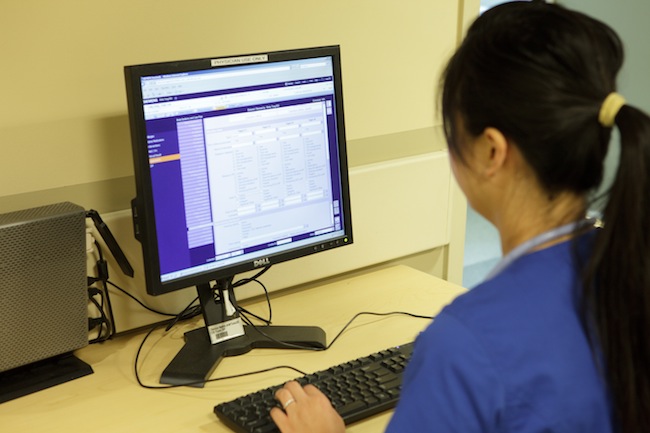
In the small town of Visalia in California, the Kaweah Delta Medical Center found a way to use IT to support efforts to improve its financial, clinical, and patient outcomes.
In the small town of Visalia in California, the Kaweah Delta Medical Center found a way to use IT to support efforts to improve its financial, clinical, and patient outcomes.
The story began three years ago with a brainstorm. Kaweah Delta was using the Soarian® workflow engine to track its clinical processes. David Gravender, the medical center’s chief information officer, had the idea to use the engine not only to monitor clinical metrics but also to send out reminders or alerts to the medical staff when something that was supposed to happen didn’t. For this, they created a new team dedicated to ensuring optimal healthcare delivery, they dubbed them “the wranglers,” alluding to the Central Valley region in California, which is known for being the most productive agricultural region in the United States.
Defining Core Metrics for Value-Based Purchasing
In 2011, Kaweah Delta began working closely with Siemens consultants to map out reminders and silent alerts based on clinical quality measures identified by the Centers for Medicare & Medicaid Services (CMS) as part of its Value-Based Purchasing (VBP) program. They needed better visibility of VBP performance metrics. In addition, they wanted to leverage the Soarian workflow engine to support the organization’s initiatives for improving clinical quality and patient satisfaction. The effort focused on four conditions: acute myocardial infarction, pneumonia, heart failure, and surgical care. The first objective was to determine key indicators – specific prescription drugs or lab test results, for instance – that signal when a patient has one of these targeted conditions. The second objective was to send out reminders or alerts if a key step in the clinical process has been neglected or delayed. The project team developed to meet both these objectives.
The Challenge: A Reliable Alert System
One of the biggest challenges was determining exactly when the reminders and alerts should fire and who should get them. The idea was to have a fail-safe system that would alert their staff if something fell through the cracks. If the alert was sent too soon, there would be a lot of unnecessary alerts and people would start to ignore them. If alerts are fired to late, there may not have been enough time to get something done in the time frame required. Deciding who should receive the alerts also posed a challenge. Since no one works 24/7 It wouldn’t help to send an alert about something that needs to be done within 24 hours to a physician or nurse who wasn’t coming in for a day or two.
A Dedicated Team
Instead, the medical center created “wranglers” – a dedicated team of nurse practitioners who would receive the reminders and alerts and make sure they reach the right person in a timely fashion. According to one of the wranglers, the alerts prompt them to investigate the patient chart and identify missing items. The nurse practitioners, who have prescribing authority, can respond directly. Or they may need to alert a physician or bedside nurse.
Earlier this year, the tools for acute myocardial infarction and surgical care improvement went live. Pneumonia and heart failure should be up and running soon. Already, the wranglers say, the system has triggered alerts for core measures that might otherwise have been overlooked or delayed. This has almost certainly improved patient care and outcomes.
Outstanding Results for Value-Based Purchasing
The new tool also promises to help improve Kaweah Delta’s financial health. Starting in 2012, CMS began penalizing medical centers that fall short on a selected list of clinical quality measures and rewarding those that perform especially well. Working with Siemens, Kaweah’s team is also getting ready to launch a reporting system that will allow them to see how well the workflow reminders and alerts are working in real time.
The result will be better clinical processes, decision making, and documentation. With more accessible patient information, Kaweah Delta helps to improve its performance on core measures – increasing reimbursement dollars and saving millions each year. The bottom line matters, of course: The goal is to develop tools that help ensure that patients get the very best care possible.
Read more articles like this one on Medical Solutions Online – the Magazine for Healthcare Leadership.
http://sie.ag/OBJrtl
The outcomes achieved by the Siemens customers described herein were achieved in the customer’s unique setting. Since there is no “typical” hospital and many variables exist (e.g., hospital size, case mix, level of IT adoption), there can be no guarantee that others will achieve the same results. The products/features (here mentioned) are not commercially available in all countries. Due to regulatory reasons their future availability cannot be guaranteed. Please contact your local Siemens organization for further details.