
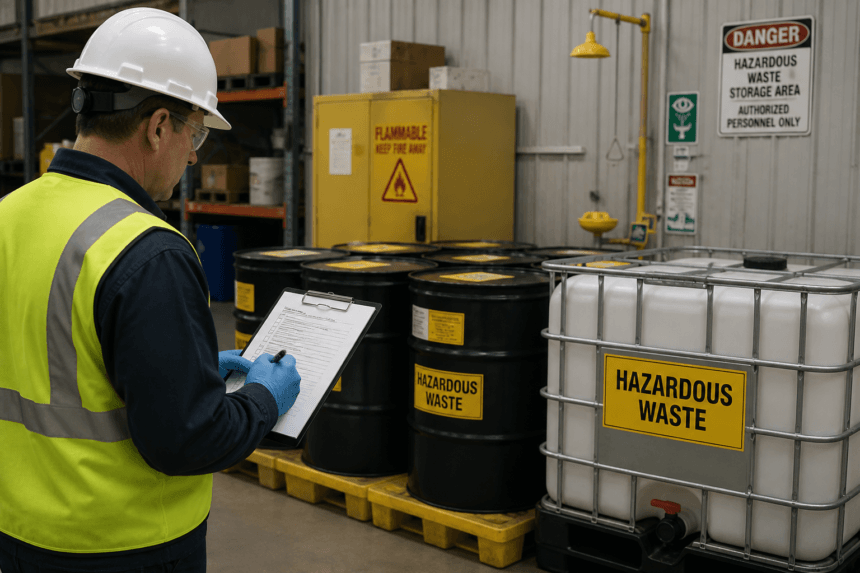
Effective hospital waste management guidelines protect staff, control disposal costs, and help a facility show an inspector that waste is handled safely from the exam room to final pickup. An Occupational Safety and Health Administration (OSHA) inspection rarely starts with anything exotic. It often starts with records, then with a simple question for the medical assistant or technician working near a disposal point.
- What a Regulated Medical Waste Audit Really Covers
- How Disposal Method Shifts Cost and OSHA Risk
- Why overclassification drives unnecessary spending
- Why underclassification creates worker and inspection risk
- What Should Different Healthcare Settings Audit First?
- High-volume dental clinics and sharps-heavy workflows
- Outpatient laboratories and trace chemical waste
- Multi-specialty clinics with mixed waste streams
- Red Flags You Can Catch Before an Inspector Does
- When a Regional Disposal Partner Earns Its Contract
- A Practical 30-Day Audit Plan
- A Smarter Audit Cuts Both Risk and Spend
Regulated medical waste is material from a healthcare setting that may create an infection or injury risk and therefore needs a defined handling and disposal route. OSHA enforces workplace safety rules that require employers to protect workers from exposure hazards. The financial stakes are real, but the worker-safety stakes come first.
Clear terms help staff make the right choice quickly. Sharps, including needles, scalpels, and lancets, belong in puncture-resistant containers. Trace chemical waste includes small clinical or laboratory remnants that need identification and a separate disposal path. Segregation means sorting material where it is generated, while a manifest records the transfer of regulated waste from the facility to its disposal destination.
What a Regulated Medical Waste Audit Really Covers
Treat waste as a compliance system
A waste audit is a structured review of how materials move through the building and whether the vendor agreement fits what the facility actually produces. Many compliance failures start with a small mistake: a contaminated item goes into the wrong receptacle, or a contract assumes a different procedure mix. Correct classification, clear labels, and properly placed containers keep the chain of custody intact.

What a strong audit should measure
Start with three questions: Where does the facility spend money, where are workers exposed to avoidable risk, and how quickly can a corrected workflow show results? Vendor fit belongs in that review. A hauler whose service tiers do not match real generation volume can leave bins overfilled one week and half empty the next, so pickup schedules should reflect department-level records rather than a generic route.
A regional provider such as Biogenic Solutions advertises pickup schedules and waste streams tailored by facility type. That kind of arrangement only works when the administrator can show the provider what each department generates and how much secure storage the site has available.
Review the audit in three practical work areas:
- At the point of generation: identify each department’s waste streams, watch how staff sort materials, and check whether sharps containers are within reach and below their fill lines.
- In storage and transport records: inspect temporary storage conditions, trace chemical labels, manifests, and any missed or delayed pickup documentation.
- In the service agreement: compare training dates, container inventory, pickup frequency, and the contingency plan for a missed collection against actual facility demand.
How Disposal Method Shifts Cost and OSHA Risk
Different waste streams need different handling, and each method has its own financial and regulatory profile. The wrong container type or pickup interval can inflate the budget or create an overflow problem that an inspector can see immediately. The table below offers a quick reference; the bigger issue is whether the selected method matches the facility’s documented waste volume.
Why overclassification drives unnecessary spending
Putting clean packaging or ordinary office trash into a red bag raises disposal costs without improving safety. Overclassification is common in busy clinical areas when staff have not been shown the practical line between regulated and general waste. In a 2025 hospital quality-improvement project, reducing red-bag receptacles and educating operating-room staff cut regulated medical waste from 19.11 tons to 7.44 tons per month and lowered monthly disposal costs from $23,049.33 to $13,354.94. The 2025 operating-room project’s waste and cost reduction
Better bin placement and brief, role-specific education can do more than another policy memo. A 2026 multi-department project at Akron City Hospital found that monthly regulated medical waste fell from 56,366 pounds in 2022 to 37,017 pounds in the first half of 2024 after staff education, clearer receptacle cues, and changes to container size and availability. Akron City Hospital’s reduction in regulated medical waste
Why underclassification creates worker and inspection risk
Underclassification creates the opposite problem: regulated or hazardous material enters general trash, where an environmental-services worker, hauler, or member of the public may encounter it. A visible disposal failure can also damage the confidence that patients and neighbors place in a healthcare organization.
The consequences are not theoretical. In September 2022, Kaiser Permanente agreed to pay $49 million to settle California allegations involving medical waste, hazardous materials, and patient records placed in dumpsters headed to local landfills. Kaiser Permanente’s $49 million California settlement In December 2024, the Santa Clara County District Attorney’s Office accused Valley Medical Center, O’Connor Hospital, and St. Louise Regional Hospital of improper disposal after unannounced inspections of hospital waste compactors. The December 2024 Santa Clara County hospital waste allegations
What Should Different Healthcare Settings Audit First?
High-volume dental clinics and sharps-heavy workflows
Dental practices usually generate a narrow and predictable hazard profile. Anesthetic needles, scalpel blades, and orthodontic wire belong in the sharps stream. Chairside placement matters because a container within arm’s reach reduces the distance staff carry an exposed sharp; the facility should also document replacement intervals and compare them with daily patient volume.
Most high-volume dental clinics do better with a standardized medical waste management program on a predictable schedule than with broad red-bag service they will never fill.
Outpatient laboratories and trace chemical waste
Laboratories shift the problem toward chemistry. Reagents, solvents, preservatives, and expired test kits can collect on back shelves if no one owns the disposal process. Audit labels first, then confirm that incompatible chemicals are not stored together and that chemical waste stays separate from the infectious-waste stream.
Multi-specialty clinics with mixed waste streams
Mixed-use buildings are harder to audit because materials do not sort themselves. Exam-room trash may sit near procedure-room biohazards, while vaccine sharps appear in bursts and laboratory material moves through the same corridors as breakroom garbage. When departments follow different unwritten rules, staff often choose the most expensive disposal category whenever they are unsure.
Check the bins before reopening the vendor agreement. Clear labels, sensible placement, and a small number of well-defined waste routes give the provider a better basis for setting service levels.
Red Flags You Can Catch Before an Inspector Does
Documentation gaps
Inspections often begin with records, so paperwork is the first place to look. Missing service records, incomplete manifests, and undocumented pickup exceptions suggest that a facility has lost track of regulated material. Compare the manifest date, container count, and pickup record with the vendor invoice rather than accepting any one document on its own.
Pair waste-training records with the documentation systems the facility already uses, instead of relying on a separate binder that only one employee knows how to update. Administrators can also use the records to trace the medical waste journey from generation through treatment.
What the walkthrough shows
Inspectors also walk the floor. Sharps containers past the fill line are easy to spot and easy to correct. Unlabeled satellite containers, unsecured storage rooms, and regulated waste placed where the public can reach it all point to weak environmental controls.
Check signage between departments as well. A biohazard warning mounted above eye level or placed behind a supply cart will not help a rushed staff member decide where a blood-contaminated dressing belongs.
Staff knowledge gaps
A facility can have clean records and well-maintained containers yet still fail if the person holding the needle does not know the procedure. Ask staff short questions during normal rounding. For example, ask where a used lancet goes, what happens when a sharps container reaches its fill line, and who responds if a reagent bottle leaks in a laboratory work area.
Those answers reveal whether written policy has reached the point of care. They also show where a short refresher session can prevent the same sorting error from recurring.
When a Regional Disposal Partner Earns Its Contract
Budget bloat and compliance friction often follow the same purchase: a rigid service model bought from a national hauler. Waste generation is not rigid. It changes with patient volume, procedure mix, and the amount of on-site laboratory work.
Storage space sets another limit, while state and local policy and law rules can determine how long certain materials may remain on site before transport. A collection plan built around those facts helps a facility avoid paying for unused pickups or stacking full containers in a room that was never meant to hold them. A busy dental practice may need frequent sharps service with little red-bag support, while an outpatient laboratory may need a slower pickup cycle with closer attention to trace chemicals.
The practical benefit appears quickly. A disposal partner can help standardize containers, reset pickup intervals, and align manifests with the service plan, while the administrator keeps responsibility for training and day-to-day oversight.
A Practical 30-Day Audit Plan
Most facilities can complete a useful audit without closing the clinic. During week one, map waste streams by department and gather the current vendor contract with recent manifests. In week two, walk the floor and check container placement, labels, storage security, and whether manifest records match what left the building.
Use week three to speak with staff during normal rounding and identify sorting errors that repeat in the same department. Week four is for repair work: correct the physical workflow, retrain on the weak points, and revisit the vendor contract now that the facility has real generation data.
What success looks like
After 30 days, look for cleaner manifests and an invoice that matches actual service needs. Fewer sorting mistakes mean less regulated-waste overflow. Staff should know where a sharp, a contaminated item, or a trace chemical container belongs without stopping to guess.
A Smarter Audit Cuts Both Risk and Spend
A hospital waste management program works best when administrators treat it as a daily worker-safety control rather than a once-a-year inspection task. Start with one department this month: compare its bins, staff practice, manifests, and pickup schedule. That focused review can expose a preventable hazard or an avoidable charge before either one becomes a citation.