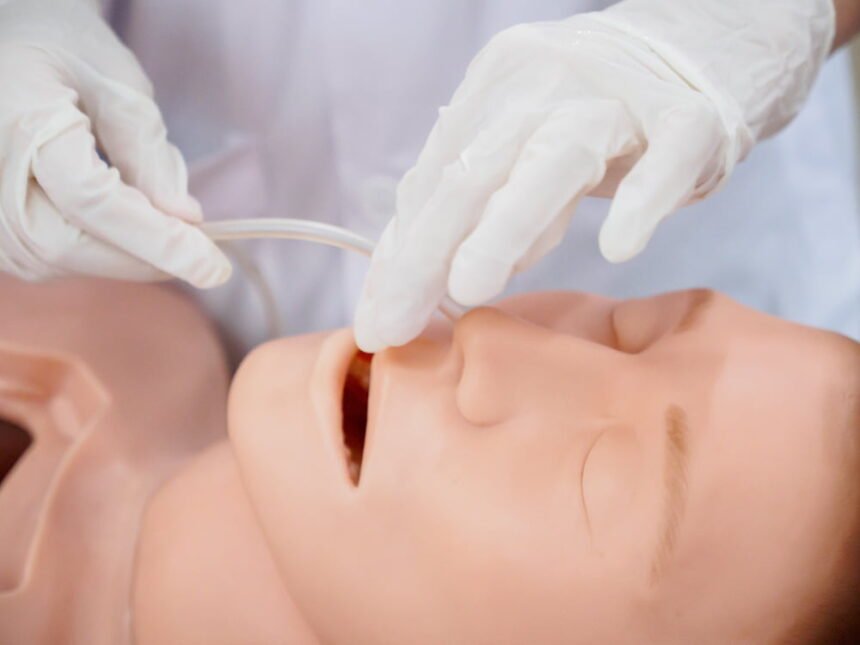
Nasogastric feeding tubes must be placed safely to avoid damage or death. Different techniques and new technology might reduce complications.Read more to find out why that may be the case.
Avoiding the Problems Associated with Nasoenteric Tubes
The safe placement of a nasogastric or nasoenteric tube requires a professional medical practitioner and a high level of accuracy. Nasogastric or nasoenteric tubes (NGT/NET) are flexible devices that pass through the nose distally into the stomach or small bowel (respectively), allowing for adequate nutrition and medical management of critically ill or surgical patients. Unfortunately, there are complications with these tubes that can be avoided, as a study from Brazil points out.
Early placement of NGT/NET is associated with reductions in infectious complications, preservation of gut mucosa integrity, and enhanced gastrointestinal motility and immune responses.
NGT/NET may also positively impact patient outcomes, improve wound healing, reduce disease severity and complications, shorten the length of stay in the ICU and even reduce the mortality rate. They are also useful for seniors at the end of life.

NG/NE feeding tubes can be inserted with different techniques, including blind insertion, guidance placement devices, endoscopy, and fluoroscopy, and are used for gastrointestinal decompression, medication administration, enteral nutrition (EN), and occasionally for gastric lavage.
There are two major complications associated with feeding tube malposition, which are similar to some of the other complications with tubes:
- Aspiration pneumonia: Malposition of NGT/NET in the esophagus or in the stomach of a patient who requires small bowel feedings greatly increases the risk of aspiration pneumonia. As of today, 28% of tube malpositions result in pneumonia.
- Inadvertent lung misplacement: 2-5% of NGT/NET are accidentally placed in the lungs, which leads to a 30% chance of a collapsed lung (pneumothorax). The misplacement in the lungs can even, in rare instances, lead to death.
Therefore, healthcare providers must assess risks and apply patient safety and quality of care methods.
This article will present the signs of feeding tube misplacement, risks, and location confirmation methods. In addition, it will introduce an innovative technology, the ENvue system, that aids the medical teams in navigating a feeding tube correctly to avoid complications.
What Are the Signs and Symptoms of a Misplaced NGT/NET?
Various signs, such as coughs, increased blood pressure, increased heart rate and respiratory rate, or decreased oxygen saturation, can indicate a feeding tube misplacement.[1]
Healthcare workers must regularly analyze hazards and implement patient safety-related procedures.
Blind feeding tube placement poses the most significant risk of malposition. Thus, tube verification is necessary for optimal patient safety and comfort.
To avoid further complications, practitioners must immediately cease feeding through the tube if they suspect misplacement. Many techniques can determine the correct tube placement. However, each technique’s efficacy should be considered in relation to a patient’s situation.
How to Verify Safe Enteral Feeding Tube Placement
Before initiating EN, confirmation of correct NGT/NET tube placement must be verified using an evidence-based approach. There are several reliable verification methods including: x-ray(radiography), pH reading, capnography, ultrasound, and fluoroscopy.
An abdominal radiograph is the “gold standard” for verifying the location of a nasogastric and nasoenteric feeding tube. Here, the tube’s full path through the digestive system can be observed.
Per the Pennsylvania Patient Safety Reporting System (January 2017 – June 2020), the use of x-rays and pH aspirates was identified in 90.8% of the reports. At the same time, 9.2% of the reports indicated they used non-recommended verification methods (e.g., insertion of air bolus/auscultation). It is worth mentioning that these verifications are performed only after the tube is already placed.
Today, there are innovative systems that assist clinicians in placing feeding tubes. The placement devices utilize advanced methods of navigation, some of which integrate sensors and body mapping for safe and rapid feeding tube placement. These provide greater assistance to medical staff in the process.
New Technology for NGT/NET Navigation by ENvizion Medical
In recent years, a promising NGT/NET placement system known as ENvue® was launched on the market. The system assists the clinicians in placing a feeding tube safely into the small intestine.
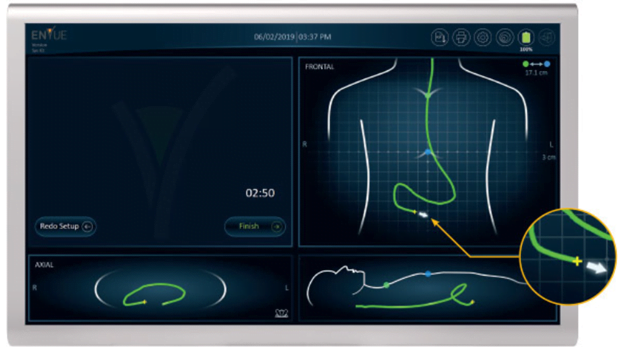
The ENvue navigation system comprises an electromagnetic (EM) field generator that emits EM waves covering the patient’s thorax and gastrointestinal tract. The EM field generator together with several EM sensors create a specific patient’s body map and provide accurate illustrations even when a patient moves.
There is an additional embedded sensor within the feeding tube distal tip that activates once entering the field of electromagnetic waves.
The ENvue system tracks the tube sensor through the gastrointestinal tract and displays the relative tip position and placement pathway during placement.
According to ENvue’s records, each procedure starts with a simple registration using anatomical landmarks that aligns the patient to the navigation system and ensures precise navigation.
ENvue’s intuitive screen offers multiple simultaneous views (Frontal, Axial, and Lateral). The screen displays a patient’s body contour, as well as the direction and orientation of the tube sensor, in real-time with no lagging. Moreover, the ENvue system alerts users when the feeding tube is misdirected into the airways, which may prompt them to withdraw and reinsert the tube.
Although there are several tools on the market to assess NGT/NET placement accurately, ENvue is different. With innovative technology, it combines a highly accurate body map, built-in sensors, and continuous visual guidance. These features have come to revolutionize the procedure.