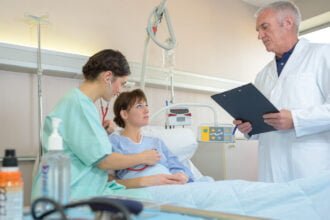
Too many people have a narrow view of nursing. It’s true that the majority of nurses, particularly those new to the profession, wind up working in one of several settings:
- An Emergency Room
- A Hospital Floor
- A Doctor’s Office
These are stable employment environments. The demand is constant, and the skills you’ll learn in these settings are invaluable.
However, these are also arguably the blandest ways to work as a nurse. No offense, of course, to the wonderful people who occupy these positions—it’s simply that there is a lot of repetition. You wind up doing the same or similar things every day.
Outpatient options are a great way to change or lengthen your career trajectory. In this article, we take a look at what opportunities are available and how to pursue them.

Why Outpatient Roles Are Increasing
One of the most interesting and impactful developments of the last 50 years is that people are living longer. Because we have an aging population, there is now a much more complex variety of healthcare needs than was previously the case. There are more adults than ever who require gerontological services.
This places a high value on nurses who can work in home health, hospice, or rehabilitation environments. The actual scope of work that an outpatient nurse will do can vary enormously, just as it can for nurses working in the hospital setting. That said, there are some common avenues that are worth considering:
- Gerontology Care: Gerontology patients are not necessarily dying, but they have developed conditions that are not likely to substantially improve. Alzheimer’s and dementia are common examples. These individuals can live comfortable lives, but their overall life expectancy is typically limited to several years or less. They are no longer candidates for generalized preventative care and instead receive treatments designed to maximize quality of life.
- Home Health Care: Home health care can fit in the gerontology framework but is often independent. Some patients will need home health care simply because they are rehabilitating from surgery or a long-form illness. Nurses who can provide care in patients’ homes are very valuable, as they give patients a higher level of autonomy. Many nurses also find the work rewarding because it allows them to connect with patients on a more personal level.
- Rehabilitation: Rehabilitation nursing can take many forms, including cardiac, orthopedic, and more. These roles can occur in patients’ homes or in rehabilitation centers. Nurses in these positions help patients regain functionality, independence, and quality of life.
Because there are so many different ways to work as an outpatient nurse, the primary limitation really is just your imagination. What kind of medicine do you want to practice? Once you’ve identified that, you can likely find multiple career options that provide the combination of compensation, flexibility, and satisfaction that you’re looking for.
Why Outpatient Healthcare Scenarios Are Impactful to Employment
This is a good question. It helps first to understand where healthcare struggles from an employment perspective. The problem that many clinics and hospitals face is that new nurses come in, stay for five years or less, and then leave—not just the hospital, but the profession entirely. Nursing has one of the highest professional churn rates of any career path that requires a four-year degree.
It’s hard, it’s stressful, and it’s emotionally draining. Unfortunately, many nurses fail to take advantage of the sheer variety of options that they have at their disposal. Yes, working as a floor nurse is hard. Working as an emergency room nurse is arguably even harder, but those aren’t the only options. You can find career placements that allow you to do work that you find rewarding and enjoyable day in and day out.
Many people extend their careers in nursing by seeking certification-only positions. These roles can significantly increase your options and possibly even your earning potential.
How Certification Roles Work
Certification-only positions do require expanding your professional credentials, but the benefit is that you can do so while you work. Advanced practice positions are a common secondary route for nurses who want to expand their careers. The difference, however, is that with these roles, you must obtain a graduate degree before you can do anything else.
This means that from the day you decide you want to be a family nurse practitioner or a similar position, you are about three years out from reaching your goal—and that doesn’t even take into consideration the tens of thousands of dollars required to get there. Advanced practice positions are great, but those barriers make them a tough sell for some people.
Certification-only routes are different. Once you decide you want a position as, say, a gerontology care provider or a rehabilitation specialist, you can begin applying for those jobs right away. If a specialized certification is required, you can work on it while occupying your ideal role. This is because most certification-only positions require hundreds of hours of clinical experience, which would be virtually impossible to accumulate without getting the job first. Employers understand this and are more than willing to invest in a professional who they believe will occupy the role for years to come.
Do Specialized Nurses Make More Money?
Specialized nurses absolutely can make more money, though the likelihood of this depends largely on the role you’re interested in as well as the healthcare market in which you work. Rates of pay can vary dramatically from state to state. For example, in California, the average nurse makes around $115,000 per year, while in Illinois, the rate of pay could be approximately half that.
Specialization is best thought of as a way to invest in your experience as a nurse. In other words, it’s a great tool for unlocking work that you find genuinely rewarding and enjoyable. Better pay can very well result from these jobs, but it’s not necessarily a guarantee.
Is Outpatient Care Right for You?
If you’re a nurse or an aspiring nurse who’s interested in home health care or outpatient services in general, consider researching the options available in your community. The work is dynamic, rewarding, and often a refreshing change of pace for people who have worked only in the hospital environment. It’s not necessarily the perfect fit for everyone, but it is a great option for exposing yourself to new scenarios and discovering a greater level of satisfaction and joy in your nursing work.