When people hear that nurses are well educated, they usually picture a single classroom. In practice, nurses learn in two very different places over the course of a career.
- Two Teaching Worlds in Nursing
- Who the Learners Are
- How Settings Shape Curriculum and Outcomes
- Credentials and Pathways for Educators
- FAQ
- What is the difference between academic and clinical education in nursing?
- What is the definition of clinical teaching in the context of nursing?
- Aligning Academic Preparation and Hospital Training
Academic vs clinical education in nursing requires matching instruction to learner readiness: structured degree curricula prepare students for licensure, while hospital-based professional development builds licensed nurses’ competence through work-focused training. The central constraint is timing and purpose: academic programs sequence learning over years, whereas hospitals must respond quickly to practice changes while prioritizing patient safety.
The first is the nursing school, where students prepare for licensure before entering practice. The second is the hospital or health system, where learning continues long after licensure.
Each setting serves different learners and goals, shaping what is taught and what results follow. In this article, we compare both settings, their learners, their outcomes, and how their educators are credentialed.
Two Teaching Worlds in Nursing

Academic education prepares students for licensure through structured programs at colleges and universities. These programs follow defined curricula, degree requirements, and accreditation standards that shape every course, combine nursing theory and practice, and include supervised clinical placements during their education.
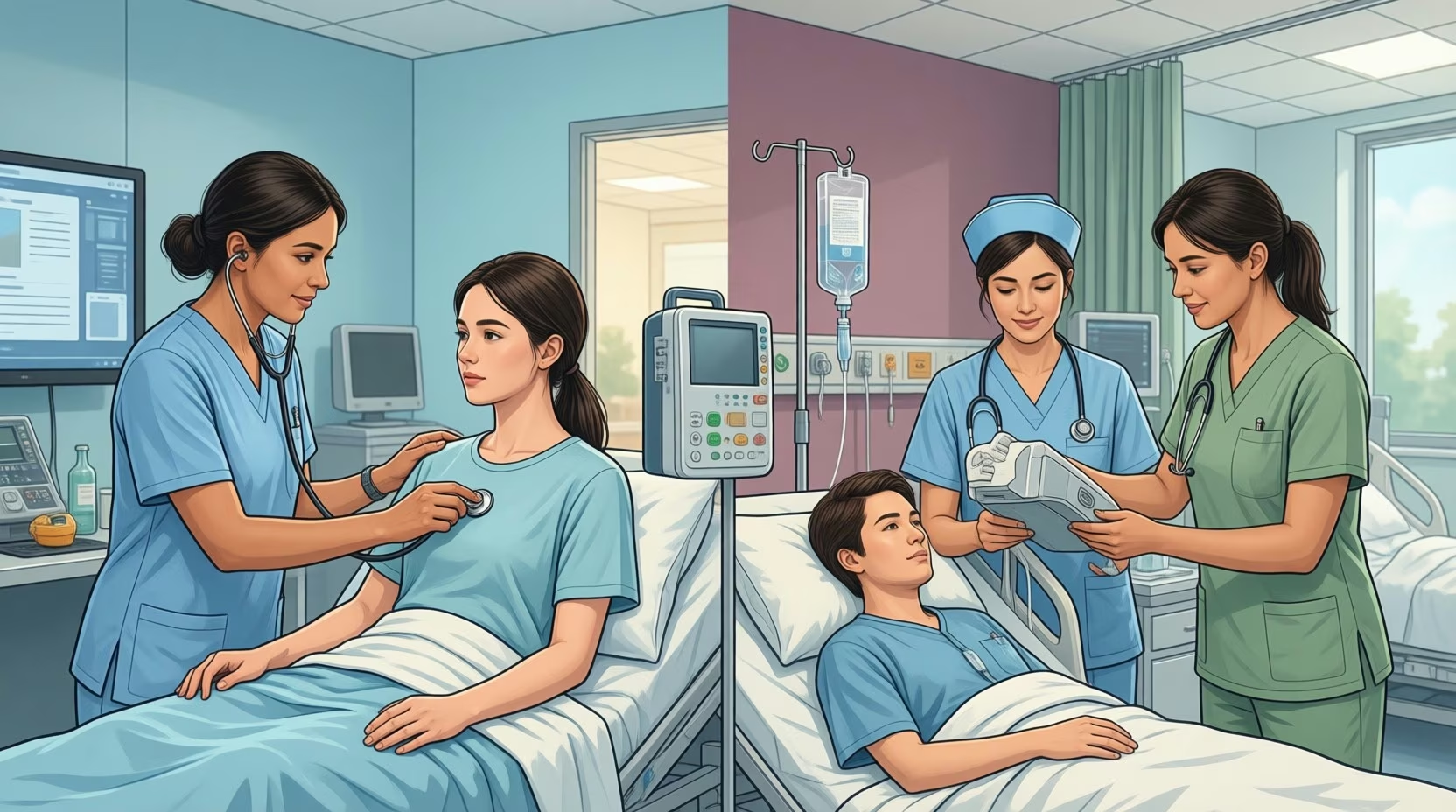
Clinical education, often called nursing professional development, serves practicing nurses inside hospitals and health systems. It covers orientation, skills training, and ongoing education that keeps staff current in their roles.
Both settings are necessary because nursing knowledge and technology keep changing after graduation. New medications, devices, and evidence-based guidelines regularly reshape how nurses deliver everyday care.
Who the Learners Are
Academic learners are students building their professional foundations from the ground up. They study nursing theory, ethics, and patient assessment in classroom learning and skills labs, then apply that knowledge in supervised clinical practice.
Clinical learners are licensed nurses who already carry patient responsibilities in demanding work environments. They need new-hire orientation, training on new equipment, updates to protocols, and preparation for specialty units.

This difference in experience changes how educators approach their teaching in each setting. Students generally benefit from clear structure, while practicing nurses need content that connects directly to current work.
How Settings Shape Curriculum and Outcomes
Academic settings emphasize planned curricula that build knowledge in a deliberate sequence over several years. Faculty set long-term learning goals and measure student progress through exams, assignments, and clinical evaluations.
Hospital settings place their emphasis on competency, patient safety, and quick responses to changing practice. When a new infusion pump or care protocol arrives, staff often need training within days or weeks.
These priorities lead each setting to judge its success in different ways. Schools track licensure exam pass rates, graduation rates, and how well graduates transition into practice.
Hospitals look more closely at safety measures, documented staff competence, and quality indicators tied to patient care. A hospital administration and education program might measure success through fewer medication errors or stronger audit results.
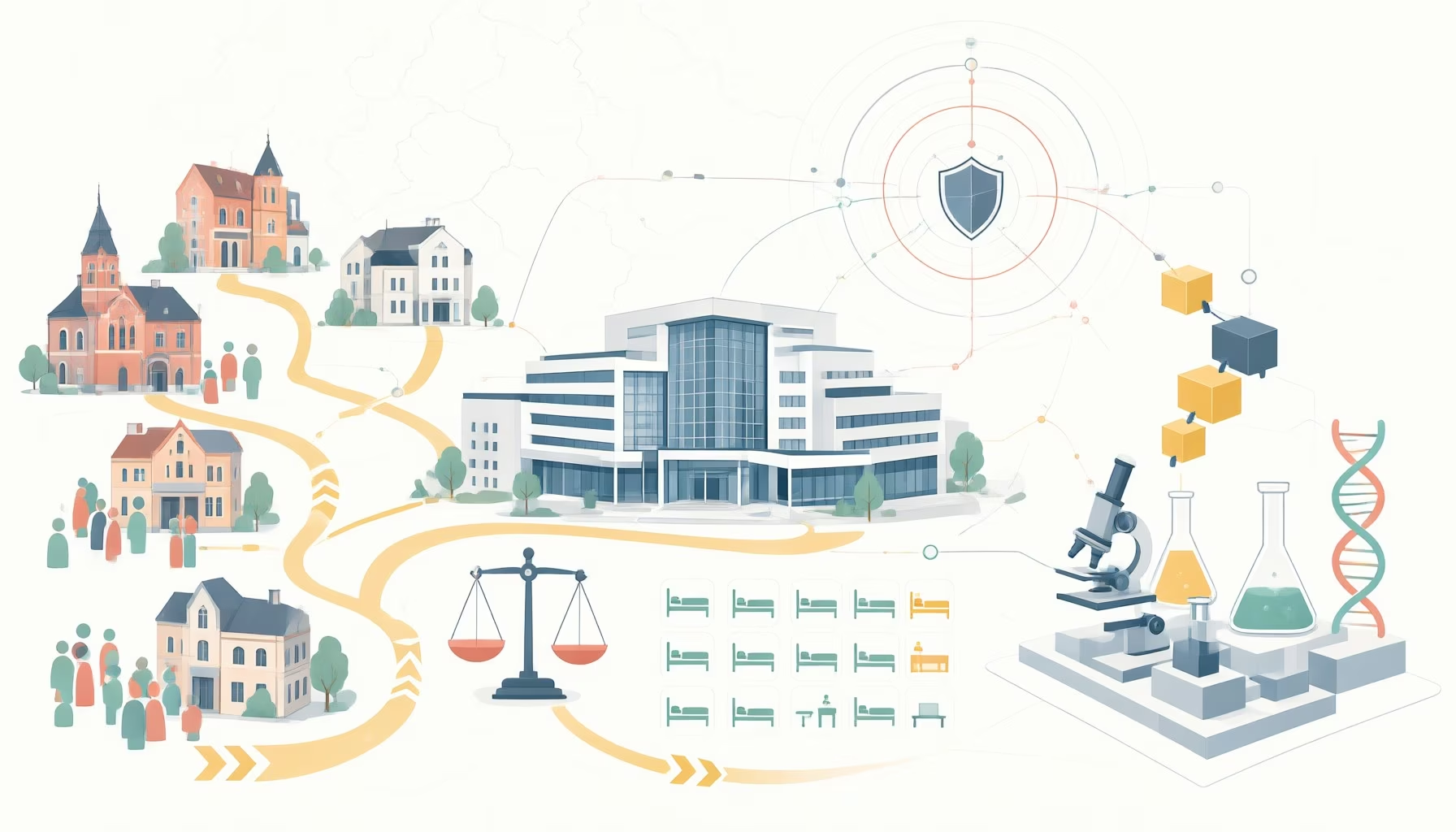
Despite these differences, the two settings overlap in important ways. Strong schools and strong hospital programs both depend on skilled educators who receive adequate time and support. Hospitals also host many of the clinical placements that academic programs rely on for student training.
| Evaluation Dimension | Academic Nursing Education | Hospital Clinical Education |
|---|---|---|
| Primary Learning Objective | Prelicensure foundational knowledge, degree completion, and board exam readiness | Postlicensure unit orientation, equipment proficiency, and protocol adherence |
| Supervision Model | Direct faculty or preceptor oversight during scheduled student rotations | Peer precepting during onboarding and independent practice with periodic competency checks |
| Patient Contact | Graduated exposure starting in simulation labs before supervised patient assignments | Immediate daily patient care responsibilities across active inpatient or outpatient units |
| Feedback Cadence | Scheduled midterm and final clinical evaluations paired with graded coursework | Real-time bedside debriefing and immediate remediation when care protocols change |
| Success Metrics | Licensure exam pass rates, course grades, and graduation rates | Medication error reduction, clinical audit scores, and documented staff competence |
Credentials and Pathways for Educators
Educators in both settings are often experienced nurses who move into teaching after years of practice. Many pursue certification to signal a serious commitment to the craft of teaching.
Academic and clinical educators can earn separate certifications through different national nursing organizations. Readers comparing options may find it useful to review how academic and clinical nurse educator credentials differ, including the differences between CNE and NPD certification.
Eligibility rules, required experience, and renewal requirements vary from one credential to another. Anyone considering certification should confirm current requirements directly with the relevant certifying body.
Educator shortages add pressure to both settings and turn educator support into a workforce issue. In a 2025 survey, the American Association of Colleges of Nursing identified 1,588 full-time faculty vacancies across reporting nursing schools offering four-year and graduate programs. Sources: evidence
According to AACN application data, nursing programs turned away 93,176 qualified applications in 2025. Faculty shortages, limited clinical sites, and budget constraints were among the main reasons cited.
Hospitals face related strain when experienced nurses leave bedside roles or move into academic teaching. Supporting educators in both settings helps protect the pipeline that prepares and sustains the nursing workforce.
FAQ
What is the difference between academic and clinical education in nursing?
Academic education prepares students for initial licensure through multi-year college degree curricula, classroom instruction, and simulation labs. Clinical education takes place inside hospitals and health systems, providing licensed nurses with unit orientation, equipment training, and ongoing professional development tied to patient safety.
What is the definition of clinical teaching in the context of nursing?
Clinical teaching is guided, practice-based instruction delivered in patient-care environments. It connects classroom theory to bedside competence through instructor demonstration, supervised patient care, targeted questioning, and post-care debriefing.
Aligning Academic Preparation and Hospital Training
Nursing education happens in two distinct settings that depend heavily on each other across a nurse’s career. Academic programs build foundational knowledge and prepare students for initial licensure, while hospital-based clinical education maintains staff competency and adapts to ongoing changes in patient care protocols. Understanding how these environments complement each other helps employers, educators, and healthcare systems coordinate training effectively. As healthcare demands continue to evolve, investing in both academic faculty and clinical educators remains essential to prepare and support the nursing workforce.