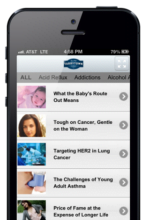
 With some prodding by the federal government, more and more hospitals and other medical practices are giving patients access to medical records, physician advice and other useful tools online and via mobile devices through patient portals.
With some prodding by the federal government, more and more hospitals and other medical practices are giving patients access to medical records, physician advice and other useful tools online and via mobile devices through patient portals.
At first, doctors and patients alike were skeptical of the new tools, but recent studies suggest that patient portals are actually working to improve preventative care in the United States.
A study out last month from Kaiser Permanente found that parents who have access to and use electronic health record portals are more than 2.5 times more likely to take their babies and toddlers to the recommended well-child doctor visits. In the study of 7000 children in Hawaii and the Pacific Northwest, researchers found that patient portal use helped busy parents manage the scheduling of preventative care visits and adhere to guidelines even when their children seemed well.
More Read

“For busy parents, it may be difficult to prioritize or remember when to bring their young children in for well-child care visits or immunizations, particularly when they are healthy,” said Jeffrey Tom, MD, MS, FAAP, lead author of the study and assistant investigator at the Kaiser Permanente Center for Health Research in a statement for the team. “Our study found that in two demographically and geographically distinct regions in the United States, PHRs appear to be a viable tool to help ensure children adhere to recommended preventive care.
Researchers from the same team also found that that users of the personal health record portal were 1.2 times more likely to have their young children vaccinated than those parents who had not adopted the portal system.
As the recommended number of preventive services offered to patients increases, many physicians struggle to maintain a balance between urgent patient concerns and dedicating the time necessary to address prevention. It turns out, electronic patient portals may be the prevention tool of the future.
In a study published in the Journal of the American Board of Family Medicine, researchers found that 90 percent of patients in the primary care practices studied found a patient portal easy to use. Additionally, 83 percent found it to be a valuable resource, and 80 percent said that it facilitated participation in their own care.
Adult patients using the portal received 86 percent of recommended pneumococcal vaccinations, whereas only 45 percent of those patients not using the portal received vaccinations. 84 percent of adults using the portal received all recommended preventive services during the study period, compared to just 68 percent of non-portal users.
As the use of mobile apps increases, the idea of a patient portal has been become appealing to many. With enhanced features, these apps have the potential to increase patient involvement in care further in the future. “We expect that PHRs are likely to become more fully integrated into patients’ daily activities with the growing adoption of smartphones and the availability of PHR-enabled mobile applications,” said Dr. Tom, of the Kaiser Permanente study. “To maximize the benefits of this integration, PHRs will need to be continually improved with features that are most useful to patients.”
(patient portal / shutterstock)