Breast news is booming.
Breast news is booming. Mammography is in the news again. We have legions of breast lobbyists that have agendas that are far beyond the true medical value of mammography. Even legislators have entered the mammographic arena in a clumsy effort to show their pro-women bona fides. Politicians should not practice medicine. It’s absurd that they try to do so when they can’t even perform their own jobs competently.
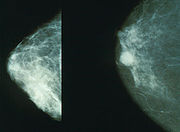
In 2010, the government overturned its own panel the United States Preventive Services Task Force (USPSTF), in response to an outcry from politicians and mammo-cheerleaders. The USPSTF is not anti-mammogram, and neither am I. I’m pro medical evidence. Mammogram enthusiasts often champion positions that are beyond the science. Beyond the Kool Aid drinkers, there are billions of dollars at stake here. Medical evidence is massaged by companies who manufacture conventional and emerging imaging breast techniques and by radiologists who interpret the studies. If you’re a player in the Mammogram Industrial Complex, and a major study threatens your livelihood, predict the reaction. Here are some sample press releases.
- The study is irreparably flawed
- The study is a right wing conspiracy
- The job killing study will shift more jobs overseas
- The male study investigators want mammography to fail so they can divert research money to prevent prostate cancer
Let me preempt the argument that I am holier than thou with respect to my implication that radiologists may be tainted by a conflict of interest.
- Gastroenterologists perform too many colonoscopies
- Colonoscopy is a clumsy tool for colon cancer prevention
- Colonoscopy advocates primarily rely on polyp removal as evidence of its worth, which is a surrogate marker of uncertain value.
Hopefully, the above statements will support my credibility.
The truth is that mammography, even in its most optimistic light, isn’t the lifesaver that the public believes. Indeed, some experts opine that women who undergo mammography do not enjoy a mortality advantage, although they may suffer fewer breast cancer fatalities and complications. While this is a worthy outcome, it is clearly a limited benefit.
The November 22,2012 New England Journal of Medicine article strongly suggested that millions of women have been overdiagnosed with breast cancer, meaning identifying cancers that would not have progressed or would have been detected later without posing more danger to these women.
Advances in breast cancer treatment may exaggerate the benefits of mammographic detection. In other words, a breast cancer survivor might wrongly credit the mammogram as her savior rather than the treatment.
Overdiagnosis of cancer should be regarded a disease itself. These women undergo unnecessary surgeries, chemotherapy and radiation, which can have profound and lifelong effects on them and their families. It is also costing us a fortune. It is not a fair and balanced approach to showcase women who have been saved without acknowledging the harm that mammography causes Shockingly, the American College of Radiology issued a statement calling the study ‘deeply flawed an misleading’. Any conflict of interest here?
It is easy to deepen our cynicism when those who support or attack a view have a personal interest that coincides with their position.
The medical and political establishments do not reverse course easily. We have known for years that prostate specific antigen (PSA) is deeply flawed and harmful. Look how long it took to disarm its advocates, many of whom were urologists who believed in PSA with religious zeal. Every one of them honestly believed that this test had saved men’s lives. I do not dispute this contention. How many men, however, were gravely harmed by treatment of prostate cancer that would have never threatened them? Isn’t this worthy of some consideration?
Patients need to know the medical evidence that supports our medical advice. When there isn’t evidence, or the evidence is conflicting, we physicians need to disclose this, and patients should interrogate us directly on these issues. I welcome this dialogue in my office.
The public has an exaggerated view of the benefits of mammography. For instance, I suspect that most ordinary folks believe that mammography prevents breast cancer, which is completely false and was never its intent.
The vexing issue for patients is whom can they trust to offer them candid and unvarnished advice? I believe in truth. It’s not enough in medicine to believe that something is true because we want it to be or because it serves our own interest.
Have any women Whistleblower readers been counseled about the hazards of mammography by their physicians? If not, then was your decision to proceed truly informed? Aren’t your breasts worth knowing the whole story?