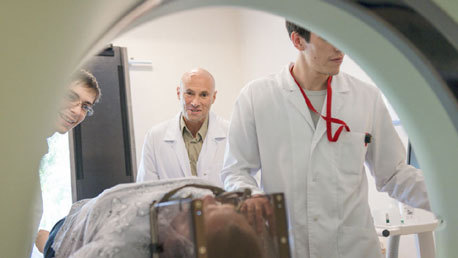
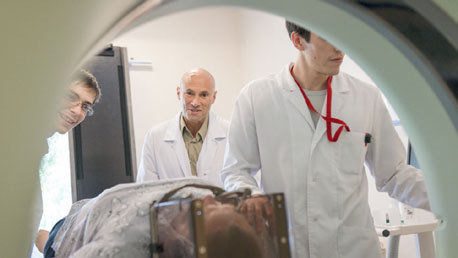
 In a country like Russia, access to healthcare for everyone cannot be achieved overnight. Ten years ago, Dr. Arkady Stolpner founded his first diagnostic center with a magnetic resonance imaging (MRI) system. Today, Stolpner’s 77 diagnostic centers account for 20 percent of all MRI exams made in Russia per year.
In a country like Russia, access to healthcare for everyone cannot be achieved overnight. Ten years ago, Dr. Arkady Stolpner founded his first diagnostic center with a magnetic resonance imaging (MRI) system. Today, Stolpner’s 77 diagnostic centers account for 20 percent of all MRI exams made in Russia per year.
It was in 2003 when a friend of Stolpner proposed to open the first private diagnostic center in St. Petersburg. “In 2003, to get a MRI diagnosis in one of the state-owned clinics of the city, you had to wait four months,” says Stolpner.
In August 2003, the Diagnostic Treatment Centre of the International Institute of Biological Systems (DTC IIBS) welcomed its first patient. In 2005, Stolpner opened a diagnostic center in Krasnoyarsk, 5,500 kilometers away.
Quick troubleshooting of the equipment is one issue when you have large distances. Stolpner copes with it through training his own service engineers in the regions.
The other issue is keeping the quality of diagnostics. “All MRI centers are merged into a single telemedical network,” explains Stolpner. His most experienced doctors supervise their colleagues in the other cities from the consulting center in St. Petersburg.
Radiosurgery is another field where Stolpner revolutionized Russian medicine: “It was not practiced in Russia – because there was simply no equipment. In 2008, we were the second center in Russia equipped with a Gamma Knife.”
Stolpner is especially proud of his training center in St. Petersburg, where the younger doctors get to know how to use the equipment they will be working with. “We understood from the very beginning that equipment alone is not enough,” says Stolpner.
Today, DTC IIBS includes 77 diagnostic centers in Russia and neighboring CIS countries, mostly equipped with Siemens refurbished ecoline MRI and CT scanners. With 1.2 million MRI exams per year, these centers account for 20 percent of all such exams in Russia, according to Stolpner.
“Our cooperation with Siemens is of mutual benefit. We organize conferences and our doctors take part in workshops. It happens that a workshop opens the eyes of a doctor for new methods of examinations,” explains Stolpner.
Today, the competition is getting tougher, both from private as well as state-owned clinics that are investing into equipment. Stolpner is sure that expertise makes the difference: “We are convinced that we can work better – and more efficiently.”
[ + ] Refurbishment of Pre-Owned Systems ecoline systems are pre-owned Siemens systems refurbished for their customers worldwide during a comprehensive process that starts with a professional inspection of the used system before de-installation at the last customer site and leads finally to the start of a completely new lifecycle under expert supervision provided by Siemens.
Read more articles like this one on Medical Solutions Online – the Magazine for Healthcare Leadership: http://sie.ag/17CKcoo
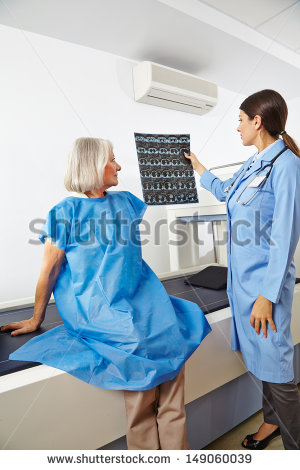
(MRI/shutterstock)