By using this site, you agree to the Privacy Policy and Terms of Use.
Accept
Health Works CollectiveHealth Works CollectiveHealth Works Collective
  • Health
    • Mental Health
  • Policy and Law
    • Global Healthcare
    • Medical Ethics
  • Medical Innovations
  • News
  • Wellness
  • Tech
Search
© 2023 HealthWorks Collective. All Rights Reserved.
Reading: Good Riddance to Routine Pelvic Examinations
Share
Notification Show More
Font ResizerAa
Health Works CollectiveHealth Works Collective
Font ResizerAa
Search
Follow US
  • About
  • Contact
  • Privacy
© 2023 HealthWorks Collective. All Rights Reserved.
Health Works Collective > Policy & Law > Health Reform > Good Riddance to Routine Pelvic Examinations
Health ReformPolicy & LawPublic Health

Good Riddance to Routine Pelvic Examinations

Michael Kirsch
Michael Kirsch
Share
4 Min Read
SHARE
So much in medicine and in life is done out of habit. We do stuff simply because that’s the way we always did it.  Repetition leads to the belief that we are doing the right thing. In this country, we traditionally eat three meals each day. Why not four or two?
 
Life gets more interesting when folks question long standing beliefs and practices forcing us to ask ourselves if what we are doing makes any sense. In the medical profession, a yearly physical examination was dogma.
So much in medicine and in life is done out of habit. We do stuff simply because that’s the way we always did it.  Repetition leads to the belief that we are doing the right thing. In this country, we traditionally eat three meals each day. Why not four or two?
 
Life gets more interesting when folks question long standing beliefs and practices forcing us to ask ourselves if what we are doing makes any sense. In the medical profession, a yearly physical examination was dogma. Now, even traditionalists have backed away from this ritual that had no underlying scientific data to support it. Yet, patients would present themselves to this annual event believing that this ‘check-up’ was an important health preserver.
 
Here were some medical routines that were never questioned.
  • Yearly ear drum examinations with the otoscope. Always exciting.
  • Palpation of the abdomen.
  • Listening to the lungs with a stethoscope.
  • Testing your reflexes. (Sure, this was fun, but did it help anyone?)
Keep in mind that I am referring to components of the physical exam that are performed on asymptomatic individuals who feel well. Obviously, listening to a patient’s lungs has more value if a patient has fever and a cough.
 
Yes, I recognize that there may be an intangible value in having a physician make physical contact with his patients, which some argue help to create a bond in the relationship. This may be true in part as patients have been taught to expect this from their doctors. Indeed, a ‘hands off’ physician may be construed by patients as being an inattentive or even an incompetent practitioner. 
 
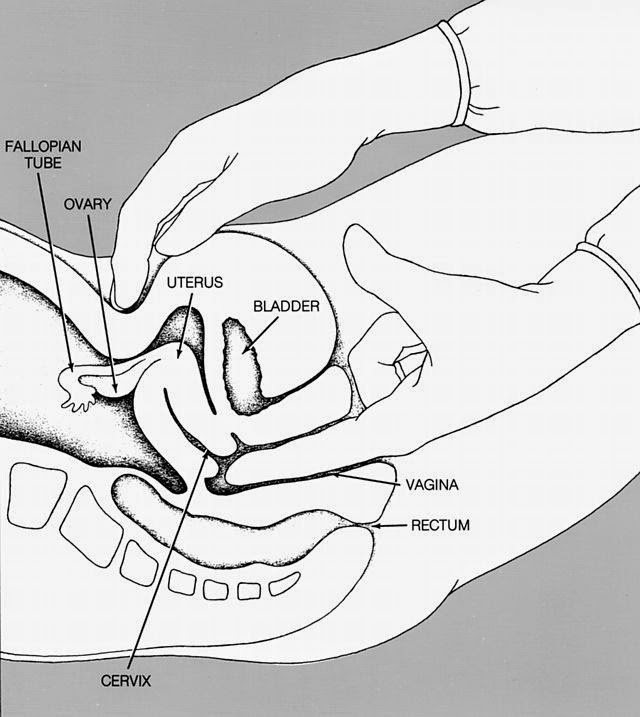
Recently, the American College of Physicians issued a new guideline published in the Annals of Internal Medicine stating that routine pelvic examinations should not be performed. Why? Because there is no persuasive evidence that they do any good.
 
Sure, there will be pushback. In medicine and elsewhere, there is often resistance to change from those whose practices are being challenged.   Review the following complex table that I have prepared.
 
Procedure Under Review                Resistors
 
PSA                                                  Urologists
Mammograms                                   Radiologists
Colonoscopies                                   Gastroenterologists
Term Limits                                       Politicians
Tort Reform                                      Take a guess
 
If all of the elements of a routine check-up were subjected to scientific scrutiny, we might be shocked at how little of the exam remained. This might create an unintended benefit. It would free up time that we physicians could use to talk more with our patients. So far, no scientific study has deemed this to be a waste of time.  

Share This Article
Facebook Copy Link Print
Share

Stay Connected

1.5KFollowersLike
4.5KFollowersFollow
2.8KFollowersPin
136KSubscribersSubscribe

Latest News

Tirzepatide
How Tirzepatide Helps With Medical Weight Loss
Weight Loss
May 26, 2026
playing sports help grow brain
Why Play Matters For Healthy Brain Development
Health Infographics
May 25, 2026
operating room build time
Inside The Operating Room Build Timeline
Uncategorized
May 25, 2026
infection prevention
How Environmental Control Supports Infection Prevention In Healthcare
Health Infographics
May 25, 2026

You Might also Like

Devices for the Treatment of Obesity: Modes of Action

April 18, 2011
conducting Clinical Trial
Global Healthcare

5 Tips for Conducting a Clinical Trial

July 26, 2023
Standing room only at the APTA 2013 Conference
Health ReformMedical InnovationsPublic HealthWellness

Innovative Care Models for Prevention, Health Promotion, Fitness and Disease Management

July 2, 2013
The ACA has put patients at the center of healthcare services. A patient-centric healthcare approach in this digital era means a revised definition of quality in the physician-patient relationship. When it comes to healthcare services, patients shell out a hefty amount from their pocket and want nothing less than the best. The services in healthcare are no longer limited to just cost as consumers now evaluate quality and experience in the same equation. Research highlights from the 2015 Healthcare Consumer Trends by National Research Corporation states that reputation in healthcare matters more to consumers when choosing a brand than any other industry, e.g. hospitality, retail, airline, etc. The new generation of quality measurements in healthcare require a different mind-set and a different 'toolbox' to handle the hurdles. It’s the need of the hour for healthcare providers and others across the healthcare value chain to adopt the patient-centric approach for surviving in the vast competitive ocean of healthcare services. Patient-centric care is an approach that develops through effective communication, empathy and a positive physician-patient relationship. The primary purpose is to improve patient care outcomes and satisfaction and to reduce patient symptoms and unnecessary costs. It’s a win-win situation for both physicians and patients. While healthcare providers are able to support their patients in becoming more compliant with treatment and management of their conditions/diseases, patients feel more satisfied with the care that they are receiving. PwC’s Health Research Institute’s annual report 2016 states that health systems should keep an eye on the consumer experience as they expand and extend. More partnerships and more caregivers could mean confusion for patients and poor customer experiences. To differentiate their practice among competitors, patient satisfaction can be used as a competitive distinguishing factor. Although patient satisfaction cannot really provide tangible benefits, but an experience that exceeds patient expectations for what a practice/hospital can provide is very important as it creates loyal patients who return for future health needs and refer their family and friends. Happy and satisfied patients are a secret marketing weapon for healthcare providers, whether they are physicians, dentists, physiotherapists or hospitals. Your patients are the new-age digital health decision-makers. In this era of Internet and social media, they now have multichannel access to information related to health. Needless to mention, they have gained new power to make their decisions; whether it’s choosing a healthcare provider or referring a physician to family and friends. By converting your satisfied patients to be your brand advocates, you can capitalize and use their voice as an effective marketing strategy to reach out to many other potential patients. To strive and thrive, in the U.S. many healthcare organizations are applying patient-centric approaches to healthcare. It’s all about what matters to patients, so it makes a lot of sense for the healthcare industry to place patients' healthcare experience at the center of their policies and procedures. The best deliverables are a combination of great communication for a positive physician-patient relationship, disciplined measurement and analysis of patient feedback and commitment to technology innovation – the formula for improving patient engagement and care.
BusinessHealth ReformWellness

The Link Between Patient Satisfaction and Long-Lasting Relationships

April 28, 2016
Subscribe
Subscribe to our newsletter to get our newest articles instantly!
Follow US
© 2008-2025 HealthWorks Collective. All Rights Reserved.
  • About
  • Contact
  • Privacy
Welcome Back!

Sign in to your account

Username or Email Address
Password

Lost your password?