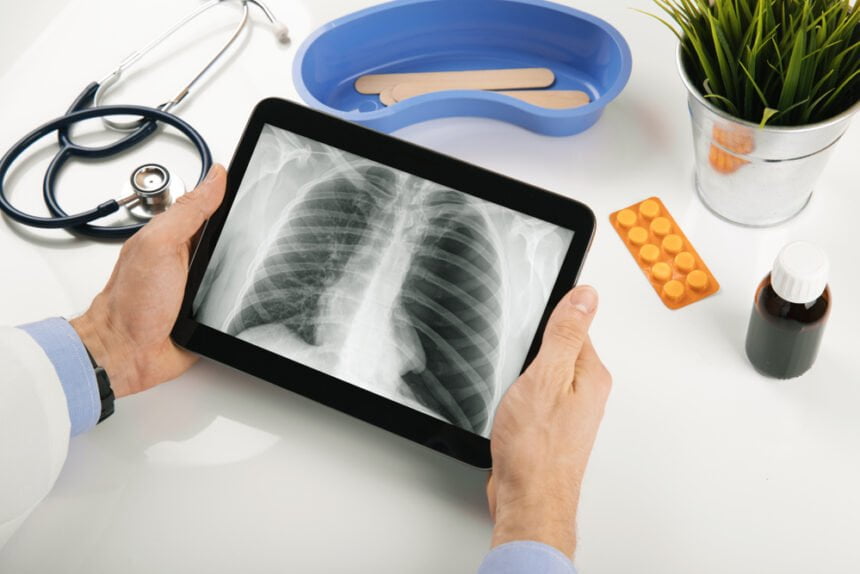
A chest X-ray can be used to diagnose many problems with the chest, including heart failure, pneumonia, lung cancer, broken ribs, and other conditions. But if your doctor wants you to get a chest X-ray, you may be wondering what to expect. Will it hurt? Will it take long? Will you have to take off your shirt? What are the risks? These are all common questions people have before getting a chest X-ray, especially if they’ve never had an X-ray before. Here’s what you need to know before you go in for your procedure:
What Your Chest X-Ray Can Tell Your Doctor
X-rays can be and often are used to diagnose broken bones, but that’s not the only purpose a chest X-ray can serve. A chest X-ray can help your doctor diagnose problems with your heart or the blood vessels in your chest; your lungs or the rest of your airway; or even the bones in your chest and spine.
X-rays work by using radiation to take pictures that let doctors see the structures inside your body. The radiation passes through soft tissues, like skin and muscle, and these areas appear dark on the resulting image. However, denser tissues, like bones and the thick muscles of the heart, block some of the radiation, so that these areas appear lighter on the resulting picture. Fluid build-up in or around the organs also blocks the passage of radiation, so that if you’re suffering from congestive heart failure, pulmonary edema, or similar conditions, your doctor will be able to tell from looking at the X-ray, because areas of the picture that should appear dark will appear lighter.
More Read

Some things that your doctor can see on an X-ray include:
- Cancer, infections, or unusual deposits of air in the pneumothorax, or space surrounding the lungs
- Chronic lung diseases like cystic fibrosis or emphysema, and potential complications of these illnesses
- Lung problems caused by heart conditions, like pulmonary edema caused by congestive heart failure
- Heart problems, including problems with your heart valves, pericardial effusion, and changes in the shape or size of the organ
- Calcium deposits in or around your heart or lungs
- Conditions affecting the blood vessels around your heart
- Broken ribs or vertebrae
Your doctor may also want to use a chest X-ray to monitor your recovery from a chest X-ray, or to verify the correct placement of a catheter, defibrillator, or pacemaker.
What the Procedure Involves
You will have to get undressed from the waist up in order to get a chest X-ray. You’ll also need to take off any jewelry you might be wearing, because that can obscure the final image. You’ll be given an exam gown to wear during the procedure.
Getting a chest X-ray doesn’t hurt. An X-ray technician will position you in front of the X-ray machine and may ask you to change positions so that multiple images can be taken, allowing your doctor to view your chest from the front, back or side. For the front-view image, the technician will probably ask you to hold your arms out to the sides, or straight overhead, and hunch your shoulders forward. You’ll need to be able to hold your breath for a few seconds while the image is being taken, because this allows for a clearer picture of your heart and lungs. You may need to repeat this process for the side and back views.
The Risks of Getting an X-Ray
While many people worry about the risk of being exposed to radiation during an X-ray, chest X-rays are a relatively low-risk procedure. You’re only exposed to a very low amount of radiation during a chest X-ray. In fact, you’re exposed to more radiation every day through natural environmental sources, like sunlight.
However, if you need more than one X-ray, your doctor may give you a protective apron to wear to minimize your risk of exposure to radiation. You should also tell your doctor if you’re pregnant, or think you might be pregnant. It’s considered safe to have an X-ray done while you’re pregnant, especially because a chest X-ray shouldn’t expose your womb to radiation. Nevertheless, your doctor may want to take extra precautions to protect the developing fetus from radiation, either by giving you a protective apron to wear, or by potentially having you take a different kind of imaging test.
Getting a chest X-ray is painless, quick, and easy. The resulting images can help your doctor diagnose any of a range of problems that can affect the structures and organs of the chest. If you’re going in for a chest X-ray, don’t be nervous; it’s a standard procedure that carries little risk, and once you have the images taken, you’ll be able to go on with the rest of your day.