Medicine today becomes personalized, preventive and less dependent on the physical location of the doctor and patient. This area of healthcare is developing faster than all others – about 20% of the annual increase. The essence of telemedicine is defined briefly – the transfer of medical information in video, audio and text format by means of wireless communication.
Personal Health Electronics
Wearable non-invasive or long-term sensors connected to portable personal electronics monitor all important parameters of vital activity or critical values of specific indicators – blood glucose, pressure, pulse and other. There are even automatic dosers for administering drugs to patients. Most of the necessary tests are handed over at home, without requiring a visit to laboratories. Regular monitoring of the body’s parameters will allow controlling not only everyday health but also slowly changing indicators, such as the development of aging processes in specific areas.
Telemedicine in the process of applying technological changes will exclude a physical presence in medical centers. Appointments take place mostly in a remote mode. A doctor or even a group of doctors from anywhere in the world is involved in the diagnosis, treatment and surgical operations.
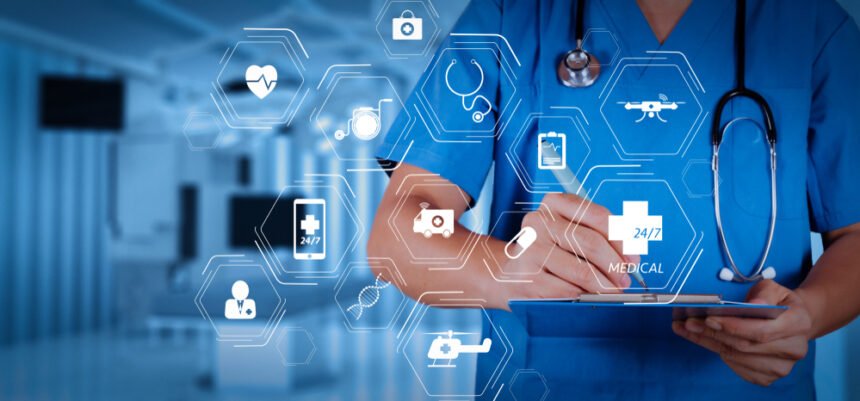
With telemedicine medical devices are becoming increasingly mobile and personal. Surgeries are also fully or partially performed by remote medical robots, which are going to acquire a mobile nature in the nearest future. Manufacturing of medicines will also be done in a personalized version by compact pharm- and bio-laboratories, and if necessary, delivered individually. Diagnosis and treatment become more and more personalized in all senses. They are carried out taking into account all the peculiarities of the organism of a patient and in the place of his location. There is no need to contact medical centers and it is possible to avoid time delays.
Predictive, Timely and Accurate Diagnosis
Detection of the onset of diseases in the earlier period due to monitoring of vital signs revealed hereditary and acquired predispositions. Before the development of radical technologies for the treatment of diseases, early treatment will be introduced in a less traumatic way for the body. It will take place at the level of lifestyle adjustments or low dosages of drugs. There will be a new profession – a medical navigator, who will constantly monitor the changes in health indicators, as well as the implementation of recommendations. Doctors will increasingly use computer-based decision support systems – diagnostic and methodical. This will continue until artificial intelligence on the effectiveness of actions surpasses a person’s capabilities not only in theory but also in practical medical fields. In a parallel mode, personal monitoring programs will develop. They will be represented by personal assistants, who will ultimately obtain the functions of the majority of necessary medical manipulations.
The Use of Big Data
The data for monitoring and analysis are transferred to cloud storages, to personal electronic cards that accumulate all important information for diagnosis. People with identified diseases or pre-illnesses are under constant monitoring to determine the dynamics of the processes. Access to huge volumes of personal data and to the data of medical clinics will make it possible to constantly improve the therapeutic methods and characteristics of medicines. The data will be available to a multitude of medical and research organizations, analytical programs and neural networks. All of them will improve performance mostly in online mode, and the problem zones of individual medical institutions and doctors will be the subject of immediate attention of monitoring systems. The growth of confidence in medicine will be based on measurable evidence of the effectiveness of treatment for each individual.