By using this site, you agree to the Privacy Policy and Terms of Use.
Accept
Health Works CollectiveHealth Works CollectiveHealth Works Collective
  • Health
    • Mental Health
  • Policy and Law
    • Global Healthcare
    • Medical Ethics
  • Medical Innovations
  • News
  • Wellness
  • Tech
Search
© 2023 HealthWorks Collective. All Rights Reserved.
Reading: Newly Released: A Health Literacy Manifesto
Share
Notification Show More
Font ResizerAa
Health Works CollectiveHealth Works Collective
Font ResizerAa
Search
Follow US
  • About
  • Contact
  • Privacy
© 2023 HealthWorks Collective. All Rights Reserved.
Health Works Collective > Policy & Law > Health Reform > Newly Released: A Health Literacy Manifesto
Health Reform

Newly Released: A Health Literacy Manifesto

Socialbttrfly
Socialbttrfly
Share
3 Min Read
SHARE


Good news! The Center for Disease Control’s blog, Bridging the Health Literacy Gap–is back!
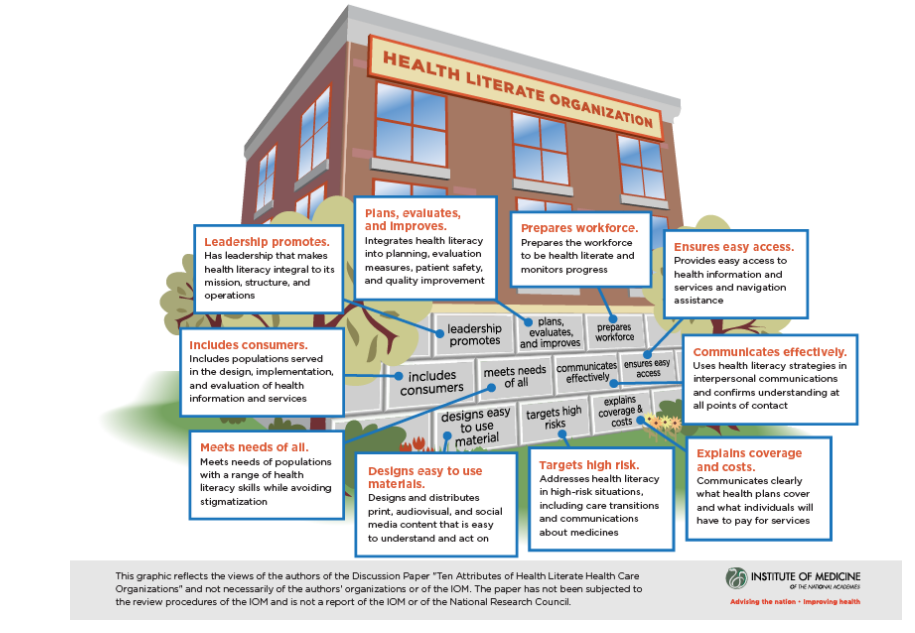
The 10 Attributes of a Health Literacy Health Care Organization


More Read

How Financial Barriers are Slowing Down Telehealth Adoption
Why Not Let the Dead Pay for Medicare?
Will ObamaCare Help or Hurt the Economy?
Waking Up? GOP Governors Want to Talk to Obama About Health Reform
Physician-Patient Collaboration: A Conversation With Dr. Danny Sands

Good news! The Center for Disease Control’s blog, Bridging the Health Literacy Gap–is back!

The 10 Attributes of a Health Literacy Health Care Organization

In its come-back post, Dr. Cynthia Bauer highlights a recent contribution to the health literacy field, a publication issued by the Institutes of Medicine titled “Ten Attributes of Health Literate Health Care Organizations.” In some ways, it’s a health literacy manifesto for organizations. As Dr. Baur shares, this discussion paper provides steps health care organizations can take to make it easier for people to use the health care system.  It states that:

a health literacy health care organization:

  1. Has leadership that makes health literacy integral to its mission, structure, and operations.
  2. Integrates health literacy into planning, evaluation measures, patient safety, and quality improvement.
  3. Prepares the workforce to be health literate and monitors progress.
  4. Includes populations served in the design, implementation, and evaluation of health information and services.
  5. Meets the needs of populations with a range of health literacy skills while avoiding stigmatization.
  6. Uses health literacy strategies in interpersonal communications and confirms understanding at all points of contact.
  7. Provides easy access to health information and services and navigation assistance.
  8. Designs and distributes print, audiovisual, and social media content that is easy to understand and act on.
  9. Addresses health literacy in high-risk situations, including care transitions and communications about medicines.
  10. Communicates clearly what health plans cover and what individuals will have to pay for services.
Turning Health Literacy Attributes into Best Practices

Prior to the recent health care decision, Kaiser’s Health Tracking Poll reported:

  • Six of every 10 Americans said they didn’t know enough about the basics of health reform to judge its potential impact on their lives.
  • Four in 10 weren’t sure whether it’s still the law of the land or they thought it’s already been overturned.
  • Roughly 60 percent seem fine with the confusion — they say they’re either not closely following news of the looming health reform case or they’ve tuned it out altogether
Given that 9 out of 10 Americans experience limited health literacy, confusion around health reform shouldn’t be too much of a surprise. Thus, we’d hope health care organizations would quickly adopt these attributes, making them best practices. However, imagine this: What if every organization adopted these attributes?

Any organization with employees and a staff has an opportunity to be a leader in transforming the conversations around our health. From explaining health insurance to implementing health promotion and corporate wellness programs, progress is possible.



TAGGED:health literacy
Share This Article
Facebook Copy Link Print
Share

Stay Connected

1.5KFollowersLike
4.5KFollowersFollow
2.8KFollowersPin
136KSubscribersSubscribe

Latest News

Florida Nurses Face Growing Licensing Risks: Understanding the Investigation Process and How to Protect Your Career
Nursing Policy & Law
July 2, 2026
Most Clinician Wellness Programs Are Built for a Schedule Nurses Don't Have
Most Clinician Wellness Programs Are Built for a Schedule Nurses Don’t Have
Career Nursing
July 2, 2026
Veneers vs. Crowns vs. Bonding: Understanding Cosmetic Options
Dental health Specialties
June 23, 2026
dental implants
Dental Implants and Quality of Life: What the Outcomes Data Shows
Dental health Specialties
June 23, 2026

You Might also Like

Patient Protection and Affordable Care Act (PPACA) Impact on the Future Healthcare Workforce

July 1, 2012
health cost
Health ReformPolicy & LawPublic Health

Health Insurance Under the Exchanges: What Will You Pay?

June 11, 2013

United pulls out of ACA exchanges: Should we care?

November 24, 2015

What are Health Insurance Exchanges?

May 5, 2011
Subscribe
Subscribe to our newsletter to get our newest articles instantly!
Follow US
© 2008-2026 HealthWorks Collective. All Rights Reserved.
  • About
  • Contact
  • Privacy
Welcome Back!

Sign in to your account

Username or Email Address
Password

Lost your password?