Lots of publications have been pointing out that obesity is somehow connected to cancer. Obese women are more prone to breast cancer than their normal-weight counterparts. Obese people have higher rates of colon and liver cancers. Obesity increases the likelihood of prostate cancer. But, as scientists call these kind of claims, they amount to a lot of “hand waving”.
Lots of publications have been pointing out that obesity is somehow connected to cancer. Obese women are more prone to breast cancer than their normal-weight counterparts. Obese people have higher rates of colon and liver cancers. Obesity increases the likelihood of prostate cancer. But, as scientists call these kind of claims, they amount to a lot of “hand waving”. What they mean by that is that correlations don’t amount to causation, and the leap to ascribing cause-effect to these observations is a leap of faith, and as we learned time and again, faith-based medicine belongs in the religious revival tent.
In all fairness, a few tantalizing observations have been made. Obesity is associated with a change in the microflora that colonizes the gut. Furthermore, these bacteria produce inflammatory substances. And there is a large volume of evidence that inflammation is associated with initiation and promotion of tumor growth. The ultimate proof in humans could be the administration of such inflammatory substances and observing the consequences over time -an a experiment that justifiably would never receive an ethics committee approval. So how do we identify the inflammatory culprit(s)?
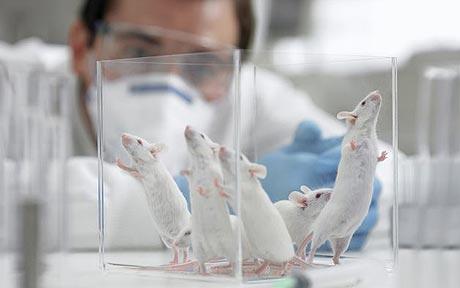
Happily, science is closing in on the proof. In a paper published in Nature ( vol.499, p.97, 2013), Yoshimoto and colleagues presented the first plausible molecular link between obesity and colon and liver cancers. They resorted to a neat trick, using a strain of obese mice in which initiation of a liver tumor with a chemical carcinogen triggers luminescence in the abdomen. If the inflammatory metabolites secreted by the intestinal microflora of these obese mice were responsible for liver cancer , then eradication of the bacteria with antibiotics should reduce the formation of liver tumors. indeed, administration of a cocktail of antibiotics markedly reduced the incidence of liver cancers. Furthermore, the obese mice fed a high fat diet had a high level of the bacterial metabolite of the bile acid cholic acid, called DCA (deoxycholic acid), a know carcinogen. And, to nail the DCA as culprit, after they administered DCA to the antibiotics-treated mice carcinogenesis was markedly enhanced. More proof needed? When they didn’t eradicate the microflora, but inhibited the enzyme that converted the bile acid Cholic acid to DCA they again showed a reduction in carcinogenesis.
More Read

But these are only obese mice; what about obese humans? There are several bacterial species in the microflora of obese people that produce DCA. And this bile acid metabolite had been strongly implicated in colorectal cancer.
Like every discovery in science, more questions are raised. Should we consider antibiotic treatment of obese people? Is there any epidemiological evidence that obese people who take antibiotics chronically are less prone to to colorectal cancer? Suggestive evidence does exist that diet, intestinal colonization with more benign flora, and gastric bypass surgery, alter the composition and amount of bile acids. As scientists are wont to say, more studies are necessary.
As wonderful as this study is in nailing the obesity-cancer link, I find the broader implication just as illuminating – we are not as autonomous as we would like to think; the microflora that inhabit our skin and our gastrointestinal tract play a crucial role in our interaction with the environment and consequently, in our very existence in the world.