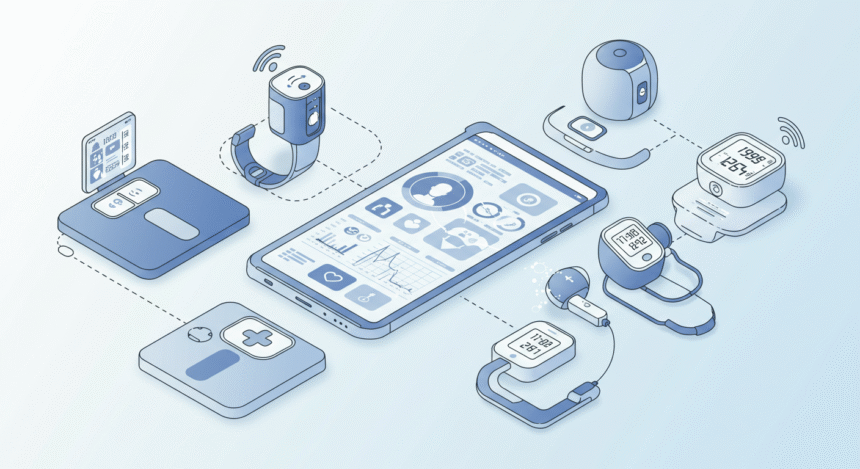
Remote patient monitoring (RPM) and asynchronous follow-ups are reshaping outpatient care delivery. However, patients frequently disengage when monitoring schedules seem inconsistent or confusing. Establishing a clear cadence—combining fixed check-ins and specific trigger-based reviews—not only enhances adherence but also streamlines clinical workflows.
- Cadence is the backbone of remote monitoring
- Design the rhythm: fixed check-ins plus trigger-based reviews
- Onboard to the cadence: tools, teach-back, and reminders
- Protect privacy while you scale remote touchpoints
- Measure what matters: adherence, escalation, and experience
- Operational playbook: roles, scripts, and fail-safes
- Conclusion
This article covers:
- Setting simple, memorable monitoring schedules.
- Privacy and consent essentials from day one.
- Metrics to optimize the monitoring rhythm.
Cadence is the backbone of remote monitoring
A predictable cadence transforms remote monitoring from scattered interactions into reliable, structured clinical workflows. Clear schedules for patient uploads, clinician reviews, and escalation processes prevent critical information from being overlooked, thereby enhancing both safety and patient satisfaction.
The Centers for Medicare & Medicaid Services (CMS) define RPM clearly, underscoring the importance of scheduled, structured data collection outside traditional clinical settings. With a clear RPM cadence, clinicians spend less time tracking down data and more time delivering care.
Cadence essentials include:
- Fixed patient-upload intervals.
- Established provider review periods.
- Defined escalation processes.
- Explicit role assignments for patients, coordinators, and clinicians.
Without clear cadence, healthcare providers face missed uploads, delayed escalations, overloaded inboxes, and reduced patient satisfaction. A well-defined RPM approach complements broader patient experience strategies, as demonstrated by HealthWorks Collective’s detailed analysis of the appointment lifecycle and patient journey mapping.
Design the rhythm: fixed check-ins plus trigger-based reviews
A successful cadence combines fixed routine checks with clearly defined, patient-triggered reviews. Scheduled check-ins (e.g., monthly reviews) create consistency for patients, while clear response windows (such as 48-hour clinician responses) manage expectations effectively.
Complement fixed schedules with explicit trigger-based criteria for intervention—such as sudden symptom changes or repeated missed uploads. Transparent patient-facing examples, such as this remote monitoring touchpoint inside a published journey, illustrate the benefits of clearly communicated expectations.
Cadence design steps:
- Establish schedules clearly in clinical guidelines.
- Reinforce in patient-facing applications.
- Highlight in pre-visit educational materials.
Categorize monitoring triggers clearly as red (immediate review), amber (non-critical, yet timely), or green (routine).
Onboard to the cadence: tools, teach-back, and reminders
Strong onboarding ensures patients internalize and follow RPM schedules. Teach-back methods—asking patients to demonstrate understanding—ensure clarity. Automated reminders (SMS or in-app notifications) further boost adherence.
Clearly outline upload expectations (type, frequency, timing), clinician response timelines, and escalation channels from the outset.
Effective onboarding includes:
- Clear, simple educational one-pagers.
- Interactive app demonstrations.
- Visual examples of proper uploads.
- Diagrams showing escalation pathways.
- Easily understood consent materials.
For higher-risk patient groups, introduce personalized, proactive support such as a check-in call within the first month to reinforce routines.
Protect privacy while you scale remote touchpoints
Privacy and consent management are integral components of sustainable RPM programs. HIPAA compliance, vendor Business Associate Agreements (BAAs), minimum necessary data collection, role-based data access, and audit logging must be integral from the start.
Moreover, patient-facing digital assets should be regularly reviewed for potential compliance risks related to online tracking technologies, as outlined by current HIPAA guidance on online tracking technologies. Awareness and prevention of privacy breaches are crucial to maintain patient trust.
Quarterly privacy audit checkpoints:
- External redirects to unvetted vendors.
- Embedded tracking pixels on patient intake forms.
- Patient identifiers inadvertently linked with analytics.
Measure what matters: adherence, escalation, and experience
Clearly defined monitoring metrics help optimize operations and patient satisfaction. Key RPM metrics to monitor closely are:
- On-time patient uploads (target: ≥90%).
- Clinician review adherence to response windows (target: ≥95%).
- Escalation-to-resolution timeframe (target: <48 hours).
- Patient disengagement rates (target: <10%).
These operational metrics align closely with established patient-experience measures such as those outlined by the CAHPS measures of patient experience.
Suggested RPM metrics review table:
| Metric | Ideal Threshold | Review Frequency |
| On-time uploads | ≥90% | Weekly |
| Review response compliance | ≥95% | Weekly |
| Escalation resolution | ≤48 hours | Monthly |
| Patient experience (CAHPS) | ≥85% positive | Quarterly |
Operational playbook: roles, scripts, and fail-safes
Maintaining RPM schedules requires clearly delineated roles, scripted communication pathways, and robust fail-safe measures. Clearly define who monitors inboxes, triggers escalations, and ensures resolution.
Early remote monitoring implementations, such as those reviewed in HealthWorks Collective’s telehealth adoption synthesis, underscore the value of clear role assignments in maintaining patient engagement.
Sample RACI (Responsible, Accountable, Consulted, Informed) framework:
| Task | Coordinator | Clinician | IT/Privacy |
| Monitor uploads/inboxes | R/A | I | C |
| Patient communication | R | C/A | I |
| Escalation decisions | C | R/A | I |
| Privacy & IT compliance | C/I | I | R/A |
Scripts to standardize interactions:
- Missed upload: “We noticed your recent upload wasn’t received—please reach out if you need help.”
- Symptom escalation: “Your recent submission flagged some important symptoms—we’ve scheduled an immediate clinician review.”
Conclusion
A reliable remote monitoring cadence combines fixed schedules, clear triggers, and strong privacy guardrails. Start simply—monthly routines and clear 48-hour response windows—and publish expectations prominently in patient-facing materials.
Remember these essential practices:
- Teach-back techniques ensure patient understanding.
- Regularly audit tracking technologies for compliance.
- Continuously refine cadence metrics against patient-experience feedback.
- Pilot your cadence approach with a focused patient cohort, then scale up gradually.
Structured, consistent monitoring not only improves clinical efficiency but significantly boosts patient trust and adherence over time.