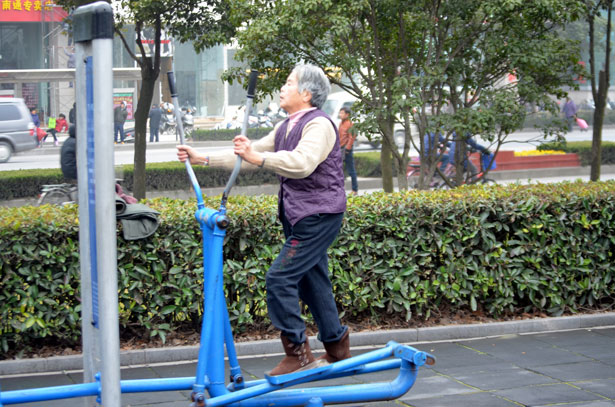
 We all know that exercise is crucial to better health. For older women however, that can often be challenging, particularly during the winter.
We all know that exercise is crucial to better health. For older women however, that can often be challenging, particularly during the winter. But getting up and moving around for even 10 minutes at a time, several times a day, has a positive effect on all-cause mortality, according to a new study in the American Journal of Preventive Medicine.
Researchers from Cornell University looked at physical activity of nearly 93,000 postmenopausal American women found those with the highest amounts of sedentary time – defined as sitting and resting, excluding sleeping – died earlier than their most active peers. The association remained even when controlling for physical mobility and function, chronic disease status, demographic factors and overall fitness – meaning that even habitual exercisers are at risk if they have high amounts of idle time.
The study analyzed a multiethnic group of 92,234 post-menopausal women aged 50–79 years at baseline (1993–1998) who participated in the Women’s Health Initiative Observational Study through September 2010. They looked at the relationship between sedentary time and total cardiovascular disease (CVD); coronary heart disease (CHD); and cancer mortality among women who reported the greatest and least amount of sedentary time over this period. Independent of other health factors, those with 11 or more hours of self-reported inactivity were 12 percent more likely to die prematurely compared with women who reported four or fewer hours of sedentary time.
More Read

Sitting still for long periods negatively impacts health at every age, from “brain fog” to muscle deterioration. Prior studies estimated that life expectancy in the U.S. would increase by two years if people reduced sitting time to fewer than 3 hours per day. Among older adults, physical inactivity has been linked to depression, decreased muscle mass, poorer lung capacity, and higher blood pressure.
While some physical changes are attributed to normal aging processes, older adults who can maintain regular physical activity –– cardiovascular, strength, endurance, and flexibility – are less likely to need long term care, according to exercise science professor Len Kravitz, Ph.D. of the University of New Mexico. Additionally, strength and flexibility exercises may prevent falls and injuries by improving balance and mobility, manage stress, alleviate sleep problems, reduce cognitive decline, lower cost of care and improve overall mental outlook.
CDC surveillance data show that about 23.1 percent of adults aged 65-74 and 35.9 percent of adults aged 75 or older are inactive — engaging in no leisure time, household or physical activity.
Proper clinical evaluation and referral to physical therapy are important to assess physical function and develop an appropriate exercise “prescription” that older adults can safely fulfill. A recent clinical review in JAMA concluded that even frail elderly and those with mobility limitations can and should participate in appropriate physical activity “Addressing functional deficits and environmental barriers with exercise and mobility devices can lead to improved function, safety, and quality of life for patients with mobility limitations.”
Finding safe and affordable venues for seniors to exercise can be challenging — particularly in cities that are not considered “walkable.” Policy stakeholders and others who promote “aging in place” should factor in the need for physical activity as they develop long-range plans for more livable “age-friendly” communities.